Deep dive
Trump's Data Center Dividend Shows AI Has to Give Back
Keith Brown · Founding Partner, Outperform Ventures
Oct 21, 2026 · 6 min read
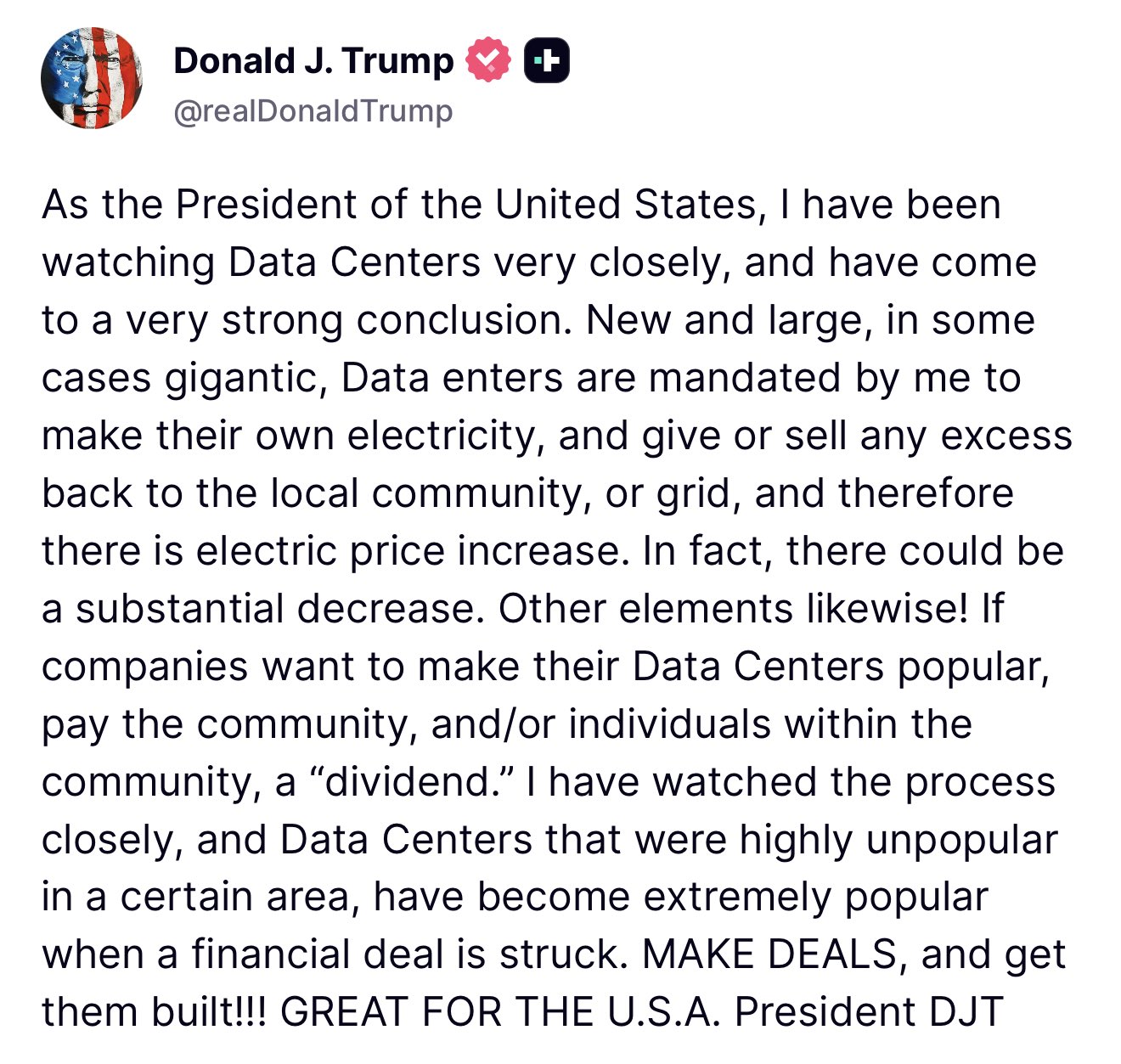
President Trump says data centers should make their own electricity and pay the communities around them a dividend. I think it's the first clear sign of where AI is headed. AI is good for companies and investors, and it has to start paying society back.
Today President Trump posted that data centers should make their own electricity and pay the communities around them a "dividend." When I read it, I saw it as the first clear sign of where all of this is headed. AI has to be a net positive for society, and this is the way the equation gets balanced.
Here's how I see it. Data centers are a net positive for the economy, for capital and for the companies building AI. I think they're a net negative for human society. Companies don't offer to pay a town unless there's a cost to make up.
The scale is why this matters. The Electric Power Research Institute projects data centers will use 9% to 17% of US electricity by 2030, up from 5% in 2024. Roughly 70% of Americans say they oppose a data center being built near them.
We will quickly lose even the social permission to take something like energy, which is a scarce resource, and use it to generate these tokens, if these tokens are not improving health outcomes, education outcomes, public sector efficiency, private sector competitiveness.
I wrote about the same pattern two days ago in why Elon Musk and Anthropic are giving away shares. A SpaceX share for every kid, Anthropic's public benefit fund and now a data center dividend all point the same way.
What Trump said about data centers
The post made two points. First, "new and large, in some cases gigantic" data centers should "make their own electricity, and give or sell any excess back to the local community, or grid." He said that would keep power prices from rising, and could even lower them.
Second, he told companies how to win support: "pay the community, and/or individuals within the community, a 'dividend.'" He said projects that were "highly unpopular in a certain area, have become extremely popular when a financial deal is struck."
It isn't a law. Data Center Dynamics notes that the White House's Ratepayer Protection Pledge isn't a regulatory requirement, a national Ratepayer Protection Act failed in the Senate this month, and the post didn't say whether dividends would ever be required.
The industry didn't push back. Nebius chief revenue officer Marc Boroditsky told CNBC the idea is "not crazy," and that his company is "100% in principle" open to finding ways to send rewards back to the community.
Towns are already being paid
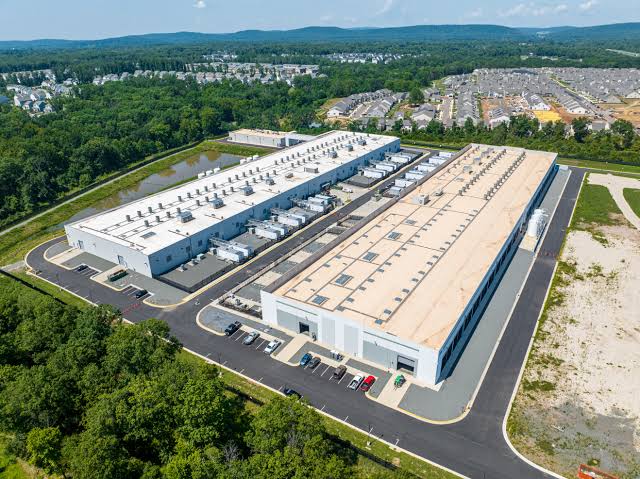
This is already happening. In De Soto, Kansas, Digital Realty is offering every household $1,000 a year in utility and property tax credits for 10 years. It's part of a $20 million community investment for a campus that will eventually cover about 1,400 acres.
In Hazle Township, Pennsylvania, developer NorthPoint reportedly offered residents $10,000 each while seeking approval for a data center campus, according to DCD. Some residents called it a bribe.
There's a quieter version too. A September report from the Bitcoin Policy Institute proposed a yearly payment to every household in a county that hosts a data center. It would come from a fixed share of the property tax the county already collects, so it adds no new tax.
Good for the economy, hard on the town next door
The case for data centers is real. They bring tax revenue and construction work, and Digital Realty expects 250 permanent jobs in De Soto. An EPRI study found data centers modestly lowered average US retail electricity rates from 2015 to 2024, because new demand spreads a utility's fixed costs across more customers.
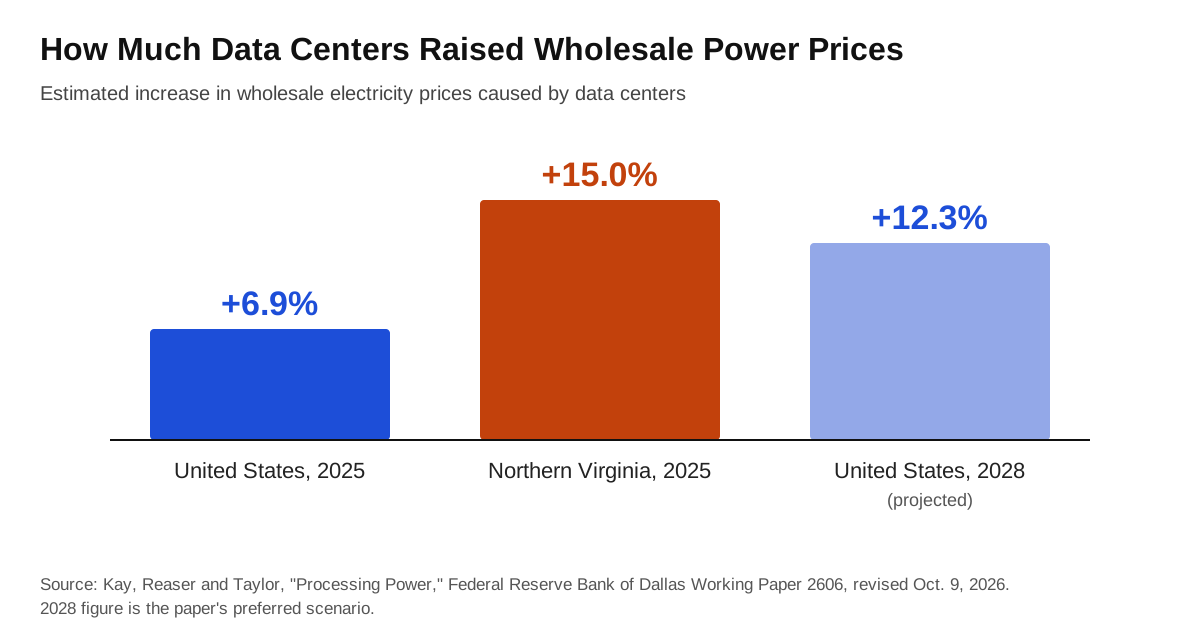
The other side is showing up in wholesale prices. Economists at the Federal Reserve Bank of Dallas estimate data centers raised wholesale electricity prices 6.9% nationally by 2025 and 15% in northern Virginia, the biggest data center market in the world. Under their preferred scenario, the national effect reaches 12.3% by 2028.
Averages hide who pays. The people living closest to these sites deal with the land, the noise, the water and the power lines. Reuters reports voter anger over data centers has become a national issue, and towns like Sunbury, Ohio have paused new projects until 2027.
Why I think AI is a net negative for society
I want to split this up, because the two ideas get mixed together. AI and data centers are a net positive for corporations, for capital and for high-net-worth individuals. They're a net negative for society as a whole.
The gains go first to the people who own the companies and the stock. According to the Federal Reserve, the top 1% of US households hold about half of all stocks and mutual funds. The costs land on people who own very little of either: higher bills, jobs that change and towns that host the buildings.
I've written about how that split shows up in the economy in is AI propping up the economy, and in giving in Americans are wealthier than ever and giving less of it.
That's why I think the argument is over. Companies don't pay people to accept something that's good for them. When the builders start offering dividends, shares and credits, they're telling us there's a cost they need to make up.
How AI pays society back
This won't stop at data centers. I think it's what happens with AI as a whole. If AI's gains are going back into the economy, some of them have to reach the people carrying the cost.
Here's what that looks like so far:
| Who | What they're offering | Source |
|---|---|---|
| Large data centers | Make their own power and give or sell the excess to the grid | Trump's post, via CNBC |
| Digital Realty, De Soto, Kansas | $1,000 per household a year for 10 years in utility and tax credits | CBS News |
| NorthPoint, Hazle Township, Pennsylvania | A reported $10,000 per resident | DCD |
| Anthropic | 5% of its shares put into a public benefit fund | Anthropic |
| Elon Musk | One of his SpaceX shares to every kid in America next year | Axios |
None of these is a full answer. Together they show the people building AI starting to price in what it costs everyone else.
What leaders building with AI can do
Most leaders aren't building data centers. Many are building with AI, or investing in it. The same idea applies. Here's where I'd start:
- Write down who pays. Before a big AI rollout, list who gets the gains and who carries the cost, inside and outside the company.
- Pay your own way. If your growth depends on a town's power, water or land, plan to cover your share up front.
- Share the ownership. Equity for employees is the most direct way to spread the gains. I explained why in what Elon Musk's net worth teaches about ownership.
- Invest in the people whose jobs change. Training and new roles cost less than turnover. I wrote about that in everyone's job is changing at once.
- Talk with the community early. Go before you need a vote, and listen to what they're worried about.
As an investor, this is also why I like the physical side of AI. The companies that make the power and own the land hold something every town has to agree to. I wrote about that in why I own tankers and oil companies instead of SaaS.
The companies that balance the equation early will get their projects built. The ones that wait will spend years fighting the towns they need.
For transparency, I own SpaceX, which now includes xAI and its data centers. I also own energy stocks, including Chevron.
Related reading
Get my monthly newsletter
One email a month with what I'm writing and working on.
One email a month. Unsubscribe anytime.