Prediction
Why I Own Tankers and Oil Companies Right Now
Keith Brown · Founding Partner, Outperform Ventures
Sep 23, 2026 · 6 min read
Software can be rebuilt cheaply now. Energy, ships and other physical assets can't, and that's the moat software lost.
I now own Scorpio Tankers, Chevron and other energy companies. I don't own SaaS. Legacy software gets replaced and heads to zero because it has become an endless commodity. As that happens, energy demand goes up.
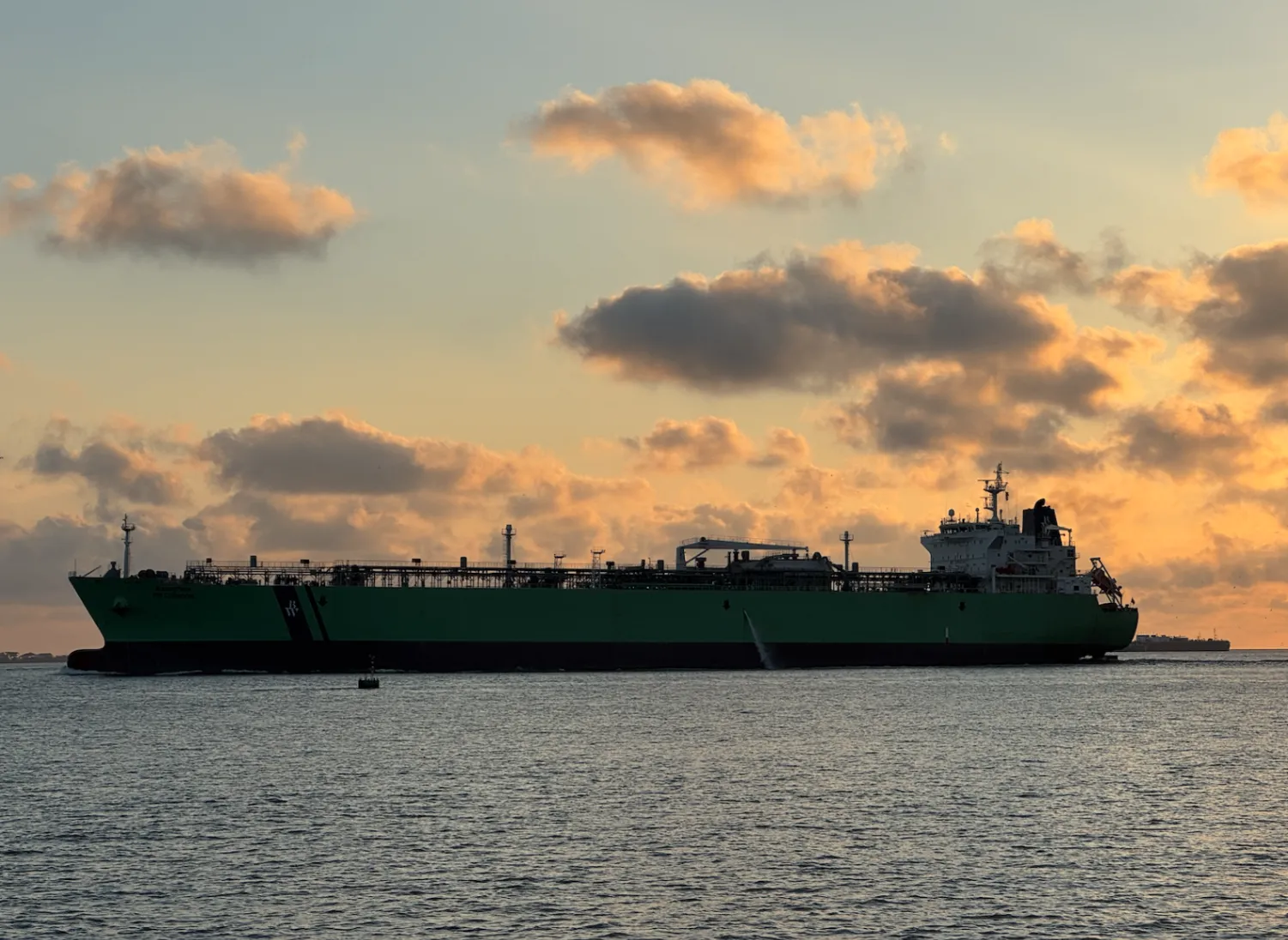
I took the photo in this article on the Texas coast. I was reading about a tech startup going under because it had no moat when this tanker came past.
What a moat is
A moat is whatever makes it hard for someone else to take your customers. For a long time, software had one of the best moats in business.
- Code was expensive to write. A competitor needed years and a big team to catch up.
- Switching was painful. Once a company ran on your software, moving off it took months.
- Margins were high. Selling one more copy cost almost nothing.
AI has weakened all three. A small team can now build in weeks what used to take years. Companies are building their own internal tools instead of paying for another subscription. When anyone can make the product, the price falls toward what it costs to make, and for software that's close to zero.
I wrote about the data side of this in legacy SaaS is worth its data. Software that owns unique data or models can still be valuable. I explained why in the Listen Labs and Airtable deals. A database with a dated interface for humans is a different story.
The startup I was reading about
The startup in the article didn't fail because the team was bad. It failed because anyone could copy what it sold. Customers had cheaper options a few clicks away, and some of them were building the same thing themselves.
That's what a commodity looks like. When you can't tell one product from the next, the buyer picks the cheapest, and the cheapest keeps getting cheaper.
Meanwhile, the tanker in front of me couldn't be copied by a weekend project. It takes years to build a ship like that, and there are only so many of them.
Physical assets are hard to copy
A tanker, a refinery, a pipeline and an oil field all have one thing in common. You can't spin one up with a prompt.
- They take years to build. New supply can't show up overnight when demand rises.
- They need permits and capital. That keeps the number of competitors small.
- The world runs on them. Every data center, factory and car needs energy that has to be produced and moved.
That's a physical moat. It doesn't depend on being cleverer than the next team. It depends on owning something that's scarce.
Software going down means energy going up
Here's the part that made the switch obvious to me. The same AI that makes software cheap uses a lot of electricity.
The International Energy Agency's Energy and AI report projects that electricity used by data centers worldwide will more than double by 2030, to around 945 terawatt-hours. AI is the biggest driver of that growth.
Every time a company replaces a software subscription with an AI agent, that work still runs somewhere. It runs in a data center that needs power. Software value moves toward zero and the energy bill moves the other way.
That's why I'd rather own the energy than the software being replaced.
What I own
I own Scorpio Tankers, which operates a fleet of product tankers that carry refined fuels, and Chevron, one of the largest energy companies in the world. I also own other energy companies.
I don't own legacy SaaS. I don't think the old model of charging per seat for software humans click through will hold up as agents do more of the work.
This is how I'm investing my own money. It isn't advice for yours. Energy prices move up and down, shipping is cyclical, and any single company can have a bad year. Do your own work.
What this means for founders
If you're building a software company, the question to ask is simple. What do you own that someone with AI can't copy in a month?
- Unique data that nobody else has and that gets better as you grow.
- Distribution you've earned, like customers who trust you and talk about you.
- Something physical in the real world: equipment, locations, inventory or licenses.
- Deep relationships in an industry where trust takes years to build.
If the honest answer is nothing, that's worth knowing now. You can still build a good business. You just shouldn't expect it to be valued like software was ten years ago.
You can test this with my free valuation tool, which looks at what makes revenue more or less valuable. Or read what your company is worth for the longer version.
The tanker kept moving
By the time I finished the article about the startup, the tanker was past me and heading out to sea. It would be doing the same job next year and the year after that.
I can't say that about most software companies right now. That's why my money is in energy. More of my thinking on money and markets is on the Investing page.
What you can still count on
I used to think telecom and your phone bill were essential. Then SpaceX said it would become a mobile carrier, and Verizon, AT&T and T-Mobile had their worst days in decades. I wrote about it in why even dividend stocks aren't safe.
What you can count on are the fundamentals of life: food and water, energy and power, plumbing and lights, clothing, and gas stations that may become charging stations. Those are the kinds of businesses I want to own right now.
Where the value goes when software heads to zero
Money has to go somewhere. Value has to chase something. As the cost of software falls toward zero, I think the value moves to distribution, human relationships and physical things.
Look at Costco and Buc-ee's. They serve almost everything under one roof, and they own the relationship with the customer. That's hard to copy with code.
Software has to go to zero, and the value of distribution, human relationships and physical things has to go up.
That's why I'd rather own things that are hard to build, like tankers, pipelines and the companies that run them, than software anyone can rebuild with an AI agent. For the software side of this, see Legacy SaaS Is Worth Its Data.
What would make me sell
Every position needs a reason to exit. These are the things I watch.
- Oil demand falls faster than expected as electric vehicles and renewables grow.
- New tanker supply floods the market and pushes rates down.
- Shipping routes reopen or shorten, so ships travel fewer miles.
- Energy companies spend their cash on expensive projects instead of returning it to shareholders.
The link to AI
This view is tied to what I see in software. AI makes code cheaper to write, which puts pressure on many software businesses. It also needs huge amounts of power and physical infrastructure that take years to build. I wrote about the software side in the last castle of SaaS and Legacy SaaS Is Worth Its Data.
Again, this is my own money and my own view. It isn't advice. Do your own research before you buy anything.
If you're building something ambitious, let's connect on LinkedIn.
Related reading
Follow what I'm building and backing
I post on LinkedIn and X about the companies I back and the products I build.
Join 2,219 people following along.