Deep dive
Is AI Propping Up the US Economy? What Business Owners Are Telling Me
Keith Brown · Founding Partner, Outperform Ventures
Oct 17, 2026 · 5 min read
Business owners using AI well are running with far fewer people. Owners who aren't are struggling. Both groups matter, and the companies that use AI to make their people better have the best shot at coming out ahead.
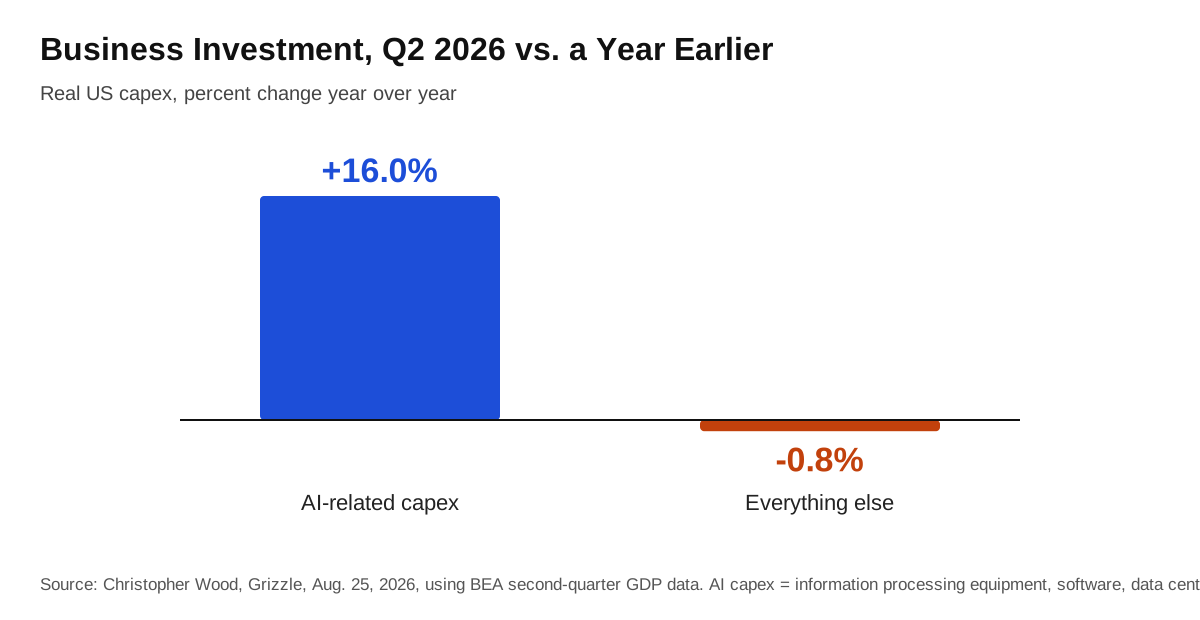
AI is carrying a big share of US growth right now. In the second quarter of 2026, AI-related business investment contributed about 1 percentage point, or 48%, of US real GDP growth of 2.1%, according to Christopher Wood's analysis of government data. Outside of AI, business investment was slightly down from a year earlier.
That number matches what I hear when I talk with business owners. The ones using AI well are letting people go at an alarming rate. The ones not using AI are struggling. Both stories are true at the same time.
The technology is not replacing a single job but acting as a 'general labor substitute for humans.'
I've written about where I'd put money instead of the Anthropic IPO. This article is about what's happening on the ground, inside real companies, and what I think owners can do about it.
How much of US growth comes from AI?
Estimates vary, and that's worth saying up front. Wood's figure counts all AI-related investment. J.P. Morgan Asset Management nets out imported hardware and puts AI's share at roughly one-fifth of growth over the past year. Either way, AI spending is one of the biggest things moving the economy.
The split is easy to see in business investment. AI-related capex was up 16% from a year earlier in the second quarter, while everything else was down 0.8%.
Are we already in a recession without AI?
I think the parts of the economy outside AI are already in a recession. Some of the data points that way. Eric Basmajian of EPB Research argues that AI investment is masking a weaker economy, and that the cyclical sectors, like housing and manufacturing, are still struggling.
Not everyone agrees, and it's fair to share the other side. Chicago Fed President Austan Goolsbee told Yahoo Finance that even without AI, the economy would not be in recession. His point is that AI is competing with other industries for the same electricians, land and components, so a slowdown in AI could free those up.
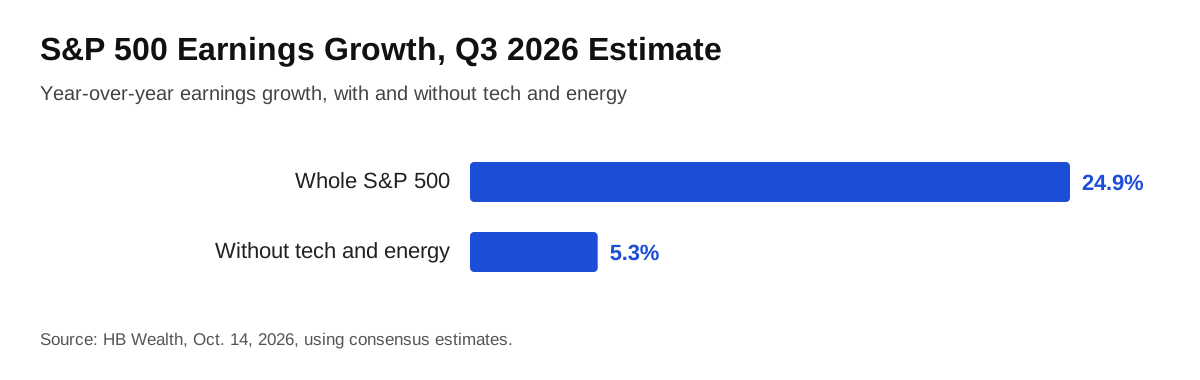
Earnings tell a similar story. HB Wealth estimates tech and energy will drive 85% of S&P 500 earnings growth in the third quarter. Leave those two sectors out, and growth drops to about 5.3%. Many companies are still growing, just a lot more slowly than the headline suggests.
What business owners using AI are doing
The owners who've figured out AI are moving fast. Work that used to take a team now takes one or two people and the right tools. Customer support, marketing, research, reporting and a lot of software work are getting done with far fewer hands.
I've seen this up close. I wrote about it in how Bending Spoons runs SaaS without thousands of engineers and in Kroger's corporate cuts. Powell sees it too. He said getting hired is hard, and that "there's also probably something more longer-term, more secular, that's happening and around technology and AI."
These companies are getting more profitable. That's good for owners and investors. It's hard on the people whose jobs go away, and on the communities that depend on those paychecks.
What business owners not using AI are facing
The owners who haven't started are in a tougher spot. Their costs are going up, and some of their competitors can now do the same work for less. Many of them tell me they're cutting budgets, holding off on hiring and waiting to see what happens.
Waiting feels safe, but it isn't. The gap between companies that use AI well and those that don't gets wider every quarter.
Why Anthropic's market size should get our attention
Anthropic is reportedly preparing to tell investors its total addressable market is more than $30 trillion, roughly equal to the entire GDP of the US. According to the report, the company bases that estimate on the full scope of work AI models could complete.
Think about what that means. Enterprise software made workers more productive. A market sized at the scale of the whole economy assumes AI can do a large share of the work people are paid to do today. That should get all of our attention, whether you're an owner, an employee or an investor.
I don't think that outcome is guaranteed. But leaders should plan for a world where it's at least partly true.
What leaders can do now
None of this calls for panic. It calls for clear thinking and steady action.
- Start using AI this month. Pick one process, like support replies, reporting or proposals, and learn what AI can do there. The owners who wait will have the hardest time catching up.
- Use AI to make your people better. The best results I see come from teams that keep their best people and give them better tools. I wrote about how in using AI skills to get better at your job.
- Help the people you let go. If AI changes your team, give people time, honest notice and real help finding their next role. How you treat them is part of your reputation.
- Own productive assets. Digital models keep getting cheaper. Real businesses, energy and land are harder to copy. I made that case in what Elon Musk's net worth teaches about ownership.
- Keep debt in check. If the AI boom slows, owners with less debt will have more room to adjust.
Where this leaves us
AI is holding up a big part of the economy, and it's changing how companies work faster than most people expected. That's uncomfortable, but it's also a chance for owners who move now to build stronger, leaner companies.
Talk to your team about it. Try the tools yourself. Then decide what kind of company you want to be when the dust settles.
Disclosure: I own Tesla and Meta stock and an investment in SpaceX, which owns xAI. This is my view, not investment advice.
Related reading
Get my monthly newsletter
One email a month with what I'm writing and working on.
One email a month. Unsubscribe anytime.