Deep dive
Elon Musk and Anthropic Are Giving Away Shares Because AI's Gains Aren't Reaching Everyone
Keith Brown · Founding Partner, Outperform Ventures
Oct 19, 2026 · 6 min read
AI is making the people who own it richer, fast, while people with only a paycheck fall behind. A SpaceX share for every child and Anthropic's fund are a step in the right direction, not a fix. I think these companies see something coming that the rest of us don't yet.
AI isn't benefiting all of society equally. The people who own AI companies and their stocks are growing fast. People with only a paycheck are falling behind. This weekend, two of the most valuable AI companies in the world seemed to admit it.
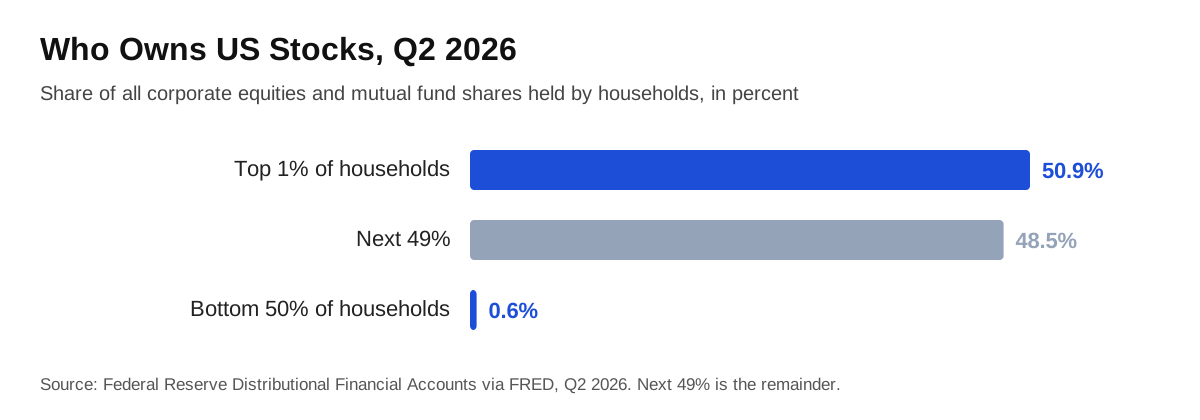
Elon Musk says he'll give one of his SpaceX shares to every kid in America next year. A day earlier, Anthropic said it would put 5% of its shares into a fund for the public good. I think both are a step in the right direction. Neither one fixes the K-shaped economy. According to the Federal Reserve, the top 1% of US households held 50.9% of all stocks and mutual funds in the second quarter of 2026. The bottom half held 0.6%.
The thing to worry about is a level of wealth concentration that will break society.
I wrote about the other half of this last week in Americans are wealthier than ever and giving less of it. Household wealth has roughly doubled while giving as a share of it has gone down. AI is speeding up that split.
What Elon Musk promised
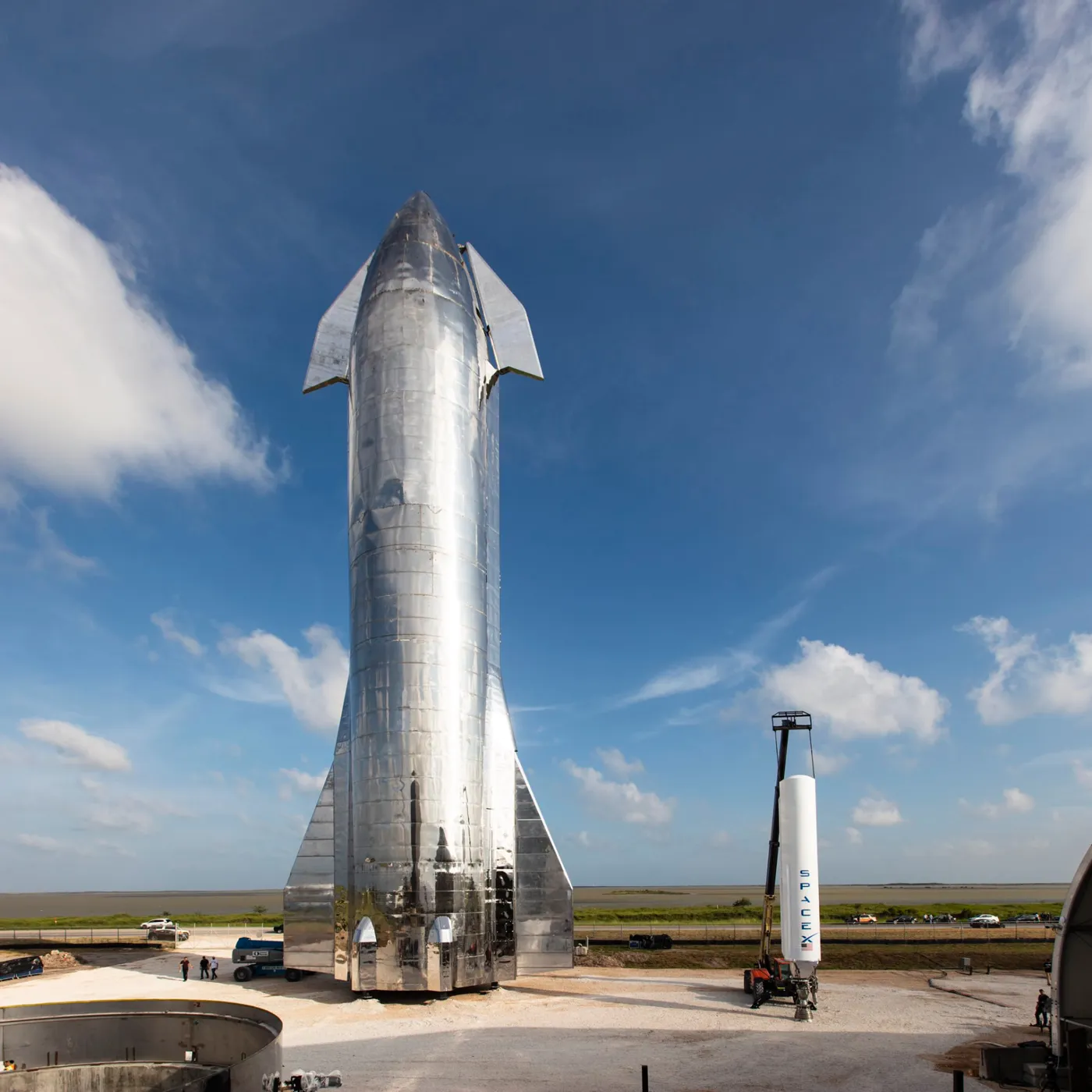
"Next year, I will give one of my SpaceX shares to every kid in America," Musk wrote on X early Monday. "This will be the first of many." There are just over 72 million people under 18 in the US, so at Friday's close of $146.03 a share, that's a gift worth a little over $10.5 billion, Axios calculated.
He hasn't said how it will work yet. It isn't clear which kids qualify, which share class they'd get or how shares would legally be held for minors, as Yahoo Finance noted. In July, SpaceX's Gwynne Shotwell pledged one share to each of more than two million new children's investment accounts.
A single share won't make anyone rich. What it does is make a child an owner. For a lot of families, it will be the first share of stock anyone in the house has ever held.
What Anthropic is doing
On Sunday, Anthropic announced the Anthropic Public Benefit Fund. Subject to stockholder approval, 5% of its shares go into the fund now. The board can add another 2% for every 50% increase in the company's value above a set baseline.
That's the part I like most. It's a fund that grows with the company. Anthropic says the fund could make large donations to nonprofits, or "direct distributions to specific populations," with workers hurt by AI as one example. None of the fund's equity can be used for lobbying or political giving. With its founders' pledge to donate 80% of their equity, roughly 20% of Anthropic's shares would be set aside for public benefit, Investing.com reported.
Musk didn't love the structure. "I recommend giving the shares directly to the public," he replied, according to the BBC. "This is what I will be doing." Those are two different paths, a fund and a direct gift. I think both are signaling the same thing.
The only way to balance the equation is ownership in things and ownership in assets.
Why a paycheck can't keep up
Stocks go up over time. Inflation eats away at earning power. If all you have is a paycheck, you're running to stand still, while the people who own things get carried forward.
You can see it in how people feel. The University of Michigan's consumer sentiment index fell to a preliminary 46.3 in October, down from 53.6 a year earlier. Its director, Joanne Hsu, said sentiment dropped steeply for lower-income consumers and "those with smaller stock portfolios." Meanwhile, the stock market sits near record highs.
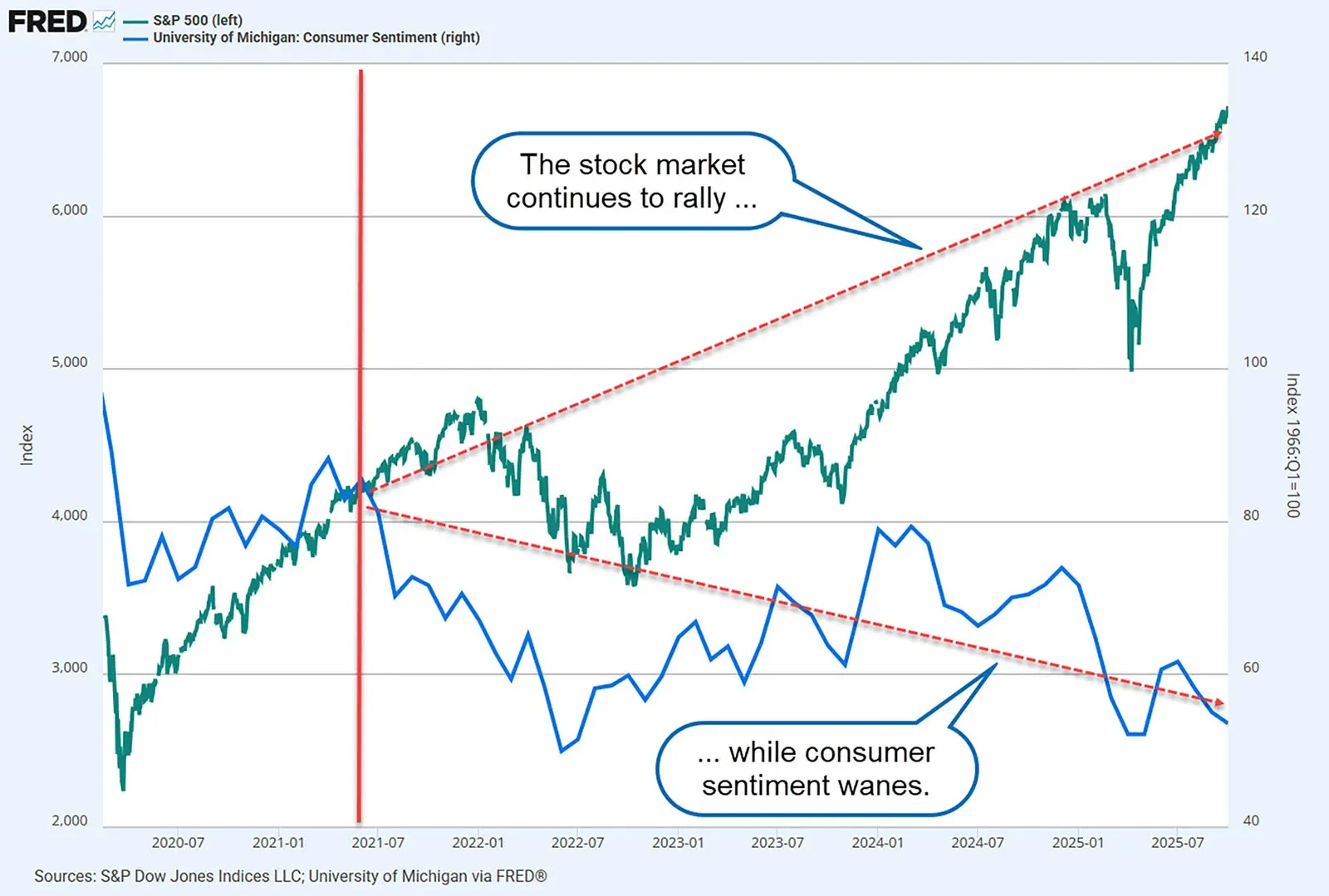
This is the K-shaped economy in one picture. The line for owners goes up. The line for everyone else goes down. I made the same point about the richest people in the world in what Elon Musk's net worth teaches about ownership. Almost none of that wealth came from a salary.
Why now?
I don't think these companies are doing this purely out of the goodness of their hearts. I think they see something the rest of us don't yet.
Anthropic says so in its own announcement. AI "could also cause instability for many workers," it wrote, and it has already committed $200 million to studying and addressing that. Amodei has warned that AI could eliminate half of all entry-level white-collar jobs, Fortune reported. Both companies are under scrutiny over what AI does to jobs, and Anthropic is preparing for one of the biggest IPOs in history.
Look at France this weekend. About 550,000 people protested high living costs and weakening public services, and almost 2,400 were arrested, CNBC reported. The Guardian described buildings set on fire and shops looted. Those protests aren't about AI. They're a warning about what happens when a lot of people feel the economy is leaving them behind.
If AI takes jobs faster than people can find new ones, more people will feel that way. The companies building AI have every reason to get ahead of it.
A step in the right direction
One share per child is worth about $146 today. A fund is only as good as how it's spent. Neither will close a gap this wide. But both point to the right idea: a share grows, and a check doesn't.
If a company's value doubles, a fund that owns part of it doubles too. A child who owns one share today owns more value in ten years if the company keeps building. That's how ownership can narrow the gap over time, instead of once.
I'm not investing in the Anthropic IPO, and I explained why in where I'd put money instead. That's a separate question from this one. On this, I give Anthropic credit for building the giving into the shares themselves.
What you can do with this
You don't need to be Elon Musk to act on it. If you have kids, open an investment account in their name and buy them a share of something you believe in. Let them watch it. The habit of owning matters more than the amount.
If you lead a company, give your people real equity and explain what it's worth. My guide to valuing stock options is a good place to start that conversation. If you're a founder, you can set aside a slice of your company for your community from day one. Thousands of companies have done that through Pledge 1%.
And if you're thinking about what you leave behind, think in assets as well as gifts. I wrote about that in how to build generational wealth that outlives you.
AI's gains won't reach everyone on their own. These two announcements are a start. Real change comes when far more people own a piece of what AI is building.
Disclosure: I own an investment in SpaceX, which owns xAI, a competitor to Anthropic. I also own Tesla and Meta stock. I don't own Anthropic. This is my view, not investment advice.
Related reading
Get my monthly newsletter
One email a month with what I'm writing and working on.
One email a month. Unsubscribe anytime.