Deep dive
Why the Energy Trade Can Work for Years
Keith Brown · Founding Partner, Outperform Ventures
Oct 20, 2026 · 7 min read
The war has gone on long enough to change the floor. Between damaged supply, low storage, tighter fuel trade and winter, I think higher oil prices are here for a long time, much like inflation after COVID.
I woke up this morning to more headlines about rising oil prices, and to cooler temperatures here in Texas. As we head into fall, I turned on the heater in our home. In Texas, air conditioning isn't optional in the summer. For a big part of the world, heat isn't optional in the winter.
Oil isn't coming down anytime soon. The war has been going on for a while now, and it feels like the floor in oil is higher and more structural. I think the energy trade likely works for a long time.
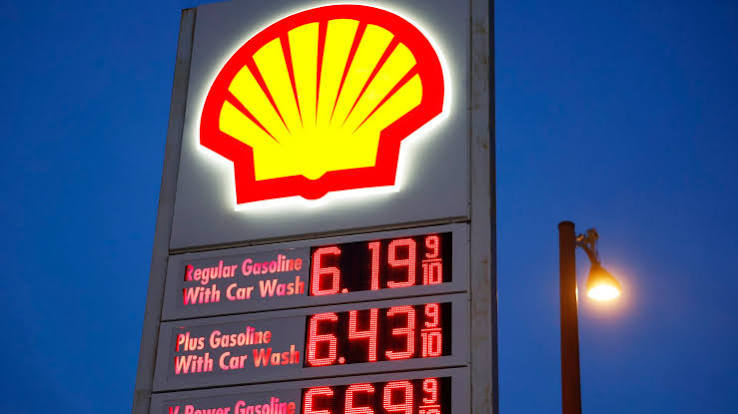
On Tuesday, Brent crude, the global benchmark, rose to $111.05 a barrel, its highest level since May. US crude topped $105 the same morning. The shipping tracker Kpler counted at least 18 vessels attacked over two weeks near the Gulf.
The greatest global energy security threat in history.
I've written before about why physical assets are hard to copy. You can't spin up an oil field, a refinery or a tanker with a prompt. When supply breaks, it takes a long time to fix. Here are the five reasons I think that's where we are.
1. The war has lasted long enough to do lasting damage
The Strait of Hormuz has been largely shuttered since the war with Iran began in late February. Gulf crude flows had recovered to about 80% of pre-war levels last month. Shipments of refined fuels like diesel and jet fuel stayed constrained, and new attacks on ships this week put even that recovery at risk.
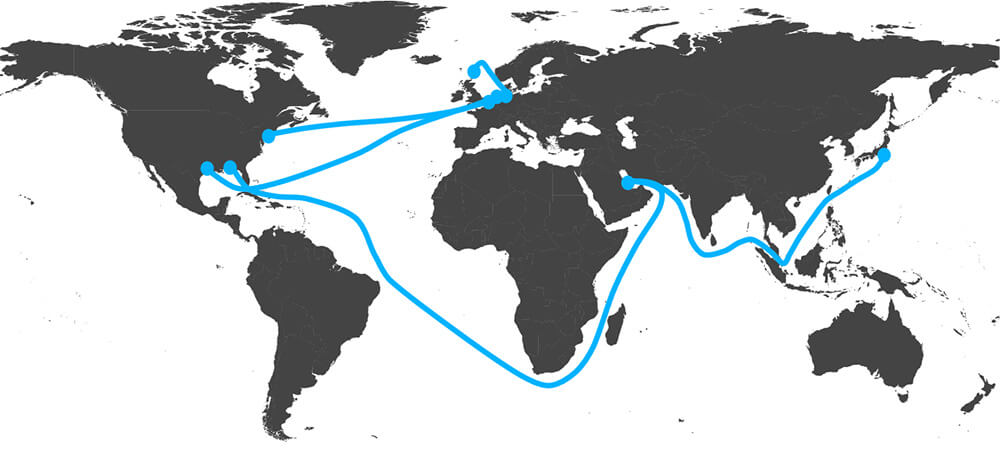
Birol warned in March that even after the strait reopens, damaged fields won't come back quickly: "It will be six months for some (sites) to be operational, others much longer." We're now about eight months in, and the strait still isn't open.
2. The world has to refill its tanks
In March, International Energy Agency members agreed to release 400 million barrels of oil and fuel from emergency reserves, about 20% of their total stockpiles. That bought time. It also means those reserves now have to be refilled.
Bank of America made the same point in May about shipping. Analyst Ken Hoexter expected tanker rates to stay high because of "inventory replenishment needs, even as/if hostilities with Iran end." Even peace doesn't empty the order book.
3. Trade is pulling fuel off the market
On Oct. 1, Reuters reported that Chinese refiners suspended oil product exports for October to protect their own stocks. China is one of the biggest suppliers of gasoline, diesel and jet fuel to Southeast Asia and Australia.
In the wider context of global diesel shortages, China's diesel export suspension is a blow to the Atlantic Basin balances.
When one big supplier holds fuel back, buyers look for replacement barrels somewhere else. That pulls cargoes away from other markets and lifts prices far beyond the countries that lost the supply.
4. Winter is here, and heat isn't optional
The International Energy Agency found that buildings drove almost 70% of global gas demand growth in 2025, mostly because of colder winter weather in Europe and the US. That was in a normal year. This year Europe starts the season with less in storage and higher prices.
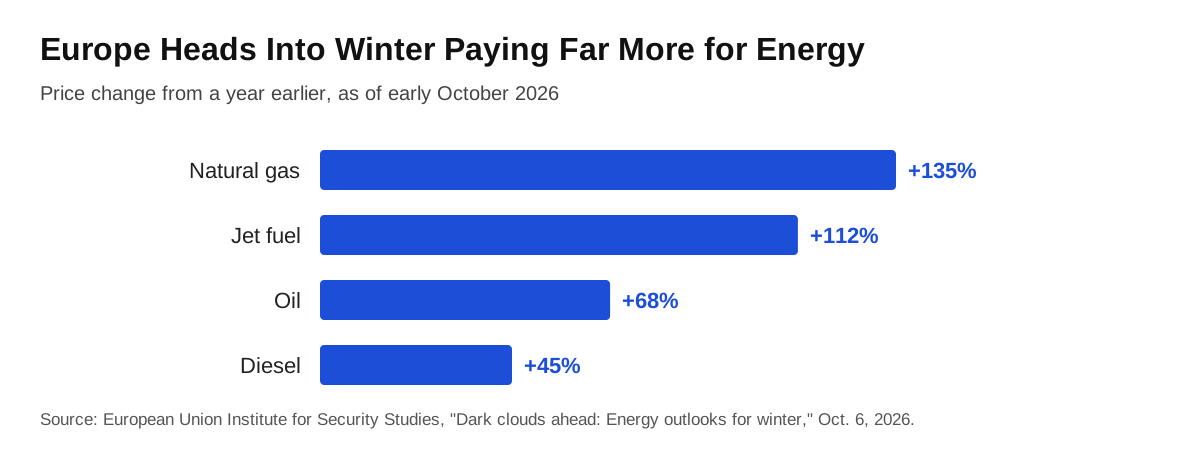
- Europe's gas storage is at its lowest level since 2022, and the European Commission has asked for cuts in gas and electricity use for the first time since February 2022.
- Europe ended the third quarter with storage just under 72% full, which the Oxford Institute for Energy Studies says points to a tight winter and a hard refill next summer.
- Asian buyers will compete with Europe for the same shipments of liquefied natural gas, and Wood Mackenzie says spot prices could spike to $40 per million British thermal units.
Heating oil and diesel come from the same part of the barrel. When gas is short and expensive, every fuel that keeps people warm gets bid up with it.
5. The floor in oil looks higher
Oil started 2026 near $62 a barrel. The physical price of Brent, tracked by the US Energy Information Administration, more than doubled to $138 by early April. It averaged about $95 so far this year, compared with $69 for all of 2025.
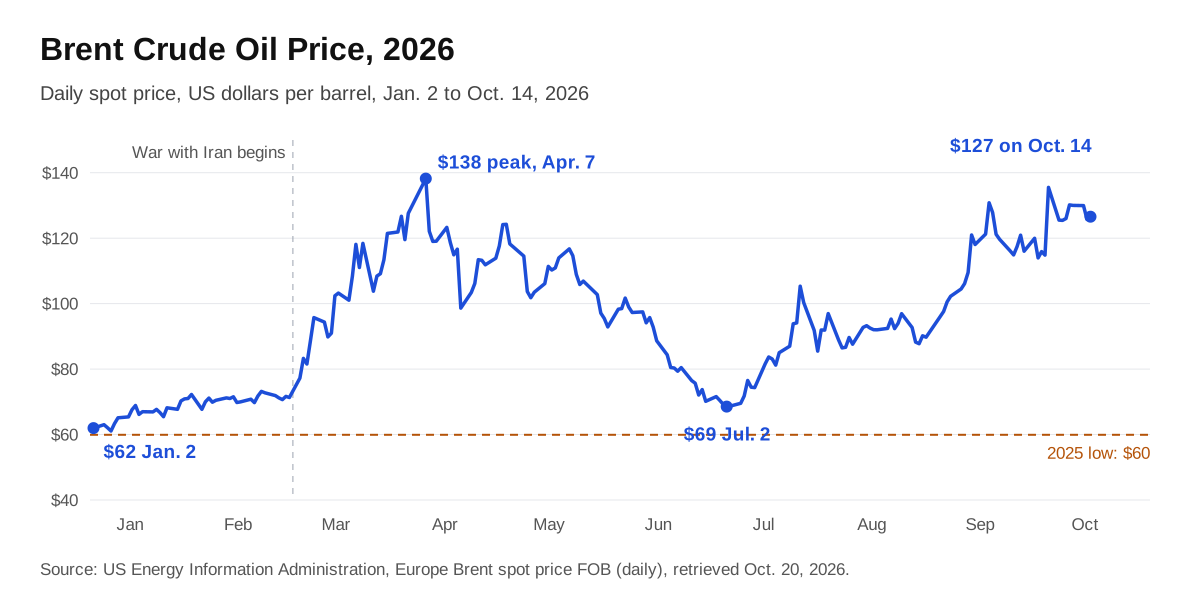
The summer dip is the part I watch most. In early July, when the market thought the worst was over, Brent fell to $69. It never got back to last year's low of $60. Then it climbed to $127.
When the good news can't push prices back to where they started, the floor has moved. That's what I mean by structural.
This looks like inflation after COVID
Inflation during COVID was supposed to pass. It didn't. After enough time, it became structural, and prices never went back.
It is probably a good time to retire that word.
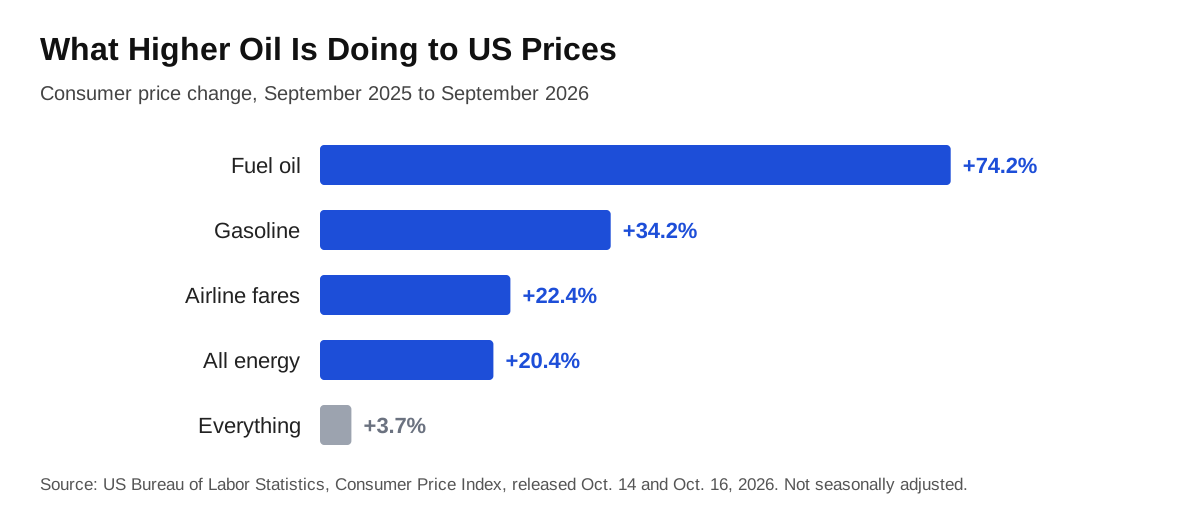
I think energy is at that same point. US consumer prices rose 3.7% over the year through September. Energy prices rose 20.4%, and gasoline alone accounted for over half of September's monthly increase.
It's a different picture from tech. Last week AI stocks got crushed, and I wrote about why that felt familiar in Andrew Ross Sorkin's 1929. Oil is moving the other way for a simpler reason. People need it, and there's less of it to go around.
What I own
I've owned Chevron and Scorpio Tankers for most of 2026. They're the best-performing stocks in my public portfolio this year. Chevron is one of the largest oil producers in the world. Scorpio runs a fleet of product tankers that carry refined fuels like diesel and gasoline.
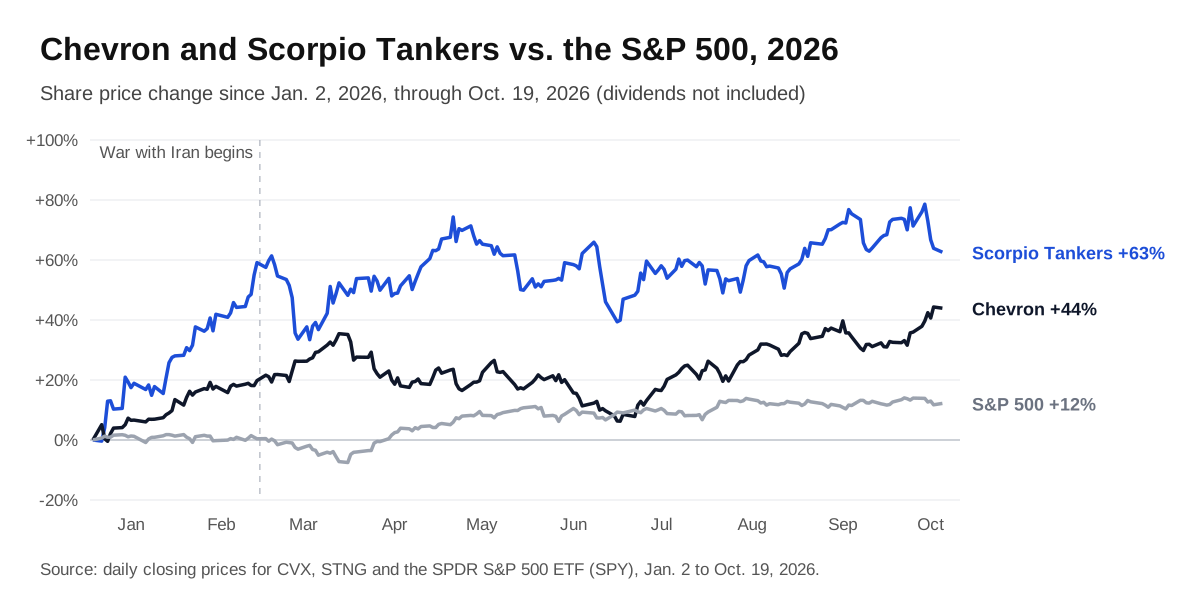
Chevron hit a new 52-week high of $225.67 on Monday. Scorpio's second-quarter earnings per share rose 231.9% from a year earlier as tanker rates climbed. One owns the oil. The other gets paid to move the fuel made from it.
Private energy for the long term
Public stocks aren't the only way to own energy. I know the team at Fortress Energy, an independent energy investment firm in Midland, Texas. They invest in mineral and royalty interests and leasehold in the Permian Basin.
If you want private exposure to energy for the long term, they're a good group to talk to. Owning the minerals under the ground is about as physical as an asset gets.
What could prove me wrong
I try to be truthful with myself about what would change my mind. These are the things I'm watching:
- A peace deal. Prices fell on Monday on reports of a breakthrough in talks between the US and Iran, before climbing again.
- Shipping costs easing. Crude tanker rates are down double digits from their early-October highs, according to Lloyd's List.
- Higher interest rates. Traders see rising odds that the Federal Reserve raises rates again this year, which would slow spending on everything, fuel included.
- A mild winter. Weather is the one force no one controls. A warm December would take a lot of pressure off.
Any one of these could pull prices down for a few weeks, the way July did. I don't think they move the floor back to where it was.
What leaders can do now
I wrote about how much of the economy is leaning on AI spending. Higher energy costs land on top of that, on every business that ships, drives, heats or cools anything.
- Make higher energy your base case. Budget on today's prices, not last year's.
- Ask your suppliers about surcharges now. Freight and delivery costs usually rise a few weeks after oil does.
- Lock in what you can. If you can fix a price on fuel, heating or shipping, look at it this month.
- Price your own products for it. If your costs are going up for good, your prices may need to follow.
For longer-term planning, I shared how I think about it in how to plan five years out when AI changes everything. Keep the vision long and the plans short.
The heater in our house will run most of the winter. I think a lot of people will feel that this year, and well after it. The question worth asking now is what $110 oil costs your business, and what you'll do before it shows up.
Disclosure: I own Chevron and Scorpio Tankers stock. I know the team at Fortress Energy but have no money invested with them. This is my view, not investment advice.
Related reading
Get my monthly newsletter
One email a month with what I'm writing and working on.
One email a month. Unsubscribe anytime.