Deep dive
Own Assets or Be Left Behind
Keith Brown · Founding Partner, Outperform Ventures
Oct 23, 2026 · 6 min read
Elon Musk's $1 billion Skydance investment is the latest example of owners putting their ownership to work. The gap keeps growing. Pay yourself first, take some off the table, and own boring companies alongside AI.
For many years I drove a used Kia or a used Honda. I paid between $3,000 and $5,000 for each one, owned it outright and did all the repairs myself. With no car payment, I could put $500 a month into a mix of the stock market, savings and bitcoin.
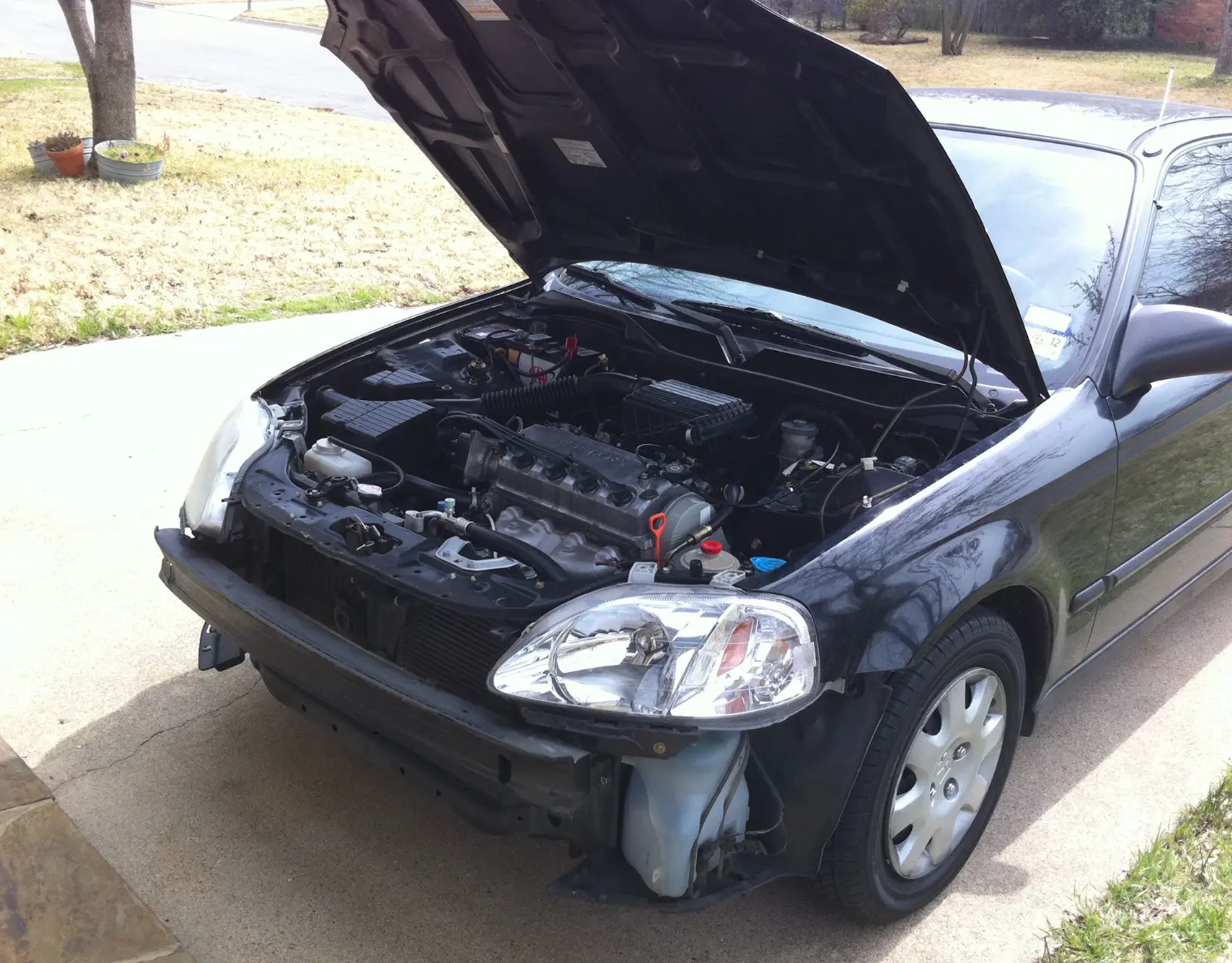
That habit is the most useful money lesson I know, and it matters more today than when I started. If you don't own assets, the gap will leave you behind. I wish it weren't true, but that gap keeps growing.
In 1971, 61% of Americans lived in middle-class households. By 2023, Pew Research found, that share had fallen to 51%. More people moved up than down, but the middle class now holds a much smaller share of the country's income.
A part of all you earn is yours to keep. It should not be less than a tenth no matter how little you earn. It can be as much more as you can afford. Pay yourself first.
Last week I wrote about what Elon Musk's net worth teaches about ownership. This week's news shows the next step. Owners use what they own to buy more of it.
What Elon Musk did with Skydance
On Thursday, Semafor reported that Musk invested roughly $1 billion in Skydance, the company formed when Paramount bought Warner Bros. Discovery. Skydance carries nearly $80 billion in debt and is working toward $6 billion in cost savings over three years, CNBC reported. It isn't yet clear whether the money came from Musk himself or through SpaceX, TheWrap noted.
The two families have backed each other for years. Larry Ellison, David Ellison's father, put $1 billion into Musk's purchase of Twitter in 2022. "How did Larry Ellison come up with some of the money to put into the creation of Skydance? Tesla stock," John Malone said at a conference this week, according to Semafor.
Musk moves ownership between his own companies too. In January, Tesla agreed to invest about $2 billion in xAI, and when SpaceX merged with xAI in February, that stake became SpaceX shares. Now Tesla and SpaceX are studying a merger of their own.
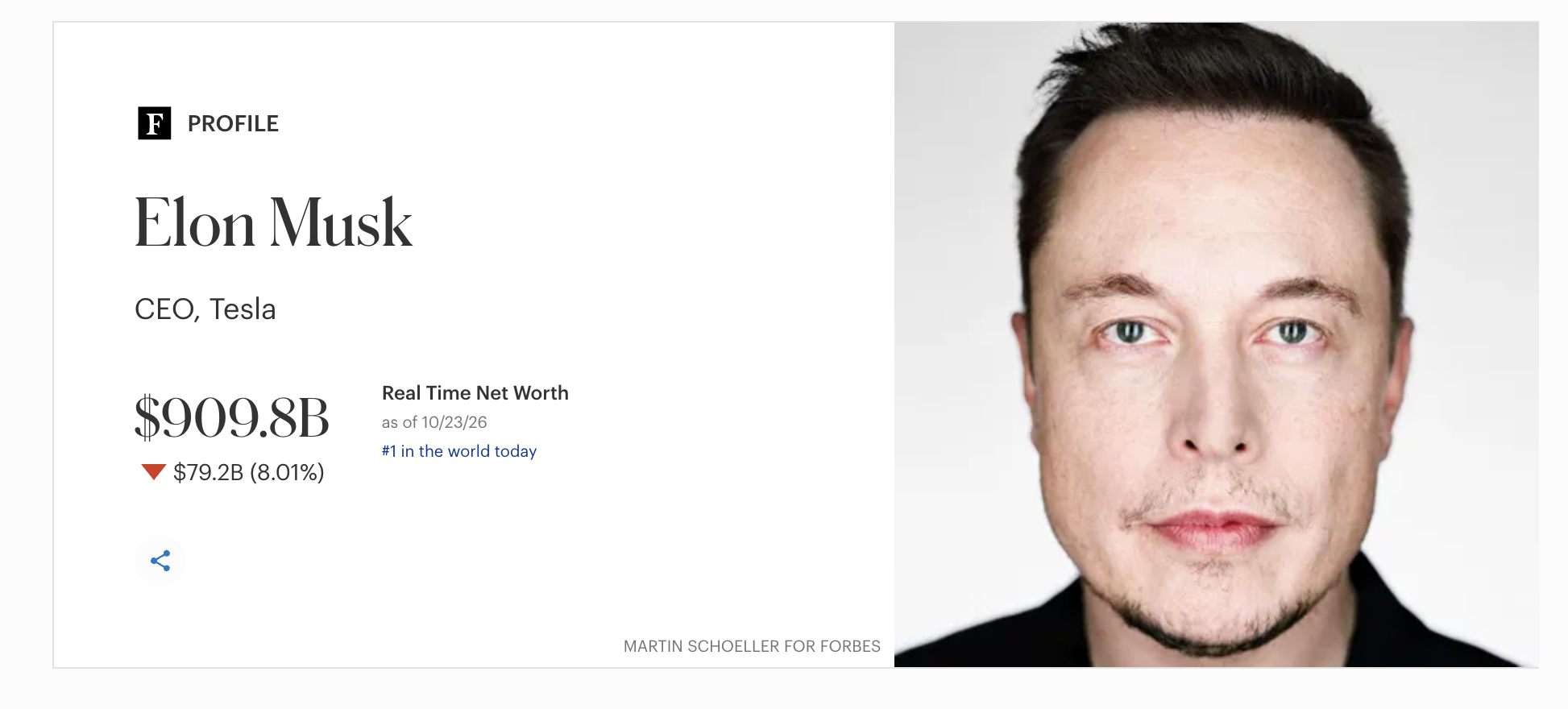
Regardless of your views of him, there's a reason he's the wealthiest person in the world. His wealth sits in ownership, and he keeps putting that ownership to work.
The same screenshot shows the risk. His fortune fell $79.2 billion in a day as SpaceX and Tesla shares dropped. Ownership moves in both directions, which is why the rest of this article is about doing it carefully.
Why does the K-shaped economy keep widening?
Economists call this split the K-shaped economy. One group climbs while the other stays flat or slides. Moody's Analytics found that the top 10% of earners drove 49.2% of US consumer spending in the second quarter of 2025, up from about 43% in 2020.
Moody's chief economist Mark Zandi pointed to surging stock prices and record home values. When the assets you own rise, you feel free to spend. A paycheck alone doesn't give you that lift.
Retailers see it in their results. "The majority of our share gains came from households making more than $100,000," Walmart CEO John Furner said in February. "For households earning below $50,000, we continue to see that wallets are stretched."
Reuters found the same pattern across companies. Ralph Lauren, Tapestry and American Express beat expectations on affluent customers, while PepsiCo and Kraft Heinz flagged pressure from lower-income shoppers.
Pay yourself first, even if it means a cheap car
A paid-off used car isn't glamorous. But every month without a car payment was another month I could invest. That $500 went to work before I had a chance to spend it.
The lesson comes down to three habits:
- Pay yourself first. Set up an automatic transfer on payday, before anything else gets spent. Start with an amount you can repeat every month.
- Take some off the table. When an investment has a big run, sell a portion and move it somewhere steadier. You keep part of the gain no matter what happens next.
- Do what you can to diversify. For me, that meant stocks, cash savings and bitcoin. Spreading your money can lower the damage from any one bad bet, though it can't prevent every loss.
Cutting one big expense is often the fastest way to find the money. A car is the obvious place to start. I wrote more about this in how lifestyle inflation eats every raise.
Is your 401(k) a bet on AI?
Most 401(k) money sits in an S&P 500 fund or a target-date fund. That feels diversified. Today, a large part of it is a bet on AI.
A JPMorgan basket of 41 AI-linked companies now makes up 49% of the S&P 500's market value. JPMorgan says no single industry has held that much of the market since the railroads of the 19th century. The ten largest companies alone are roughly 40% of the index.
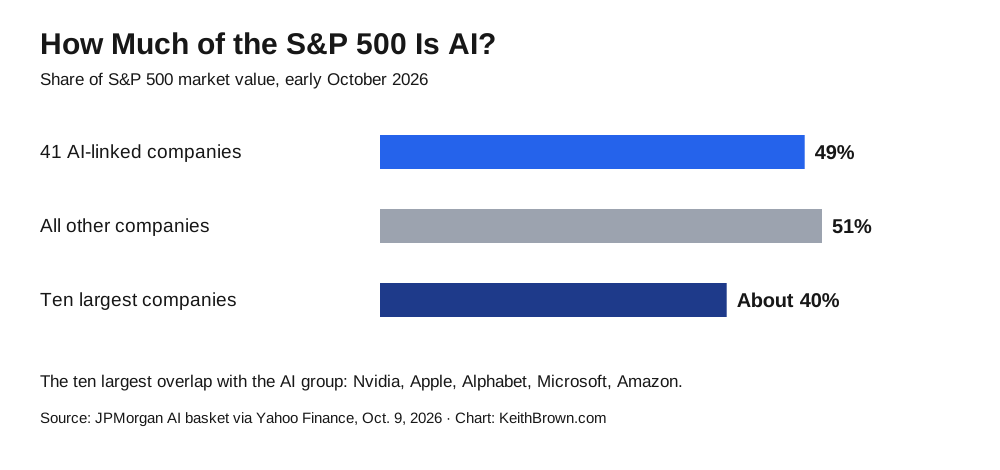
I'm optimistic about AI, and I invest in it. But many people hold AI through their index fund, their company stock and their own stock picks without noticing it's the same bet. If you work in tech, your paycheck may depend on AI as well.
I covered the bigger question in whether AI is propping up the US economy. Your own plan doesn't need an answer to that. It needs some of your money in businesses that rise and fall for other reasons.
Own boring companies too
On Thursday, WM was the best-performing company in my portfolio. Waste Management shares closed up 4.15% at $239.10 on Oct. 22. The same day, SpaceX fell 9.14% and Tesla fell 3.08% in a wider tech selloff.
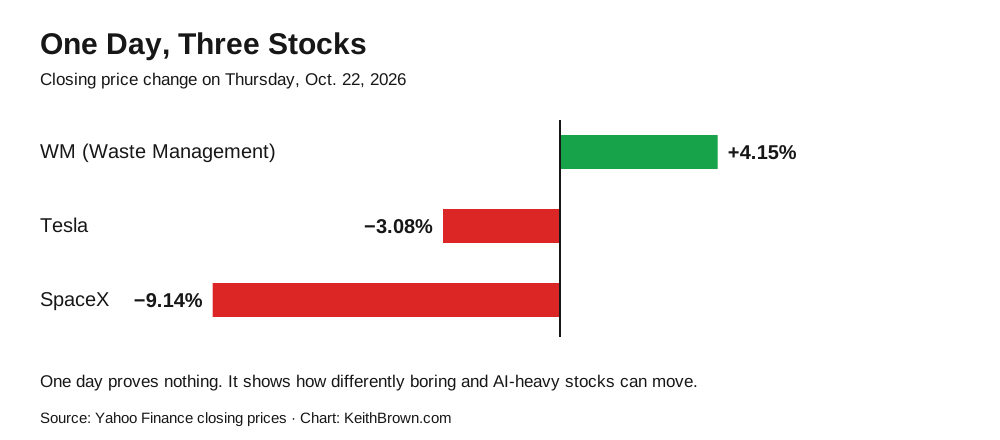
WM picks up trash. Homes and businesses need that every week, whatever happens with AI. In the second quarter, WM grew revenue 4% to $6.68 billion and returned more than $1 billion to shareholders.
Boring companies won't always beat AI stocks, and one good day proves nothing. Dividends alone don't make a stock safe either, as I wrote in why even dividend stocks aren't safe anymore. The point is to own some businesses that move for different reasons.
Look for services people pay for in good years and bad ones, like waste collection, utilities, groceries and insurance. Check what you already own first, so you don't add a second copy of a bet you already hold.
Start this month
You don't need Musk's money to think like an owner. You need a habit you'll keep every month for years. That habit is also how families start building generational wealth.
This weekend, open your 401(k) and brokerage statements. See how much sits in the biggest AI names, and add one boring company or fund if you have none. Then set up the automatic transfer, even if it means driving a cheap used car for a while.
I own Tesla stock, an investment in SpaceX (which now includes xAI), WM shares and bitcoin. This is general education, not a recommendation to buy any security. Your debts, savings, taxes and timeline matter.
Related reading
Follow what I'm building and backing
Updates on the companies I invest in, the products I build and what I learn along the way.
- New companies I'm backing through Outperform Ventures
- Products I'm building, as they launch
- What's working and what isn't, as it happens
Unsubscribe anytime.