Deep dive
I Turned 753 Pages of Startup Reports Into an MCP
Keith Brown · Founding Partner, Outperform Ventures
Nov 17, 2026 · 7 min read
I built a free MCP server so you can talk to startup benchmark data without filling out a form or digging through five reports.
Global venture funding reached $698.3 billion in the first nine months of 2026, an all-time annual high, according to CB Insights. The number of deals fell anyway. Almost every investor I know shared that chart. Very few of them read the other 231 pages.
The economist Herbert Simon saw this coming in 1971: "a wealth of information creates a poverty of attention." Every fall, the best startup data of the year arrives as a stack of PDFs. I download them, skim the summary, post the chart and move on. So does everyone else.
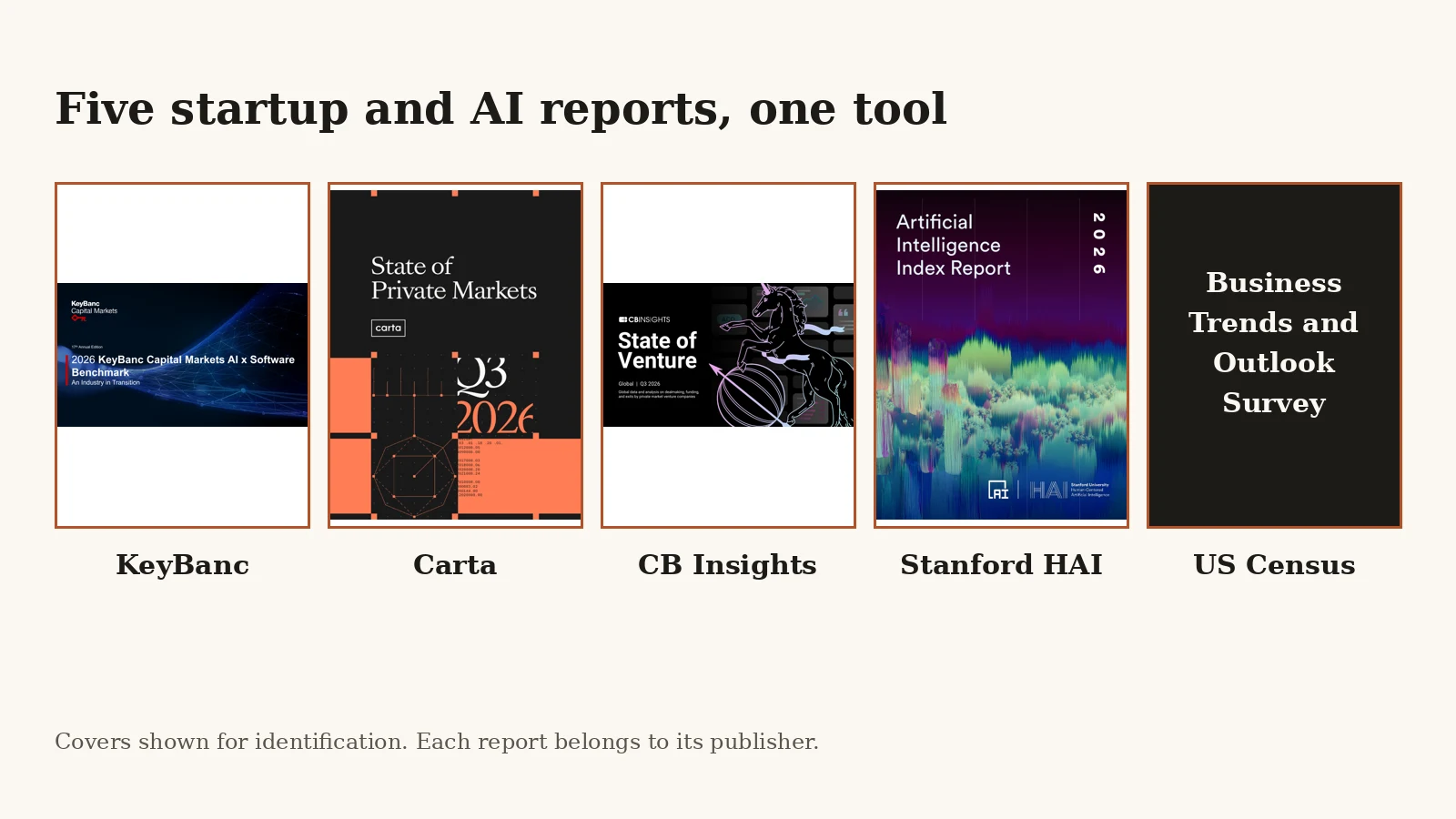
I pulled the key numbers into a free MCP server. Model Context Protocol is how assistants such as Claude, ChatGPT and Cursor can connect to outside data. You can ask what seed rounds are pricing at and get a number with a source, without handing over your email. I wrote about companies building their own software in software is moving from third party to first party. This is a small example of what that looks like.
Why I built it
Founders ask me the same questions every week. What's a good growth rate for our size? What are seed rounds pricing at? Is AI money drying up for early-stage companies? The answers exist. They're spread across five reports from five publishers, each with its own definitions and its own way of slicing the data.
I wanted to ask one question and get the number, the source and the page. And I wanted it to work inside the AI tools people already use every day, so nobody has to open a PDF to settle an argument in a board meeting.
A report can still bring in customers when the knowledge is free. If someone asks about seed valuations and gets a useful answer from Carta, they also get a link to Carta and a reason to read more. I'd like to see the people publishing these reports give readers that option themselves.
What's in it
Five sources, picked because each covers a different part of the picture. Two track where venture money goes, one tracks how software companies perform, one tracks AI worldwide, and one tracks how many American businesses actually use AI.
- 2026 KeyBanc Capital Markets AI x Software Benchmark: 81 private software companies on growth, retention, efficiency and AI.
- Carta State of Private Markets, Q3 2026: funding rounds, valuations, dilution and down rounds from startups on Carta.
- CB Insights State of Venture, Q3 2026: global venture funding, deals, mega-rounds and exits.
- Stanford AI Index 2026: AI investment, adoption, jobs and talent across countries.
- US Census Business Trends and Outlook Survey: the share of US businesses using AI, every two weeks, pulled from the Census API.
Key takeaways by report
CB Insights. The money is bigger and more concentrated than ever. Roughly 80% of third-quarter funding went to rounds of $100 million or more, which were just 299 of 6,913 deals. The average deal more than doubled to $49.8 million, while the median barely moved at $3.4 million. M&A exits fell to 2,353, the lowest since 2022.
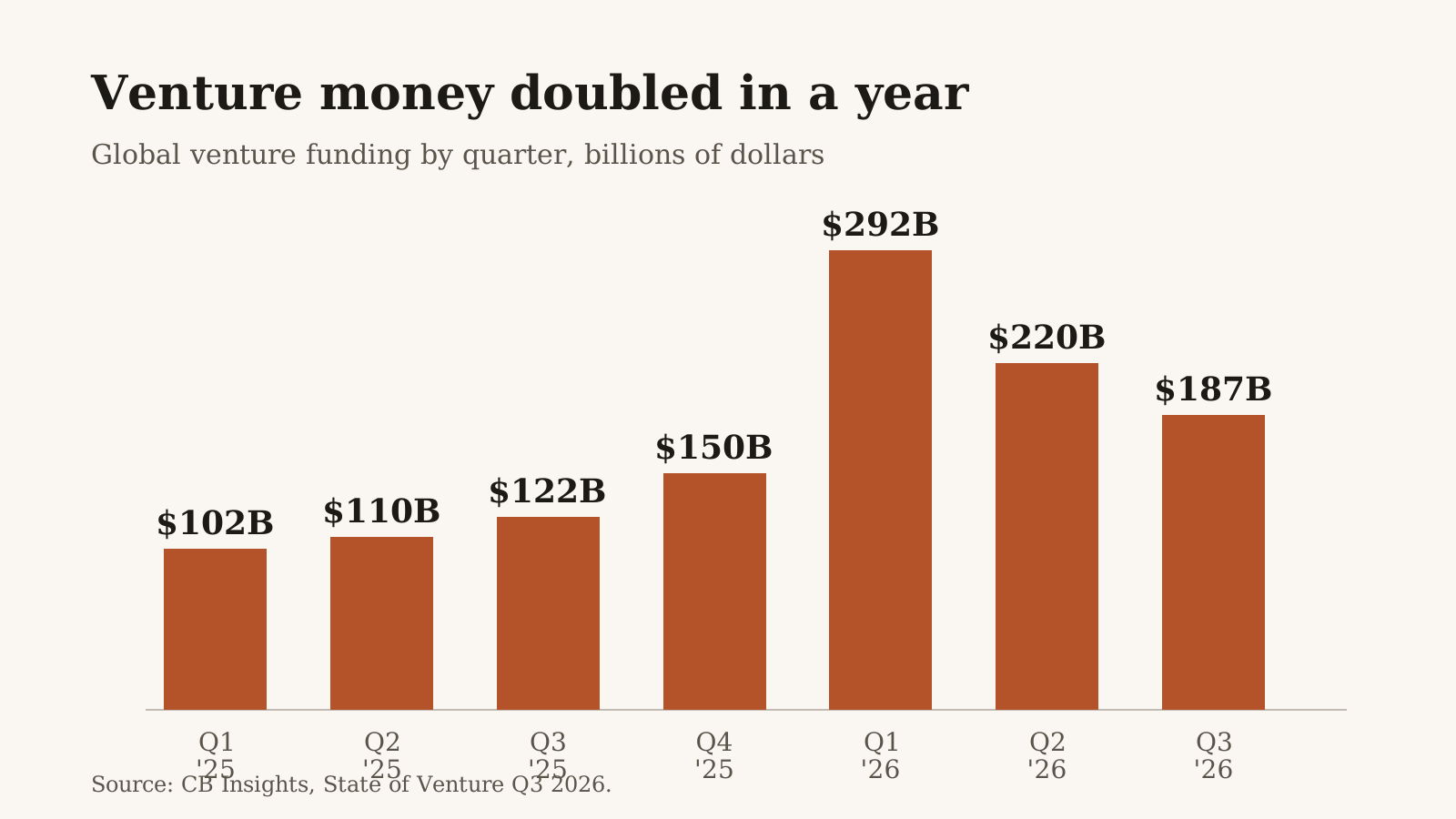
That gap between the average and the median is the story I'd tell any founder. A few companies are raising enormous rounds. Most companies are raising about what they did before, and fewer of them are getting funded at all.
Carta. Startups on Carta raised $49.3 billion in the third quarter across 1,179 rounds, while deal count fell 21% from a year earlier. The median seed valuation this year is $19.7 million, up 84% from 2021. Only 13% of rounds were down rounds, the lowest in four years. Founders are also giving up less: at 2026 rates, a company raising seed through Series D would give up about 53% of the company, against 66% at 2019 rates.
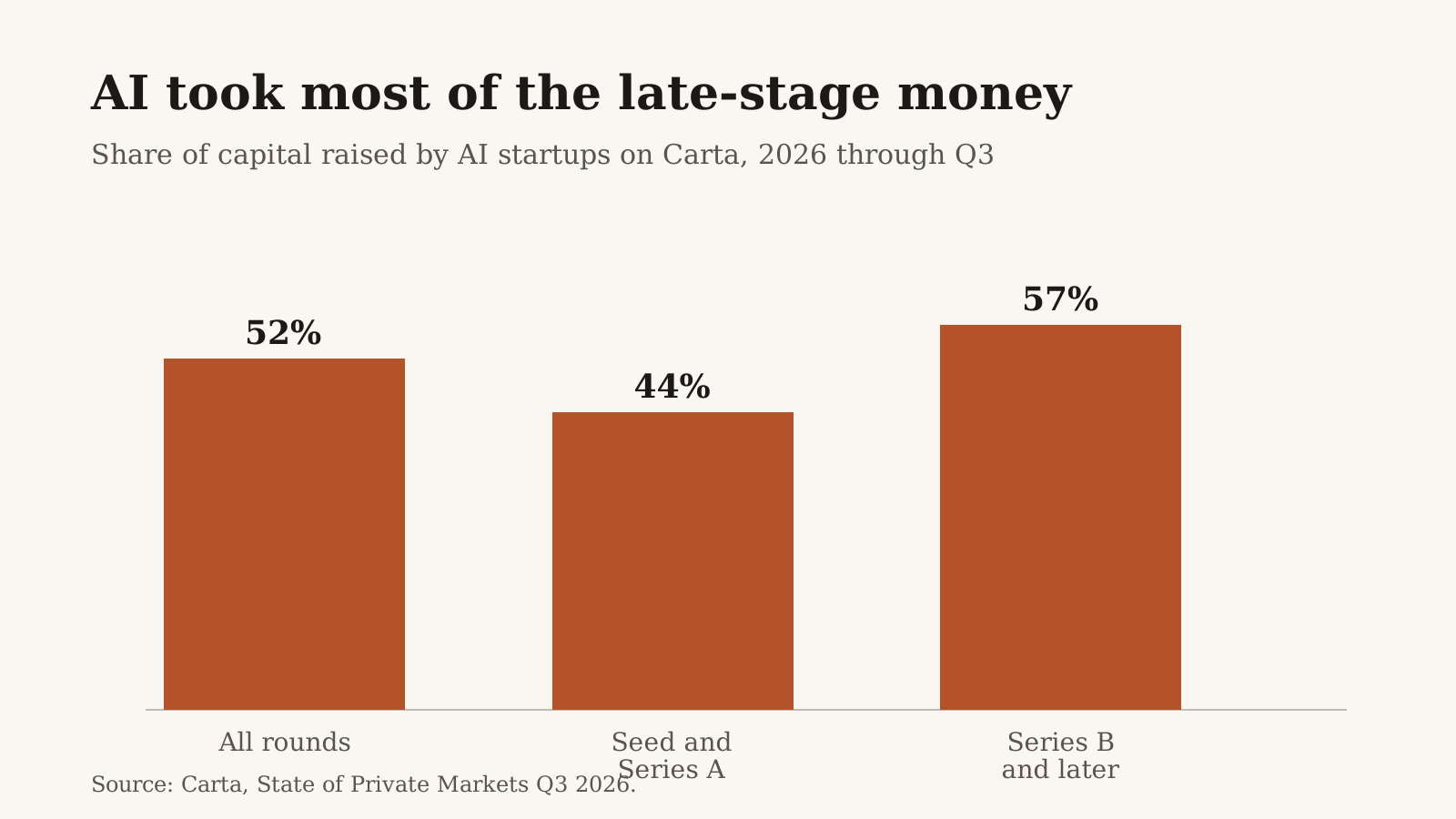
The detail I'd watch is the early-stage number. AI's share of seed and Series A money fell to 44% from 48% last year, the first drop since the generative AI wave began in 2022. Late-stage AI money hit a record 57%. The big checks are going to AI companies that already have traction.
KeyBanc. Private software companies grew ARR at a median 24% in 2025 and expect 23% this year, then 40% in 2027. Net dollar retention sits at 102%. CAC payback runs about 21 months. Companies selling AI as their core product grew 34% in 2025, against 22% for companies embedding AI into an existing product, but their median EBITDA margin was negative 12%.
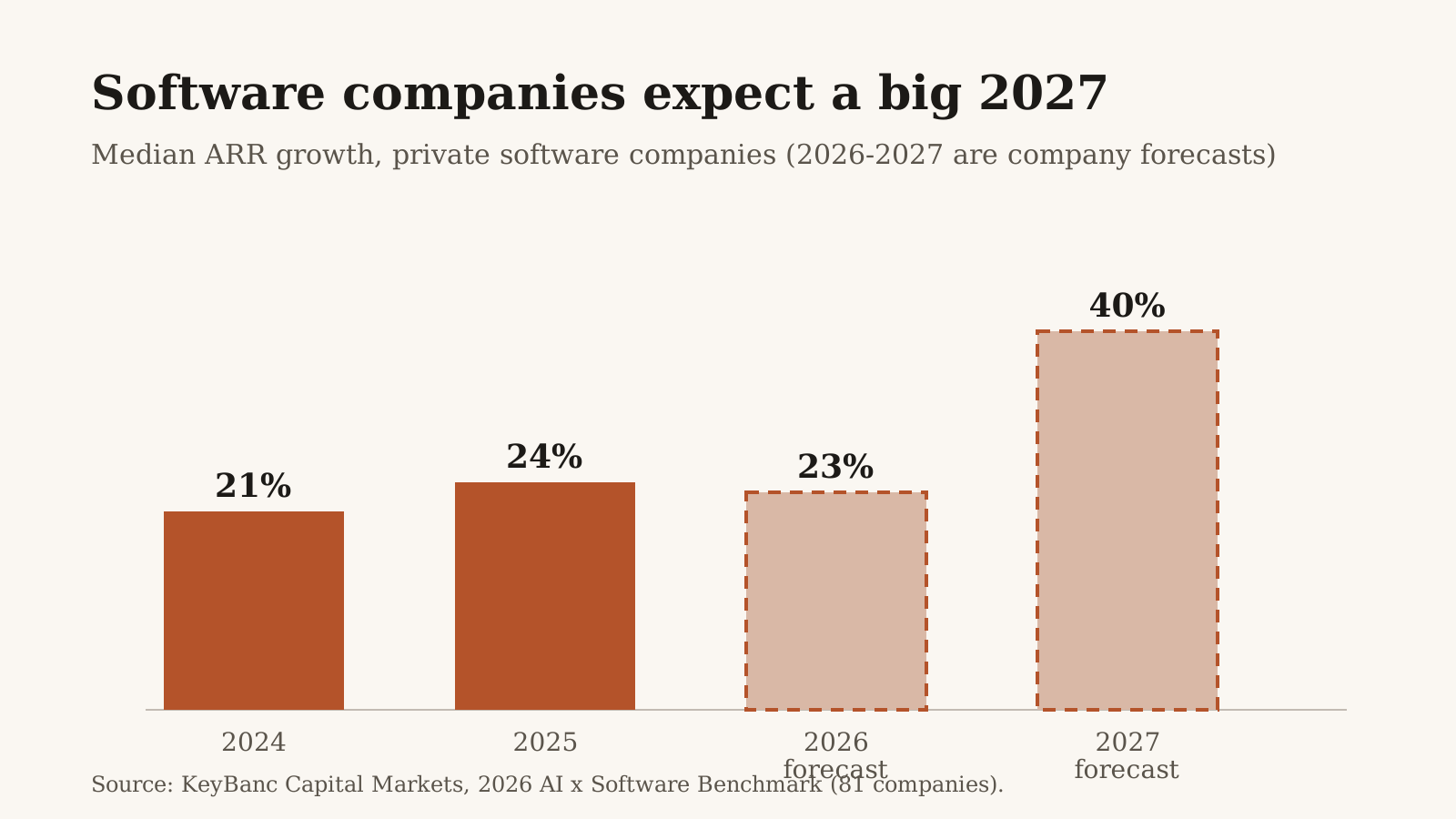
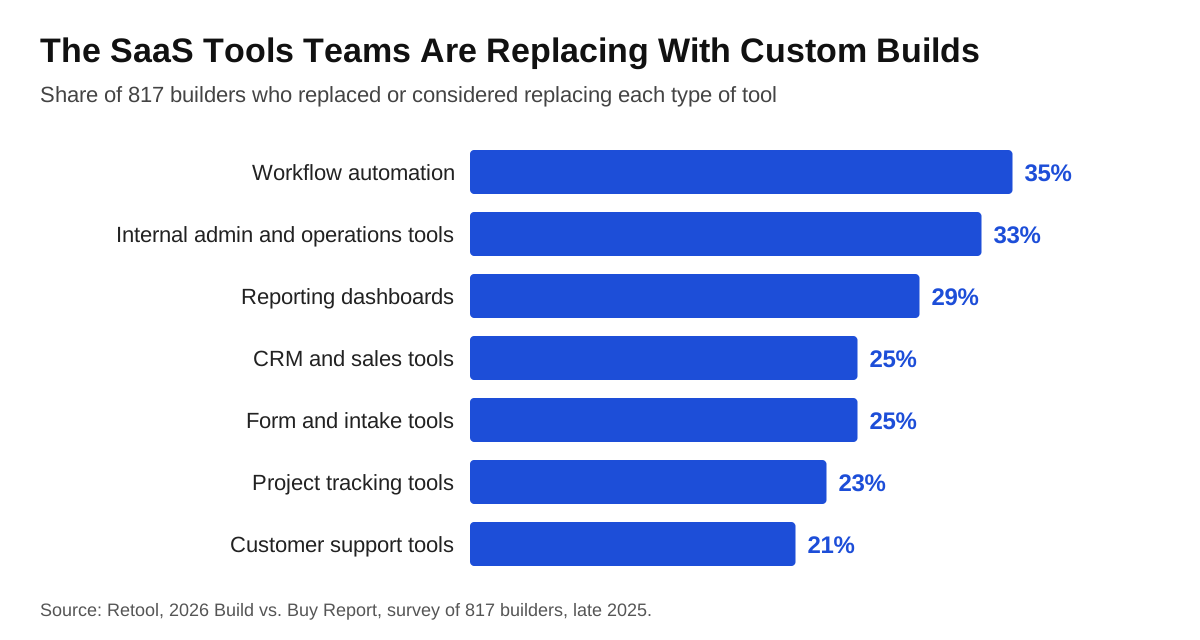
That 2027 forecast would be a big jump, and I'd treat it as a hope. The number in this report that stopped me was a different one. 43% of companies said their customers are already using AI coding tools to rebuild their features. As KeyBanc's Jackson Ader put it in the report, that's "probably a lot higher than the number of customers trying to build their own SaaS features 5 years ago."
Stanford AI Index. US private AI investment reached $285.9 billion in 2025, more than 23 times China's $12.4 billion. Organizational adoption of AI reached 88%. Generative AI hit 53% population adoption within three years, faster than the PC or the internet. And US software developers ages 22 to 25 saw employment fall nearly 20% from 2024, even as headcount for older developers grew.
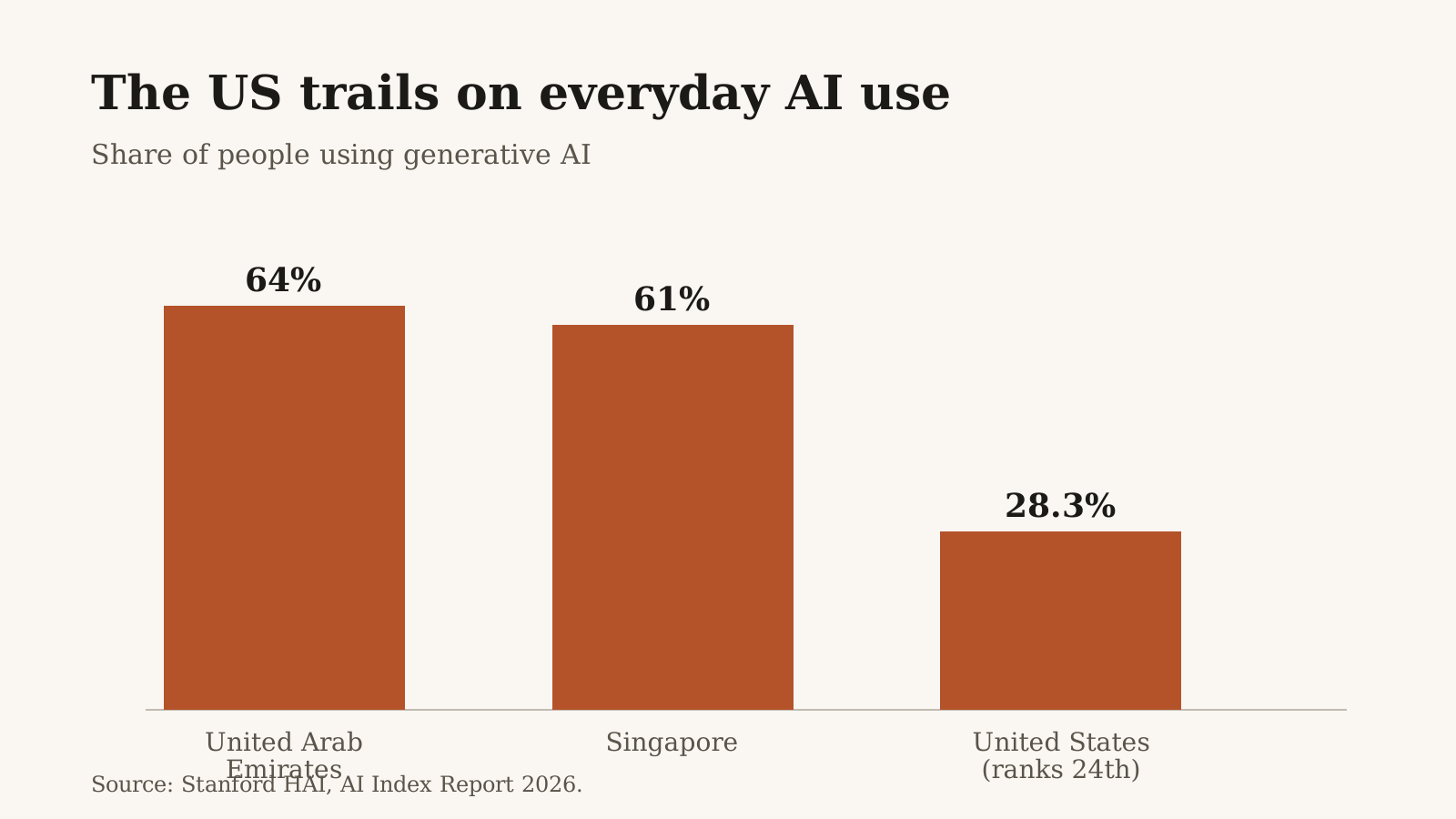
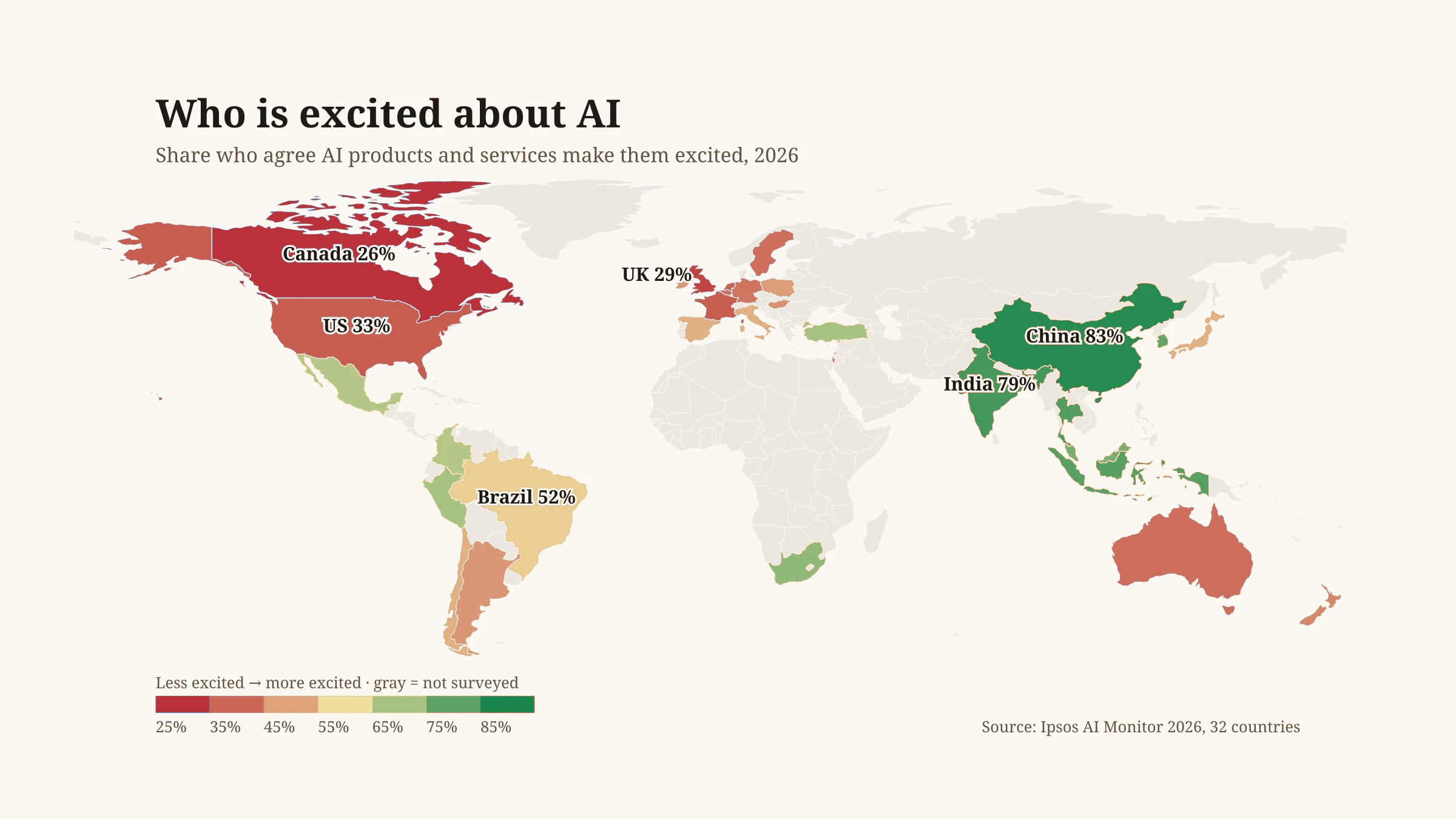
The US funds most of the world's AI and ranks 24th in everyday use. I wrote about the same gap in the country spending the most on AI is the least excited about it. The Stanford numbers point the same direction.
US Census. This one isn't a report at all. The Census Bureau asks thousands of American businesses every two weeks whether they used AI in the last two weeks. In late November 2025, 17.3% said yes. By late October 2026, it was 24.2%. About 27.6% expect to use it in the next six months.
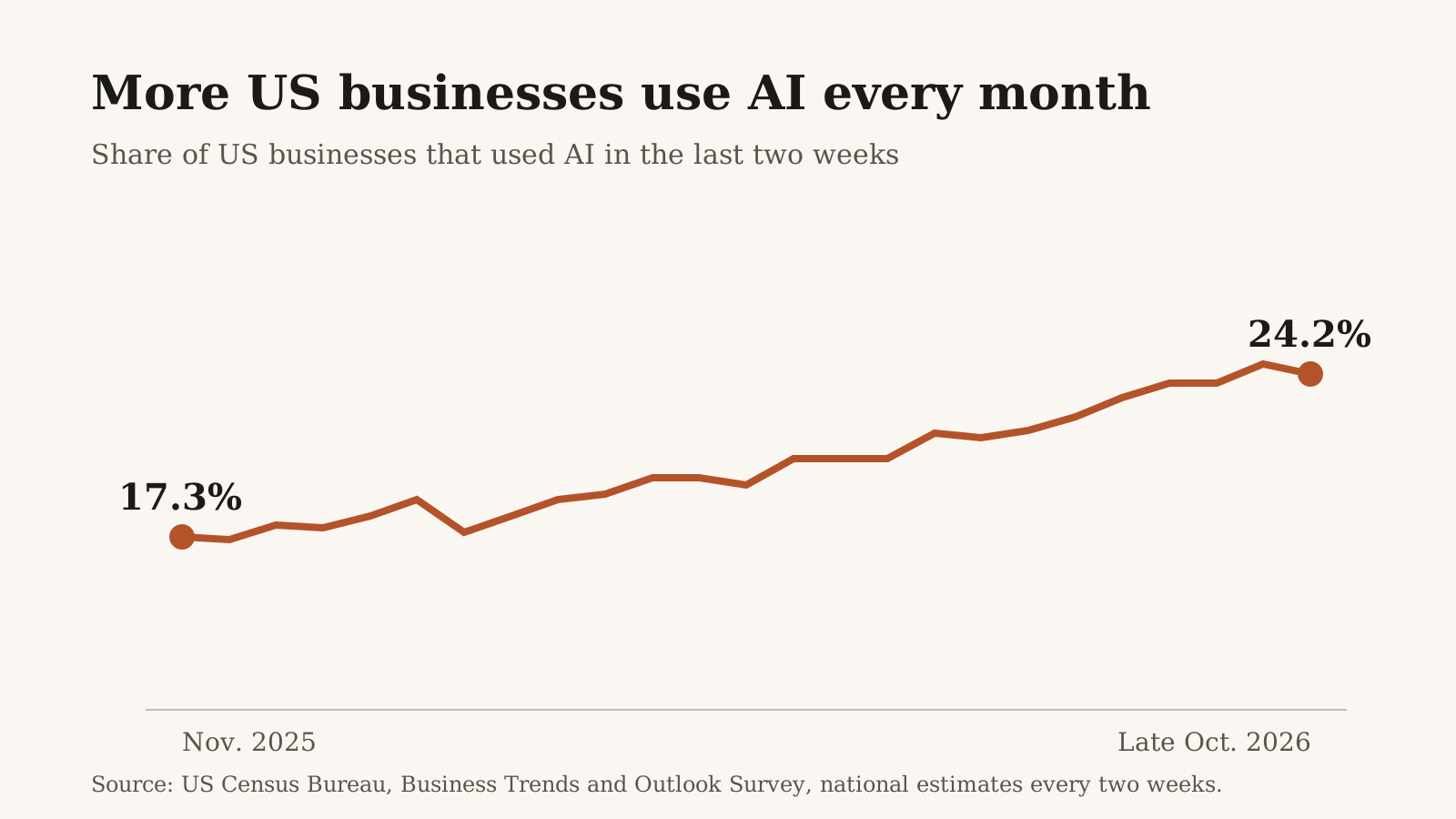
Put that next to the venture numbers and you see two different speeds. Investors are putting record money into AI. Three out of four American businesses still aren't using it in a given two weeks. That gap is where a lot of the next decade's companies will get built.
How the MCP server works
You connect it once and then ask in plain English. The tool looks up the number, quotes a sentence or two from the report and gives you the page and a link to the full report.
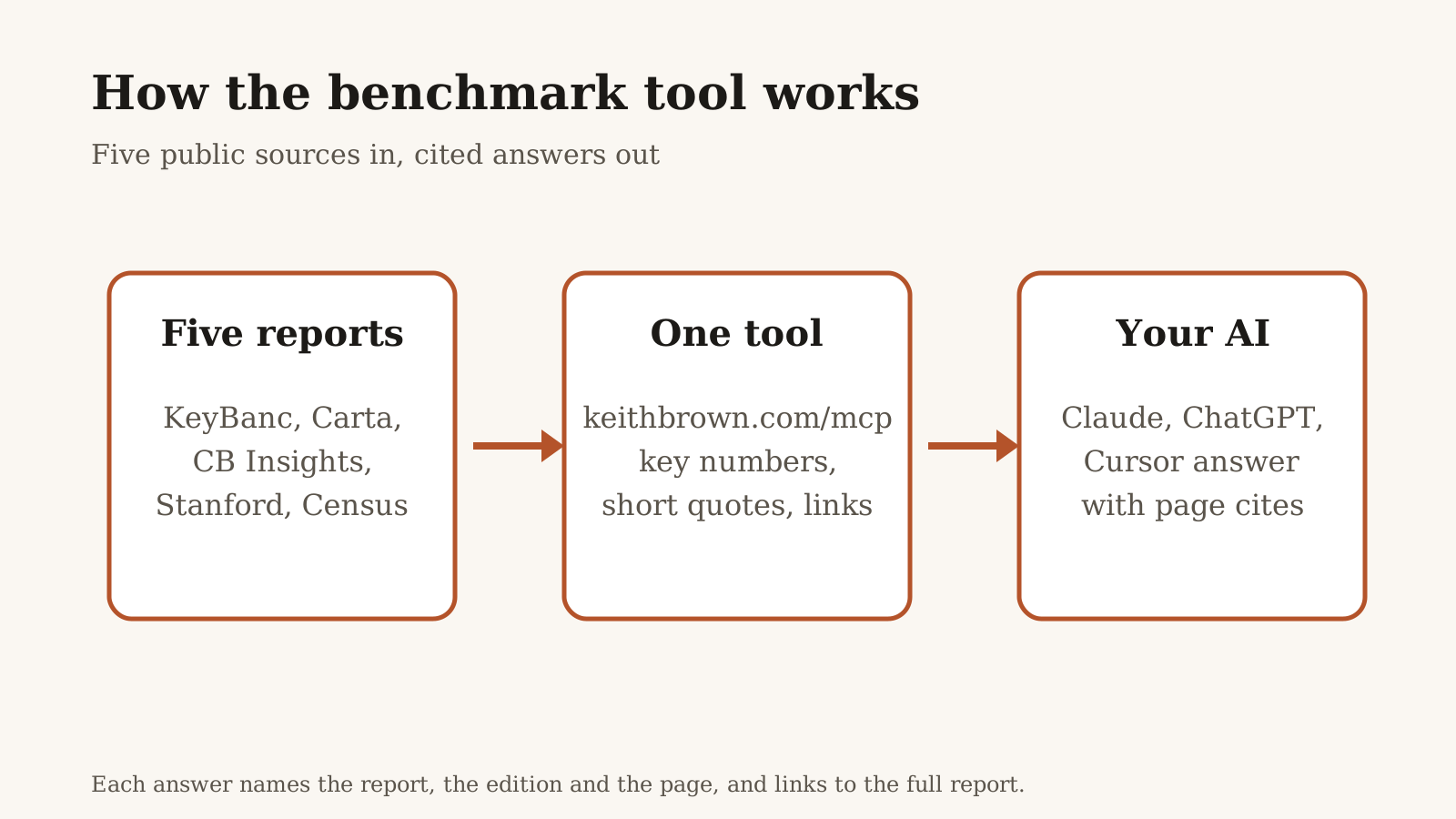
It has five tools inside it. One lists the reports. One looks up a metric. One searches for a short quote. One lines up the same metric across reports. One gives you the credits and the download link. To connect it, add https://keithbrown.com/mcp as a custom connector in Claude or ChatGPT, or as an MCP server in Cursor. No login.
I built it to send people to these reports, never to replace them. The tool gives out key numbers and short quotes, never whole pages. If you want the charts and the full method, download the report from the publisher. They did the hard work.
The people behind the data
Every number in this tool came from people who spent months collecting it. Here's who they are, as credited in each report.
- 2026 KeyBanc Capital Markets AI x Software Benchmark (KeyBanc Capital Markets): Scott Peterson, Managing Director, Software Investment Banking; Andrew Melvin, Vice President, Software Investment Banking; Jackson Ader, CFA, Managing Director, Software Equity Research; KeyBanc Capital Markets Technology Group; The 81 private software companies that took the survey.
- State of Private Markets: Q3 2026 (Carta): Hamza Shad, Carta; Kevin Dowd, Carta; Carta Data Insights team.
- State of Venture Q3'26 (CB Insights): Benjamin Lawrence, Senior Lead Analyst, CB Insights (leads the quarterly venture reports); CB Insights Research team.
- The AI Index 2026 Annual Report (Stanford Institute for Human-Centered AI (HAI)): Sha Sajadieh, Lead and Editor-in-Chief; Loredana Fattorini, Research Manager; AI Index Steering Committee: Raymond Perrault, Yolanda Gil, Vanessa Parli, Russ Altman, Erik Brynjolfsson, Carla Brodley, Jack Clark, Virginia Dignum, Vipin Kumar, James Landay, Terah Lyons, James Manyika, Juan Carlos Niebles, Yoav Shoham, Elham Tabassi, Russell Wald, Toby Walsh, Dan Weld; Affiliated researchers: Nestor Maslej, Juan Nicolas Pava, Lapo Santarlasci, Henry Zhang, Sukrut Oak; Licensed CC BY-ND 4.0.
- Business Trends and Outlook Survey (AI use questions) (US Census Bureau): US Census Bureau, Economic Directorate (econ.btos@census.gov); The US businesses that answer the survey.
What I'll add next
Mary Meeker's AI trends report from BOND is next. I'll add new editions of these reports as they come out, and I'll keep each number tied to the page it came from so anyone can check it.
I've spent most of my career reading reports like these to make decisions about people and businesses. The data was always good. Getting to it took too long. If you're a founder trying to price a round or an operator trying to set a growth target, I hope this saves you an afternoon. If you run one of these reports and want changes, tell me and I'll make them.
Related reading
Follow what I'm building and backing
I post on LinkedIn and X about the companies I back and the products I build.
Join 2,388 people following along.