Legacy
When Social Media Helps Leaders, and When It Quietly Hurts
Keith Brown · Growth & Leadership
Jul 8, 2026 · 5 min read
Social media can help a leader share ideas, learn from others and stay close to people. It can also take focus, calm and time without asking. The best way to know which one it's doing for you is to step away for a while and notice how you feel.
Social media can help a leader. It can spread your ideas, connect you with people you'd never meet otherwise, and keep you learning. It can also take your focus, your calm and your time without you noticing.
The best way I've found to tell which one it's doing is to step away for a while and pay attention to how life feels. This article is about that practice, and what it has taught me.

Where social media helps leaders
I don't think social media is good or bad. It's a tool, and like any tool it depends on how you hold it.
Used well, it gives leaders real advantages:
- Sharing what you've learned. A good post can reach more people in a day than a talk reaches in a year.
- Learning in public. You can follow people who are a few steps ahead of you and learn from what they share.
- Staying close to people. Former colleagues, founders and customers stay in your life with very little effort.
- Building trust before you meet. People who've read your thinking show up to the first conversation already knowing you.
These are good things. Founders find investors, hires and first customers this way every day.
Where it quietly hurts
The cost is harder to see because it arrives in small pieces. A few minutes here. A comparison there. A headline that sits in your head through dinner.
Most of these apps are free, which means they're paid for with our attention. Every feature is designed to bring us back. That isn't a moral failing on anyone's part. It's just worth knowing what you're trading.
For leaders, the trade shows up in a few places:
- Focus. Deep work needs long, quiet stretches. A feed breaks them into pieces.
- Calm. Your team picks up your mood. If the feed makes you anxious, they feel it too.
- Judgment. Good decisions come from your own thinking. A feed fills your head with everyone else's.
- Presence. The people in front of you deserve your full attention more than the people on the screen.
You don't know your relationship with something until you walk away
I've fasted from caffeine. I've fasted from alcohol. I've fasted from sweets. And I've fasted from social media.
You don't know your relationship with something until you walk away from it.
Every time, my life got dramatically better. The biggest one was in 2018, when I left LinkedIn and stepped out of public view after twenty years of the grind. I kept working with founders. I just stopped living in the feed.
Signs it may be costing you more than it gives
None of these make you a bad leader. They're just worth noticing:
- You reach for your phone before you've decided to.
- You feel worse after scrolling than before, more often than not.
- You compare your company, your pace or your life to people you've never met.
- Your best thinking happens less often, or only on vacation.
- The people closest to you ask for your attention more than they used to.
If two or three of these sound familiar, that's useful information. It's a reason to experiment, not a reason to feel guilty.
A simple test for any habit
Here's the question I ask about social media, and about most habits:
- If you step away and life gets worse, it was giving you something real. Keep it.
- If you step away and nothing changes, it was a habit. You can take it or leave it.
- If you step away and life gets better, it was costing you more than it gave. Be honest about that.
Honesty is the hard part. It's easy to say we're fine. It's harder to say that something we enjoy is taking more than it gives. I've had to say that to myself more than once.
What the research says
My experience lines up with the research. In one of the largest experiments on the subject, economists at Stanford and NYU paid about 2,700 people to deactivate Facebook for four weeks. The study, published in the American Economic Review, found people spent more time offline, including with friends and family, and reported small but real gains in well-being.
Stanford psychiatrist Anna Lembke, author of Dopamine Nation, recommends a 30-day break from a compulsive habit to reset how the brain responds to it. And Cal Newport's Digital Minimalism suggests a 30-day "digital declutter," then bringing back only the tools that earn their place.
How to step away without disappearing
You don't have to quit forever. You just need enough distance to see clearly.
- Pick one thing. One app, or caffeine, alcohol or sugar. Not all of them at once.
- Set a length. Two to four weeks is long enough to get past the first pull.
- Make it easy on yourself. Remove the app from your phone. Charge the phone in another room at night.
- Tell your team. Let people know how to reach you. Stepping away works better when nobody's waiting on you.
- Notice what changes. Sleep, mood, focus, patience, time with family. Write a line about it each week.
- Come back on purpose. When the break ends, decide what earns its way back, and when.
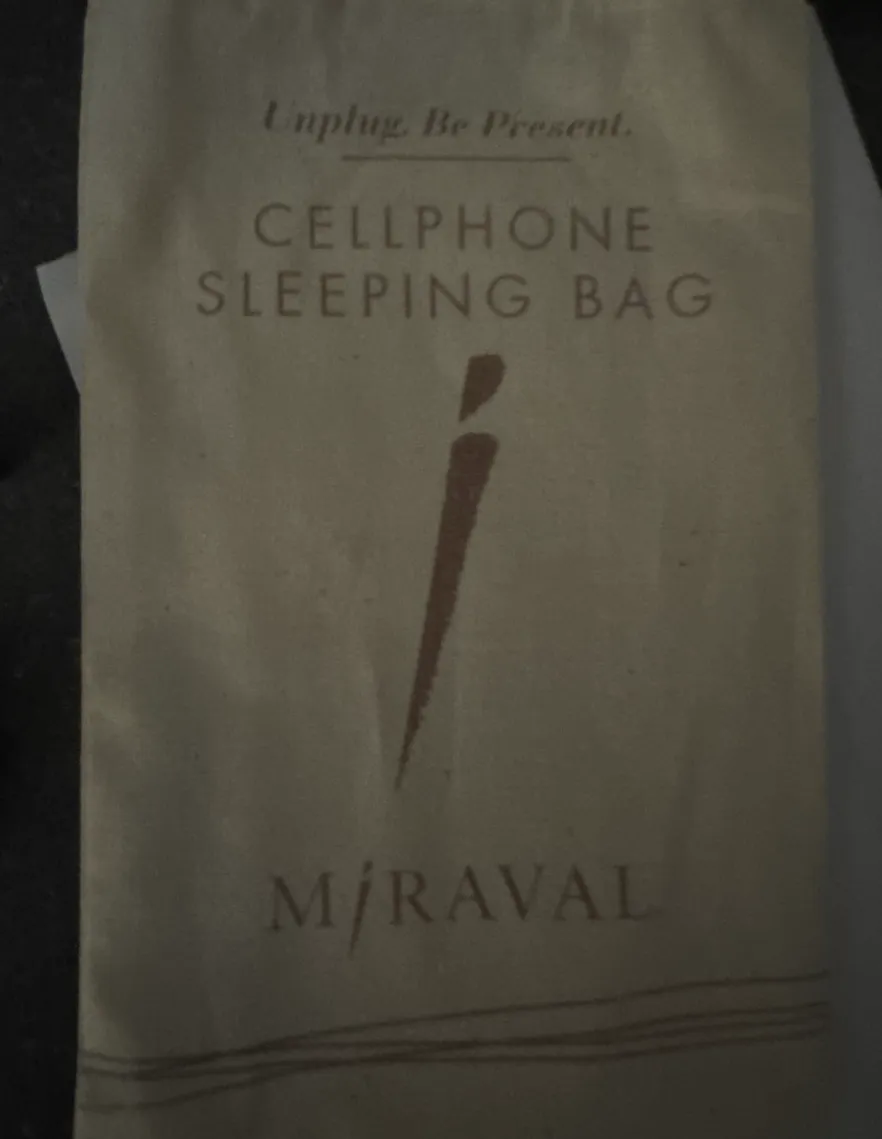
I felt this on a small scale when my phone went into a cotton bag at Miraval. A few days without it, and I met more people and thought more clearly.
Leading from a quieter place
I think of this as part of balance in body and mind. Most of what comes at us each day is noise. None of it settles on its own. You have to choose the quiet.
The leaders I admire most aren't the loudest ones online. They're the ones who seem steady. They listen well, think clearly and show up fully for the people around them.
That's also why I share my thinking in a monthly email. You open it when you choose to. It doesn't need to compete for your attention.
So try it. Step away from one thing for a few weeks and notice what returns. More focus, more patience, more time with the people you love. Then decide how much of the feed you want back.
Related reading
Get my monthly newsletter
One email a month with what I'm writing and working on.
One email a month. Unsubscribe anytime.