Deep dive
Plan 2027 Around Your Vision, Not Your Investors
Keith Brown · Founding Partner, Outperform Ventures
Oct 25, 2026 · 6 min read
The best way to give your investors a return is to run the company like you don't need their next check. How to plan 2027 around a business that sustains itself.
I talked to a founder the other day who had just raised their first million dollars. You'd expect them to be excited. They were worried about whether they could hit their numbers in the next 90 days, so their investors would give them more money.
I understood the worry. I also think it points the plan in the wrong direction. The best way to give your investors a return is to run the business like it's sustainable, like you'll never need future capital. Running it today to get more capital is fool's gold.
Why run your company like you don't need more money?
A company run to win the next round makes decisions for an audience of a few investors. It hires ahead of revenue, chases the metrics a deck needs and spends months each year raising. When the round doesn't come, it has built a cost base that only more capital can pay for.
A company run to sustain itself makes decisions for customers. It grows from what it earns, keeps the team lean and treats outside money as a choice. That company is usually the one investors want most.
I see this from the investor side all the time. The best businesses to buy are the ones that aren't looking to sell. The best investments are the ones where the founder is running the company profitably and doesn't need to take your money.
Those founders get better terms because they can say no. They also tend to deliver the return, because the business never depended on the next check.
Your investors are busy too
Start with some empathy for the people who wrote the check. Your investors gave you capital, and you want them to get a good return. That matters.
They also have money in many companies. A venture fund might hold dozens of companies or more. You have one company, usually one lead investor and a small board, so each board meeting matters a great deal more to you than it does to them.
If you feel distracted by the pace of AI, your investors are too. They're trying to figure out what AI does to every company in their portfolio at once. I've watched the old ARR-based way of valuing software come apart over the past two years, and the people on your board are working through that same change.
So a 90-day sprint to impress them may not land the way you hope. They likely have less time to watch it than you think.
I have investors too
I write this as someone on both sides. At Outperform Ventures, I have investors of my own. I didn't take their capital lightly, and I want them to have a 10x return.
Wanting that return is part of the job. It's also why I plan around where I think the future is going, and spend less time guessing what each investor wants to hear.
Which investors want you to succeed?
This is the hard part to be honest about. Some investors want you to succeed. Others would take a return even if you burned out in the process. Many VCs are like that.
That's why I didn't take a single dollar from VCs at Outperform Ventures. I wanted investors who care how the founders and the companies come out, along with the return.
Look at your own cap table the same way. Who calls when things are hard and asks how you're doing? Who only calls when a number is off? Spend your time with the first group, and keep the second informed.
What do most VC-backed founders get at exit?
The data helps explain why this matters. A November 2025 NBER working paper by Eduardo Azevedo, Florian Scheuer, Kent Smetters and Min Yang studied U.S. venture capital deals and found that 84% of founders received zero exit value. The top 2% captured 80% of the total value.
Entrepreneur and author Daniel Priestley shared the research on X this weekend, with slightly different figures: 88% of founders getting nothing and the top 1% capturing 79%, across 157,000 startups and 348,000 founders. Those may come from a newer version of the paper. I've used the published summary's numbers here.
Getting VC backing is a fools errand. New research says 88% of US venture-backed founders receive ZERO financial proceeds from their company ownership at exit, while the top 1% capture 79% of the total exit value.
— Daniel Priestley (@DanielPriestley) View on X
| Group of VC-backed founders | Share of founders | Share of exit value |
|---|---|---|
| Received nothing at exit | 84% | 0% |
| Top 2% of founders | 2% | 80% |
| Everyone else | 14% | 20% |
Source: Azevedo, Scheuer, Smetters and Yang, NBER Working Paper 34512, 2025. The "everyone else" row is the remainder of the paper's figures.
Priestley's take is that VC backing is a bad deal. Mine is more mixed, since I raise capital myself. The numbers do show how much rides on picking investors who want the founder to come out well too. If you're still deciding whether to raise, my raise or bootstrap tool walks through the trade-offs.
How should founders plan for 2027?
Planning season is here. I'd plan in this order.
1. Plan your vision
Start with what you see the future holding and what's best for you. You started the company because you saw something others didn't. Write that down before you open a spreadsheet.
Ask where your market is in two years once AI changes the cost of building software, and what your company looks like there. If the plan is only a slightly bigger version of 2026, it probably isn't a vision yet. My piece on founder mode vs. drift covers how to tell the difference.
2. Plan what's best for your family
Your investors probably won't be part of your life in five or ten years. Your spouse, your children, your friends and your family will.
So plan for them too. How many nights you'll be home, how much risk your household can carry, and what you want your life to look like if the company works and if it doesn't. A founder who has those answers makes calmer decisions at work.
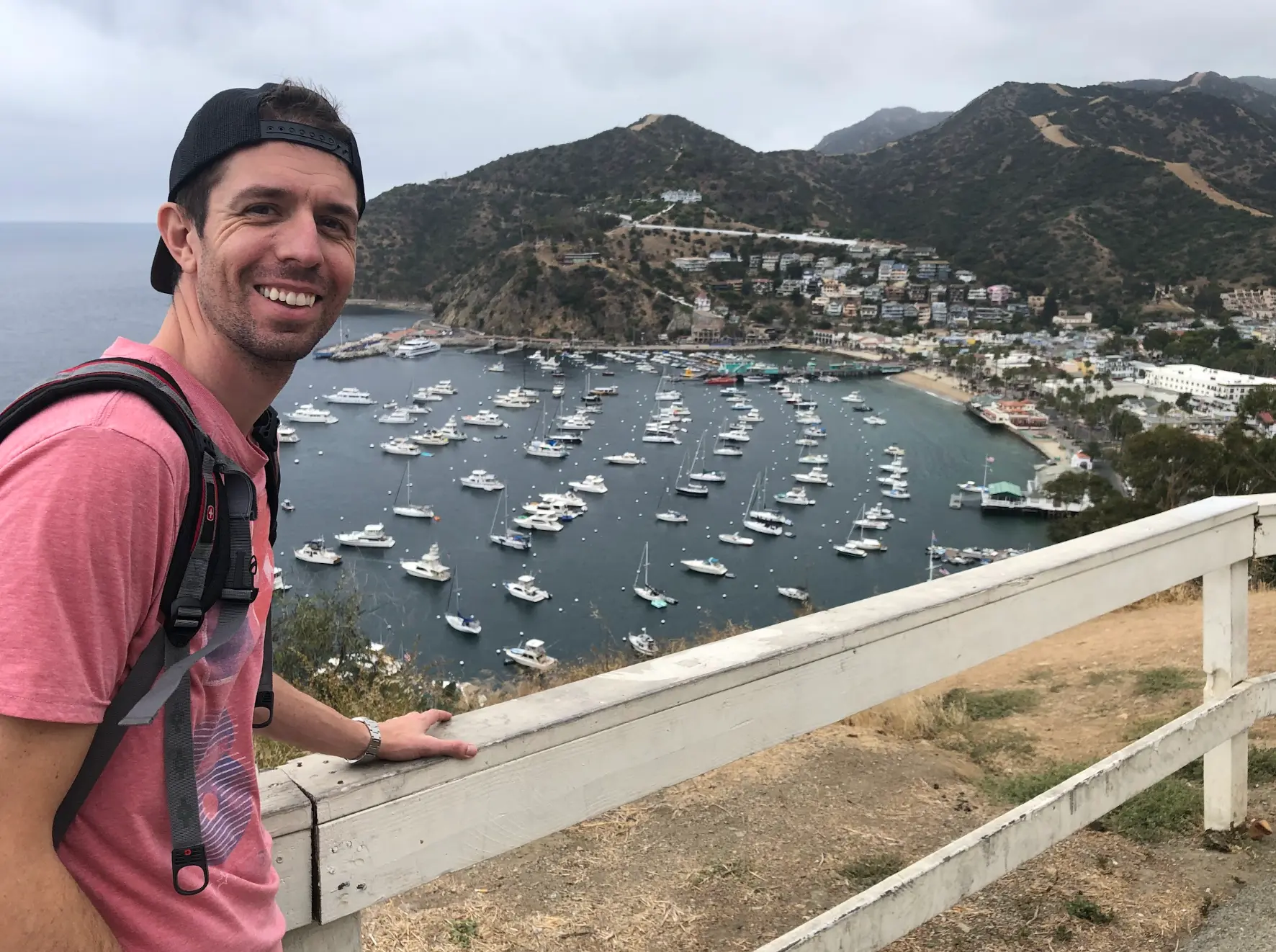
In the middle of one busy raise, I took time away and sailed to Catalina Island with friends.
3. Plan what's best for your team
Look around at who your leaders are. Teams are getting leaner, and the people who matter most matter more than they did a few years ago. I wrote about giving your best people unlimited AI tokens for the same reason.
Run the lifeboat test. If the company had to fit in a small boat, who would you bring? Those are your key people. Plan their roles, their pay and their growth first, and size the team to what the business earns.
4. Then plan for your investors
You took their money, and you owe them honesty and a real effort. Send clear updates. Tell them early when something goes wrong. Ask the ones who want you to succeed for help where they can give it.
Build the budget as if the next round never comes. If you raise again, it's on your terms. If you don't, the company is still standing. I've written about how power dynamics shape conversations at work, and a board relationship is easier when you don't need the next check.
Can a SaaS company get profitable without more VC money?
Most can. AI has cut the cost of building and running software, and a lean team can carry a business that used to need hundreds of people. Profit gives you options: raise later on your terms, sell, or keep it.
The founder I talked to has a million dollars and a product people use. My advice was to spend the next 90 days with customers and run the company as if that million is the last check it will ever need. That's the company their investors will be glad they backed.
Related reading
Follow what I'm building and backing
I post on LinkedIn and X about the companies I back and the products I build.
Join 2,219 people following along.