Legacy
The Power Dynamics Behind Partnership Language
Keith Brown · Founding Partner, Outperform Ventures
Sep 30, 2025 · 4 min read
“We're all in this together” is partnership language laid over control reality, and everyone in the room can feel the gap. The fix is not better messaging. It is closing the distance between who carries the risk and who carries the upside.
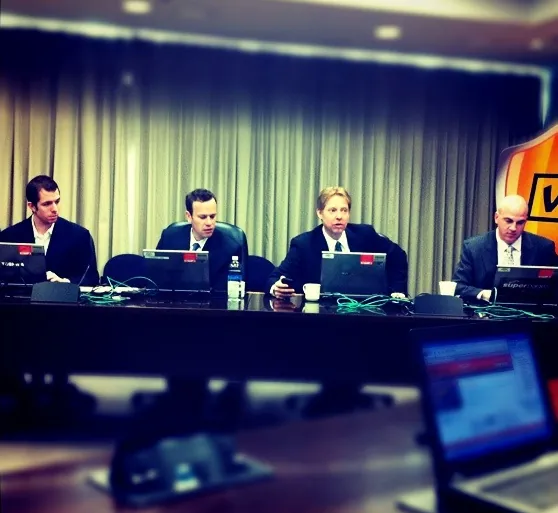
I was once in a meeting a Superpages.com early on in my career. An executive told his senior team, “We’re all in this together. So, I need your best ideas to double revenue, and I need those ideas by the end of the week.” The room nodded.
Later, one of those managers admitted he felt conflicted: he was living paycheck to paycheck, while his boss already had millions in personal wealth. “How can we be in this together if he has a Mercedes and I drive a Toyota?”
That gap between partnership language and control reality is why so many companies plateau long before their potential. To fix it, leaders have to share power through ownership.
Four Questions
Power isn’t only titles. It’s the answers to four questions:
- Who owns the upside?
- Who has decision rights?
- Who can speak freely without career risk?
- Who can walk away easily if it doesn’t work out?
When the same person or tiny group answers “me” to all four, performance suffers—no matter how inspiring the all-hands sounds.
Mechanics of Power
Ownership and upside
Equity holders enjoy compounding returns and real decision rights. Non-owners get wages and goodwill. That shapes candor and risk-taking. Teams thrive when people can take interpersonal risks—a finding from Google’s Project Aristotle on psychological safety. Safety is easier to sustain when status and upside are aligned with responsibility.
Wealth asymmetry
The median U.S. household net worth was about $193k in 2022; the top 10% holds roughly two-thirds of all household wealth. It is a different conversation to “be bold” when missing a paycheck actually matters versus when it doesn’t.
Managerial gatekeeping
Managers account for about 70% of the variance in team engagement, per Gallup, echoed in newer Gallup work. If managers retaliate or hoard info, performance craters.
Cultural tolerance
Innovative cultures require a “tolerance for failure” paired with an “intolerance for incompetence,” as Gary Pisano wrote in HBR. Freedom plus standards beats freedom for a few and standards for everyone else.
Lifestyle Businesses
You can build something meaningful without sharing equity. You can build a great lifestyle company and maintain 100% ownership, that’s not the question.
The question is whether you can build maximum scale and resilience. You can scale while hoarding equity, but you likely cap ambition, candid debate, and retention on the way—often leaving impact and enterprise value on the table.
The systemic cost of disengagement.
Globally, low engagement costs about $9 trillion, around 9% of GDP, per Gallup. During the Great Resignation, toxic culture was 10x more predictive of attrition than pay, per MIT Sloan Management Review. Hoarded power erodes safety, which erodes performance.
Sharing Upside
Broad-based ownership and profit sharing are not charity. They are an operating system.
- Retention: ESOP leaders report voluntary quits at about one-third the U.S. average.
- Resilience: Employee-owned firms were 3–4x more likely to retain non-managers and managers during the pandemic, with fewer pay/hour cuts.
- Productivity: Studies show a one-time 4–5% productivity lift in the year an ESOP is adopted, sustained thereafter. Park, Kruse, Sesil (Rutgers). Meta-analyses also find a small but significant positive performance effect.
- Wealth building for workers: Employee-owners show far higher retirement wealth than comparable workers, with multiple studies documenting the gap (often ~2x).
Put bluntly: founders who share upside often end up with a smaller percent of a far larger enterprise value, which beats 100% of a stalled company, struggling for years to break out of the 2-5M revenue range. The research above explains why.
Safety vs. Power
Amy Edmondson’s work defines psychological safety as a shared belief that the team is safe for interpersonal risk-taking. Google’s findings echo it. You cannot will safety into existence with slogans. You earn it by aligning power and upside with responsibility, then protecting dissent in practice.
If you want your team to “feel safe” to bring forward bold ideas, they actually have to be safe. That means they need to feel secure in their job, their finances, and their ownership stake in the business.
A Quick Test
If titles and salaries disappeared, and all that remained were ownership, culture, and freedom to innovate, would top talent still choose to stay? If not, the issue is not the talent pool. It is the power dynamic you built.
Leaders who share power through ownership, clear standards, and real safety do not fear strong voices. They recruit them, listen to them, and build with them. The result is not a softer culture. It is harder performance with fewer blind spots, more retention, and more enterprise value—the very outcomes even the most cost-conscious founder wants.
Ways to share power that work
Ownership doesn't have to mean giving away the company. The National Center for Employee Ownership tracks thousands of US companies that share equity through stock options, profit sharing and employee stock ownership plans. Research it has collected shows employee-owned companies tend to be more stable through downturns.
- Give real equity or profit sharing to people below the executive team.
- Write down who owns which decisions, and stick to it.
- Ask for hard feedback in a way that carries no career risk, and act on it.
- Be open about pay and how it's set.
I've written about how hard conversations build trust in vulnerable conversations at work, and how long-term owners think in a visit to a friend's ranch. Both come back to the same question. Do the people doing the work share in the result?
For a succinct principle, remember Jim Collins’ “First Who, Then What”: the best people behave like owners when you treat them like owners.
Related reading: What Managing a Gym at 19 Taught Me About Leadership · We Think About the Next Hour While Some Families Plan 100 Years · Most of What We Eat Is Acidic. So Is Most of Modern Life.
Related reading
Get my monthly newsletter
One email a month with what I'm writing and working on.
One email a month. Unsubscribe anytime.