Deep dive
What You Actually Take Home When You Sell Your Company
Keith Brown · Founding Partner, Outperform Ventures
Apr 16, 2025 · 4 min read
The sale price is not what you take home. Debt is paid first, then investors' preferences, then everyone splits what's left by ownership — and taxes come after that. Founders who have raised several rounds are often surprised by how small their share is. Run the numbers before you negotiate, not after.
I led M&A for a billion-dollar company. The headline price and the money people take home are two very different numbers.
The sale price isn't what you take home
When a company sells for $50M, the founder doesn't get $50M. Often they don't get anything close.
Money flows out of a sale in a set order, like water filling pools on the way down. Your share is what reaches the bottom.
The order money is paid out
- Debt and deal costs. Loans, bankers and lawyers are paid first.
- Liquidation preferences. Investors usually get their money back before anyone else.
- Everyone else. What remains is split by ownership, including founders, employees with options, and investors who convert.
- Taxes. Your share is taxed, and the rate depends on how and when you got your shares.
What a liquidation preference means
A preference says the investor gets their money back first. The most common version is '1x non-participating': they take back what they put in, or convert to their ownership share — whichever is higher.
Watch for terms above 1x, or 'participating' preferences. Those let investors take their money back and then also share in the rest. In a modest sale, that can leave founders with very little.
Why your share shrinks
- Each funding round sells more of the company.
- The employee option pool usually comes out of the founders' share.
- Preferences stack, one for each round.
- Earn-outs and holdbacks delay part of the price, and some of it may never arrive.
Common mistakes
- Comparing offers on price alone instead of cash at close.
- Agreeing to aggressive terms early because the valuation looked good.
- Forgetting taxes until the wire arrives.
- Not modeling the outcome at a lower price than you hope for.
When the price matters less than you think
If the sale is well above everything investors put in, preferences mostly stop mattering and everyone shares by ownership. The terms bite hardest in middling outcomes, which are also the most common. It's one reason the decision to raise deserves more thought than it usually gets.
A simple example
Here's how the waterfall works with round numbers. These are made up to show the order, not taken from any real deal.
| Step | Amount | Left over |
|---|---|---|
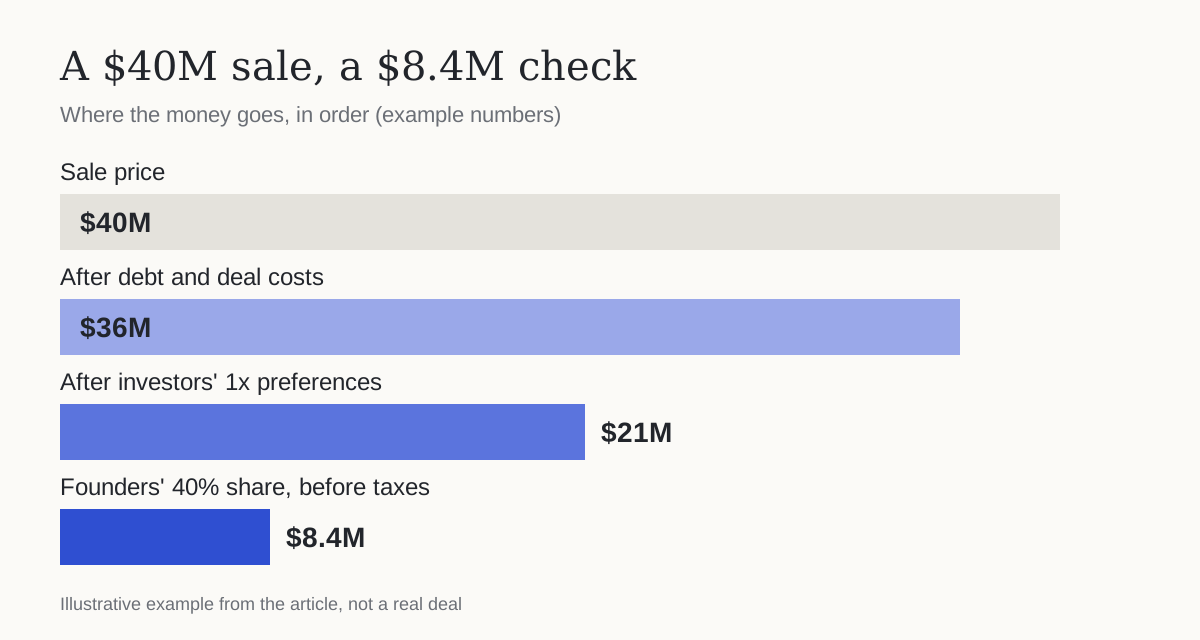
| Sale price | $40M | $40M |
| Debt and deal costs | $4M | $36M |
| Investors' 1x preferences (they put in $15M) | $15M | $21M |
| Split by ownership: founders own 40% | $8.4M to founders | $12.6M to everyone else |
In this example, investors would usually compare taking their $15M back with converting to their ownership share, and take whichever is higher. The founders' $8.4M is before taxes. A $40M headline turns into a much smaller check.
Change one term, like a 2x preference or a participating preference, and the founders' number can drop by millions.
Taxes can be the biggest line
After everyone else is paid, taxes take their share. How much depends on your situation, which is why you need an accountant involved early.
In the U.S., some founders and early investors may qualify to exclude part of their gain under Section 1202 of the tax code, the rule for qualified small business stock. The rules on company type, holding period and how the shares were issued are strict, so check with a tax adviser well before a sale.
How a deal is set up matters too. Selling shares and selling assets are taxed differently, and buyers often prefer one while sellers prefer the other.
What to negotiate besides price
- Cash at close. How much arrives on the day the deal closes.
- Earn-outs. What has to happen for the rest to be paid, and who controls it.
- Escrow and holdbacks. How much is held back for claims, and for how long.
- Your role after. How long you have to stay, and what happens if you leave.
- The team. What your employees get, especially those with options.
A lower price with more cash at close and a cleaner deal can be the better offer. Before you compare offers, know your range and run each one through the math.
Bring in help early
A sale is one of the largest financial events most founders go through. It's worth paying for good advice.
- A lawyer who does M&A. Not your general business lawyer, unless they do deals regularly.
- An accountant. To plan for taxes before the deal is structured, not after it closes.
- A banker or broker for larger deals. To bring more than one buyer to the table.
- A financial planner. To decide what you'll do with the money once it arrives.
The cost of good advisers is small compared with the money a badly structured deal can leave on the table. Talk to them months before you expect an offer.
Ask each adviser to walk you through the waterfall for your own cap table at three prices: what you hope for, what you expect and what you'd accept. Seeing the low case in writing is the best protection against signing a deal you'll regret.
Start planning early
The best outcomes usually start two or three years before a sale. Clean financials, a team that runs without you and clear contracts all raise the price and lower the risk of surprises. Talk to a tax advisor early too. Small structure choices can change what you keep. Start with the valuation tool to see where you stand.
Run your numbers
The Exit Math tool lets you enter a sale price and each funding round, then shows who gets paid what, in order. Pair it with the Valuation tool to see your range first, and read why valuation is a range.
The short answer: How much will I actually take home when I sell my company?
Related reading
Follow what I'm building and backing
I post on LinkedIn and X about the companies I back and the products I build.
Join 2,219 people following along.