Prediction
Why I Think Tesla Has Passed Its Tipping Point
Keith Brown · Growth & Leadership
Jun 10, 2026 · 5 min read
I think Tesla has passed its tipping point. Self-driving, home charging, the Supercharger network and software updates put it on a different level, and adoption is now spreading person to person through families, coworkers and friends.
I think Tesla has passed its tipping point. In the last 12 months, more people in my life switched to a Tesla than in any year before. Once enough of the people around you have one, it gets hard to ignore.
I've owned Teslas since 2019. Since then I've taken nearly everyone I know for a ride. For years the answer was polite interest, and then a long list of reasons to wait.
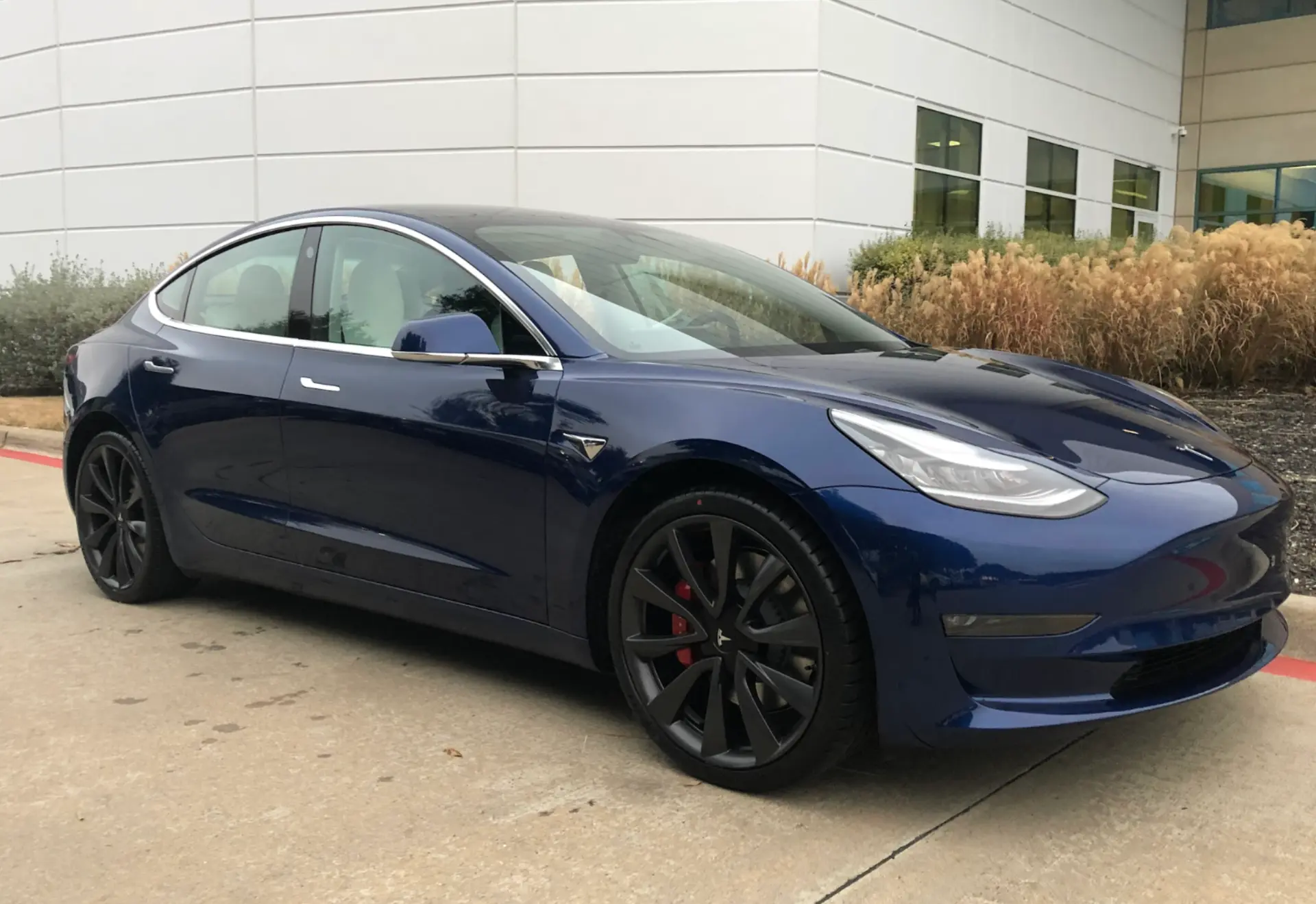
Years of reasons to wait
The numbers were slow at first. People said other EVs would come along. They said legacy automakers would catch up. There was always another reason.
I understood it. A car is a big purchase, and most people want proof before they change something that big. But it's hard for me to see a path now where every car on the road isn't either a Tesla or running Tesla hardware and software.
What a tipping point looks like
Malcolm Gladwell described it in The Tipping Point: "The Tipping Point is that magic moment when an idea, trend, or social behavior crosses a threshold, tips, and spreads like wildfire."
The sociologist Everett Rogers mapped how this happens in Diffusion of Innovations. A small group of innovators and early adopters goes first. The early and late majority follow once they see enough people they trust using something.
I'm usually early. That's how I'm wired as an investor and an operator. Most people wait for consensus, and that's not a bad thing. It's safe. But it means adoption doesn't move in a straight line. It moves through people.
How it spreads through a friend group
Think about five friends. When one has a Tesla, everyone else has a different car, and it's a curiosity.
- When a second friend gets one, it becomes interesting.
- When a third gets one, only two of you are left without one. You're riding in their cars often enough to notice the differences.
- When a fourth gets one, you're curious. It's almost undeniable.
- The fifth person isn't going to buy another gas car. They realize they're doing it the hard way.
That's where I think we are. What I hear now is "my boss has one," "my coworker has one," "my spouse has one." A grandmother rides in one and, as driving gets harder for her, she gets one. Then her friends from Bible study get one too.
It happened in my own family. Once we had a charger in the garage, the other car stopped making sense. Now our garage is all Teslas.
One is a car you drive. The other is a car that drives you.
Why it's the iPhone, not another phone
The closest comparison I have is the iPhone. I had Nokias. I had BlackBerrys. When I saw my first iPhone, I thought it was cool and didn't go buy one. It was one person raving about it.
I've realized I was that person in my friends' circles with Tesla. Here's what I think puts it so far ahead.
1. Self-driving changes what a car is
Full Self-Driving is the biggest difference, and I don't see anything close. It's very hard to do at scale. Every Tesla on the road gathers more data, which makes the system better, which puts more Teslas on the road.
Tesla publishes a Vehicle Safety Report comparing crash rates with Autopilot engaged against U.S. averages. People miss what this means. It's not just a car. It's a robotaxi, a personal private driver.
2. My family doesn't go to gas stations
We charge in our garage. Sometimes we charge on the road, but in general we leave the house full every morning with a few hundred miles of range. It's rare we drive that far in a week.
It's also cheaper. A full charge at home costs me roughly five to ten dollars in electricity. Filling a tank can run fifty to a hundred.
3. The Supercharger network is a moat
For longer trips there's the Supercharger network. Anyone competing with Tesla has to compete with that too. In 2023, Ford, GM and most major automakers agreed to adopt Tesla's plug, which SAE International later standardized as J3400.
I care enough about road trips that I built Fly or Tesla, a calculator that prices one trip two ways: a seat on a plane against a seat in an electric car, on money, door-to-door time, stress and carbon.
4. It gets better while it sits in your garage
A Tesla is a self-updating piece of technology. It has an operating system. You get in, and it's improved overnight. Everything about it is on a different level.
What this means for legacy automakers
I think the downside for legacy automakers speeds up at the same time Tesla's adoption does. That's the shape of a K. One line goes up, and the other goes down.
This isn't only software. It's hardware, data and charging together, which is much harder to copy. I think the realistic path for many automakers is licensing Tesla's technology, and that requires the hardware too.
I've written about why physical moats outlast software ones. Tesla is one of the clearest examples I know. It's the opposite of the pure software bet I passed on in the Anthropic IPO.
What could slow it down
The U.S. is where I see this most clearly. Europe is still playing out. China is a different story, with tariffs and global dynamics at play.
The other risk is Elon Musk. He became a political figure, and some people don't want the car because of him. I don't think that holds forever. When your car drives you, charges at home and your boss, your employees and your grandmother all have one, it gets hard to say no.
How to think about it as a leader
Whether or not you ever buy a Tesla, the pattern is worth learning. It shows up in every market I've worked in.
- Watch your own circles. When three of five people you know have switched to something, take it seriously.
- Ride before you decide. Spend time with the new thing instead of reading opinions about it.
- Look for compounding. Products that improve with every user, like self-driving data, are hard to catch.
- Count the whole system. Tesla's advantage is the car, charging and software together. Ask what your competitors would have to rebuild to match you.
- Check the moat. If you're valuing a company, the valuation tool is a fast way to see what you're paying for.
If you're in the early majority and still waiting, take a ride with a friend who has one. That's how most of the people I know made the switch. For more on how I think about where to put money, see the Investing section.
Disclosure: I own Tesla stock and SpaceX. This is my opinion and not financial advice.
Related reading
Get my monthly newsletter
One email a month with what I'm writing and working on.
One email a month. Unsubscribe anytime.