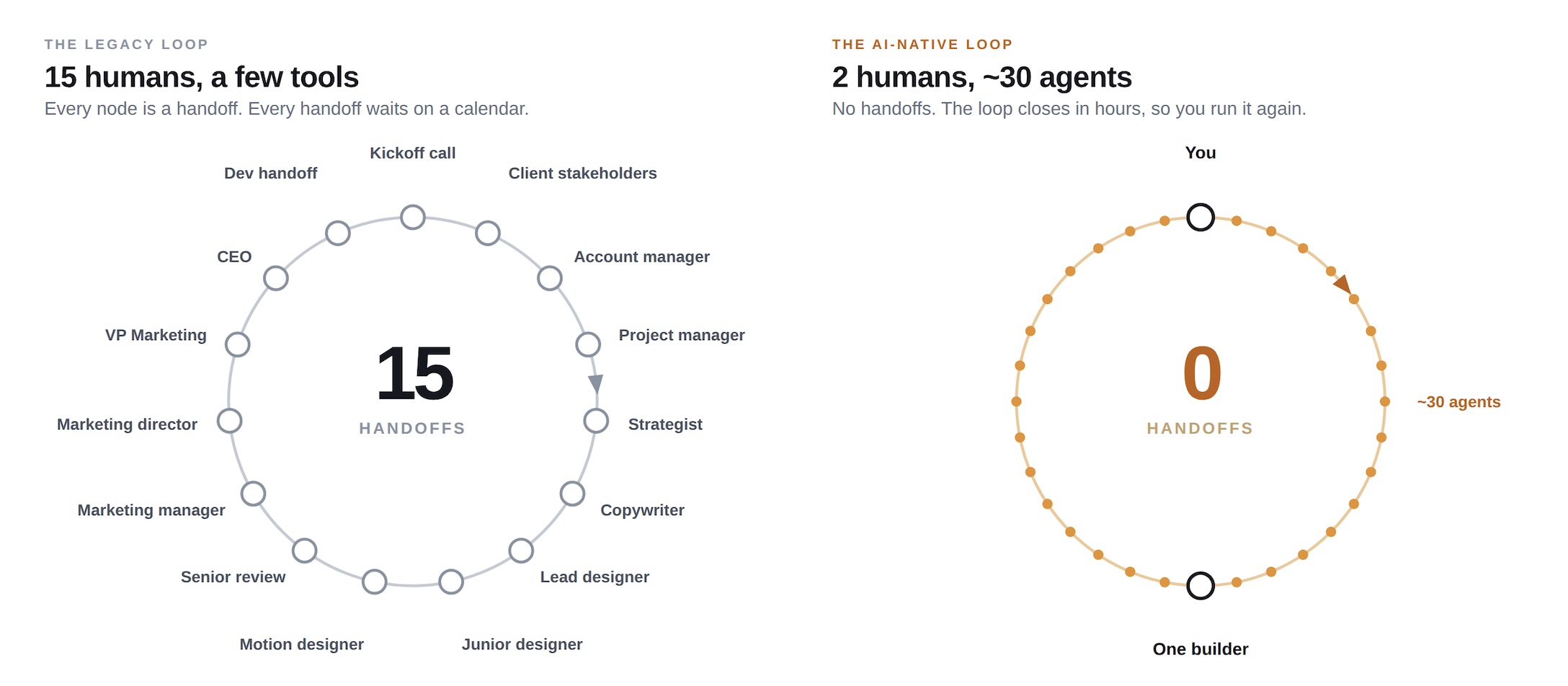
Engineers solved this problem twenty years ago. Nobody else got the memo.
Marketing ships one campaign a quarter. Ops changes a process twice a year. The board reads numbers that are three weeks stale. Every one of those is a deployment pipeline with a six-week lead time, and nobody has ever measured it.
Likely because “lead time for changes” is a DevOps metric, and nobody else outside of engineering is measured on velocity, backlogs, or uptime. But people are starting to catch on, and they are learning to think and work in continuous cycles or loops.
Hiring a 10x engineer to report directly to me and convert one of my businesses to a fully autonomous operation was my best decision of 2026.
— Jordan Ross (@jordan_ross_8F) September 5, 2026
There’s still much to do but I’d be shocked if we don’t profit 10s of millions.
Every other department has a cycle. There are just too many humans standing in it. And then part-time agencies and vendors. And then fractional consultants. And very little is automated. Oh, and nobody is measuring them against any type of momentum of velocity driven KPIs.
And then managers are wondering why “AI native” competitors seem to be moving faster, while they are drowning and more overwhelmed each day. It’s because they feel their loops getting slower, and their competitor loops getting faster. They just can’t articulate that.
Read the X post above. It wasn’t a team, it was one person, building in faster and tighter loops.
Reps, not speed
I wrote about the two loops a while back — the build loop that should have almost no humans in it, and the growth loop that should have as many as you can find. This is the part I did not go deep enough on: what actually happens inside the build loop when you take the humans out.
Tom Wujec’s marshmallow challenge found kindergarteners routinely beat MBA students at building the tallest freestanding structure. Not because they are smarter. Because business school teaches you to plan first and build once. Five-year-olds build, watch it fall over, and build again. They get more revolutions.
Low performers deploy somewhere between monthly and twice a year. The elite teams are not staffed with better engineers. They removed the things between the code and production.
The number of people doesn’t win, the number of cycles do.
Six loops in your company right now
Look at your own org chart. Every function has a loop. Literally just a series of SOPs, tasks, outcomes that drive the business forward. They have a starting and ending point.
Maybe it’s billing a customer, maybe it’s prospecting and then closing a lead, or perhaps it’s closing out the monthly update. It’s the same process every time, yet because too many humans are involved, it’s still highly manual.
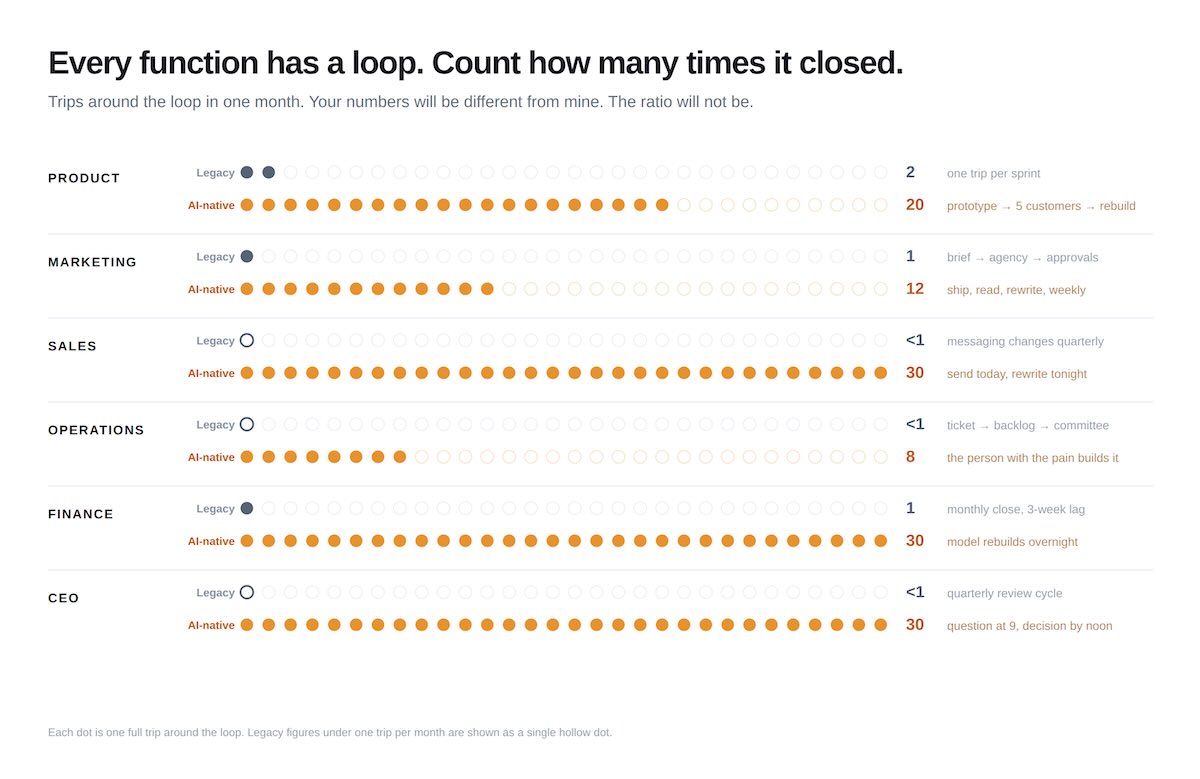
Take each team in your business. Now, count the humans standing in it, then count how many times it actually closed last month. Imagine each “loop” as a series of tasks.
Is it happening fast, slow, or completely broken? Does it involve a single person buidling AI Agents in orchestrated loops? Maybe it’s 100 people using LLMs to chat with (where most companies are today). Or worse, 200 people working completely analog.
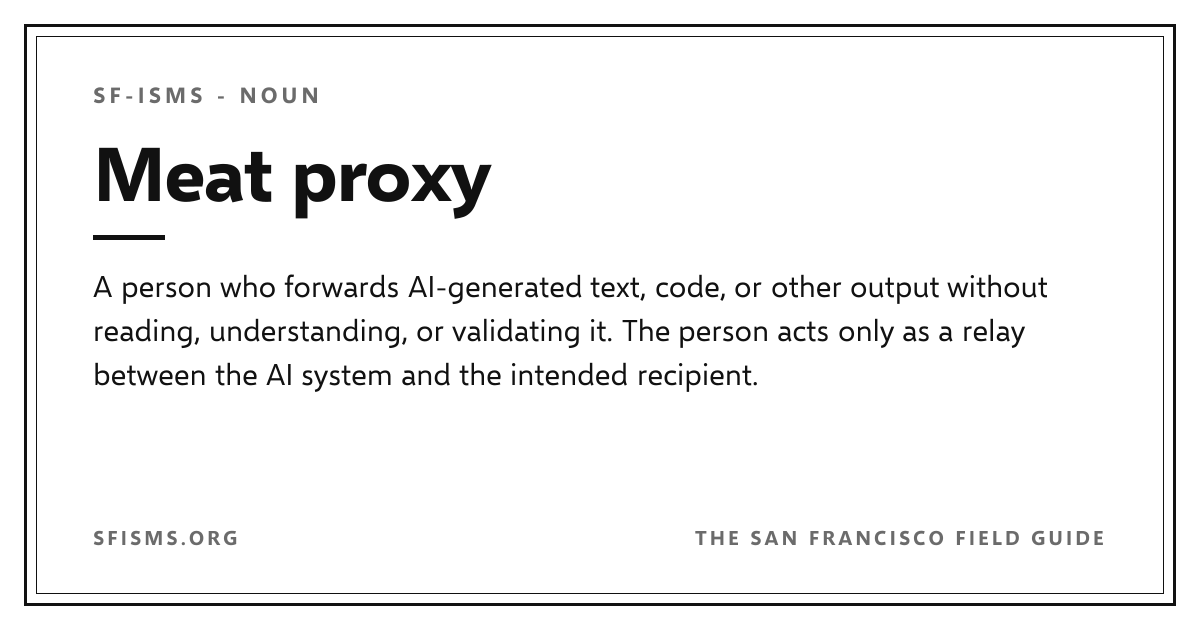
Actually I take that back. 100 humans chatting with LLMs, all with different and confused context levels, is worse. Those are just meat proxies.
This is why I said we need far fewer builders building, and far more humans selling and growing the business.
Product
Interviews, then a PRD, then design, then grooming, then a sprint, then ship, then wait for the next planning cycle. One trip per sprint, so about two a month. The old way is a lot to describe, let alone practice.
Super interesting detail from inside OpenAI:
— Gergely Orosz (@GergelyOrosz) September 7, 2026
The company hired a bunch of ex-Meta people. Some of these people wanted to invest heavily into internal tooling teams (Meta did it, worked great)
OpenAI leadership resisted, saying that in an AGI-first world, there will be no…
The AI-native version is a PM, one engineer, and a stack of agents: prototype the real thing this afternoon, put it in front of five customers tomorrow, rebuild it tomorrow night. 10 or 20 loops a month. Need tools? Build your own.
Marketing
Brief to agency to concepts to project manager to lead designer to junior to back up the chain to marketing manager to director to VP, then launch, then read the results next quarter. Call it one round trip a month, and that’s if the calendars cooperate.
This is the loop I wrote about in Chasing Approval, and it is worth noticing that most of those humans are not producing anything. They are approving what another human or LLM generated.
Sales
A rep drafts a sequence, a manager reviews it, ops loads it, it runs for six weeks, and reply rates get discussed at the QBR. Messaging changes quarterly. The AI-native version writes per-account messaging, sends it today, reads what came back tomorrow, and rewrites it tomorrow night.
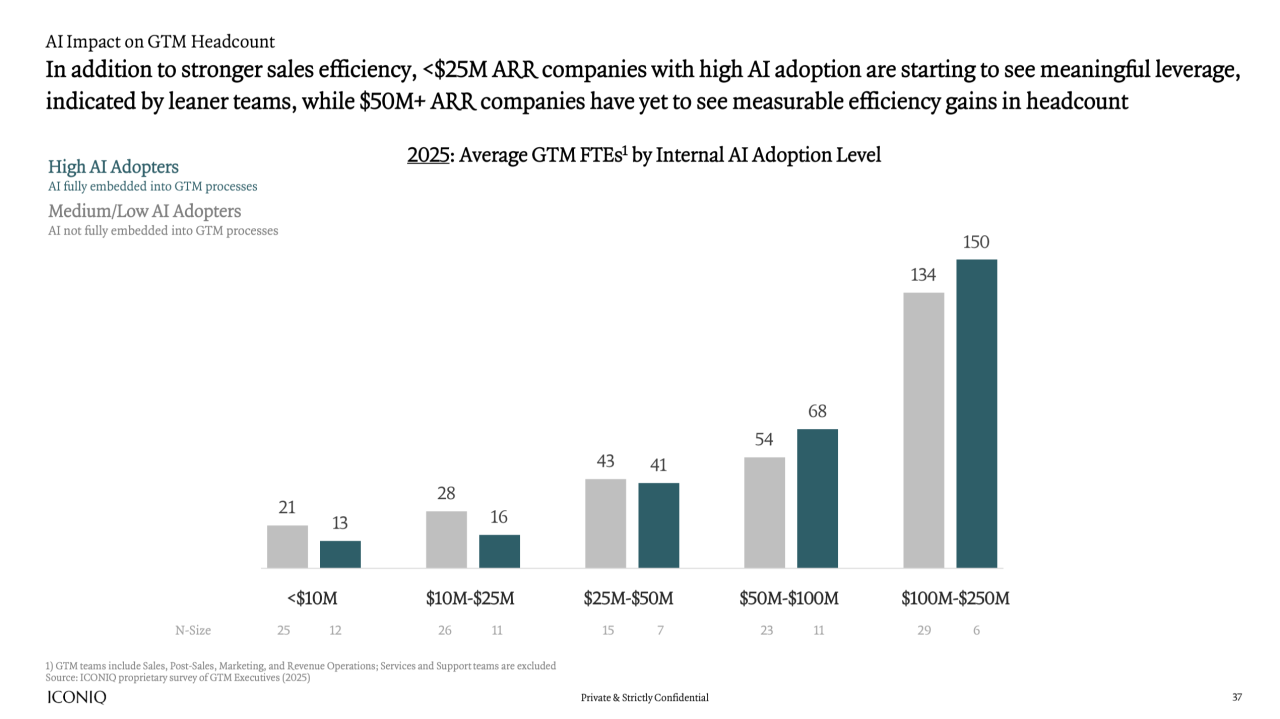
This is why we are starting to see much leaner GTM teams, especially before $25M in ARR. It’s just much much easier to do more loops with less people, when you force those people to think creatively instead of think about their next meeting. That is ninety revolutions in the time the other team gets one, which is exactly why the bottleneck moved from building to distribution.
Operations
Somebody notices a broken process. They file a ticket. It enters a backlog. An analyst documents the current state. A committee convenes. A new SOP gets written and rolled out in training. That is a quarter, sometimes two.
In the new loop, the person who actually feels the pain describes it, builds the automation with agents, runs it Monday, and fixes what broke on Tuesday.
Finance
Close the books, build the deck, route it to the CFO, and the board sees it three weeks after month end. You are making decisions on six-week-old numbers, twelve times a year.
Continuous reconciliation and a model that rebuilds overnight means you can ask “what happens if we cut that line” and have a real answer before the meeting is over.
CEO
Strategy offsite once a year. The plan becomes a document. Progress gets reviewed quarterly. Question to answer to decision takes three weeks and four calendars — which is what the legacy pyramid was built to do, back when moving information between people was the work.
The trap
Conway’s Law already told us that systems mirror their communication structure. The org chart is not a picture of who reports to whom. It is a picture of your cycle time.
Most companies believe they are modernizing. They bought the licenses. They ran the training. They have hundreds or thousands of humans, all with various LLMs.
That loop got maybe twenty percent faster. It still closes four times a month, because every handoff in it is still a handoff, and a tool bolted onto a broken structure is still a broken structure.
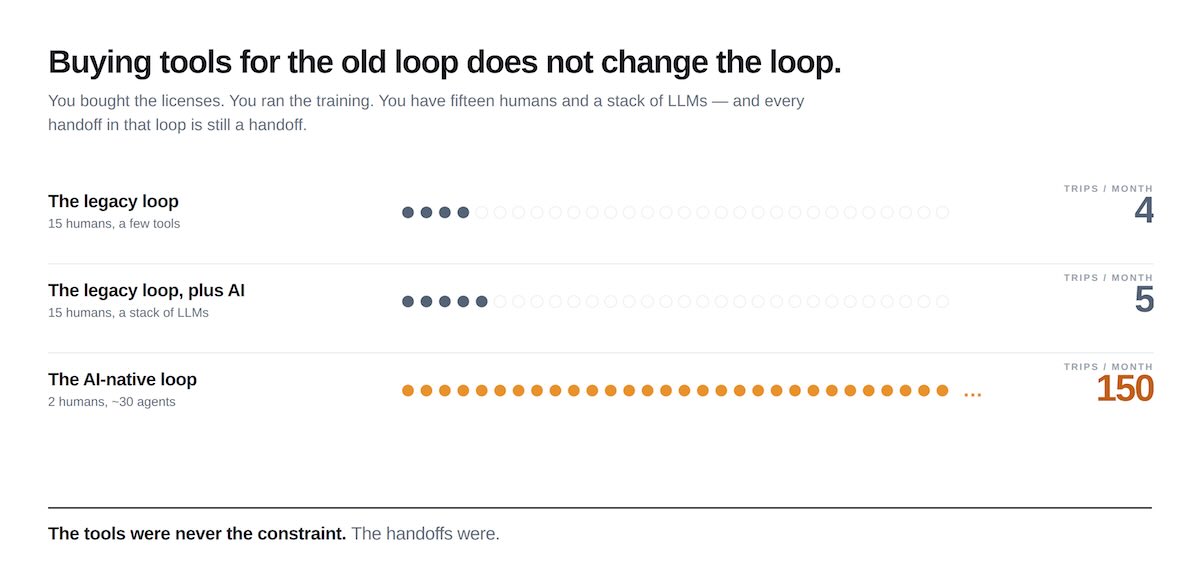
You did not change the loop. You bought better equipment for the same loop. Which is precisely what happened with cloud, with mobile, and with social — and it is why an org chart designed in 2015 is still running your 2026 company.
The org chart is the loop. Every management layer you added was a layer of transmission, and transmission was valuable right up until the moment it was not.
The tools were never the constraint. The handoffs with humans were.
Where the humans go
I am not arguing for zero humans. I argued the opposite in Double Down on Humans, and I still believe it. When the cost of digital creation goes to zero, the value of a real human connection goes up, not down.
But be precise about where they sit. Humans are irreplaceable at the two ends of the loop: deciding what is worth building, and judging whether the thing that came out is any good. Taste and judgment do not compress.
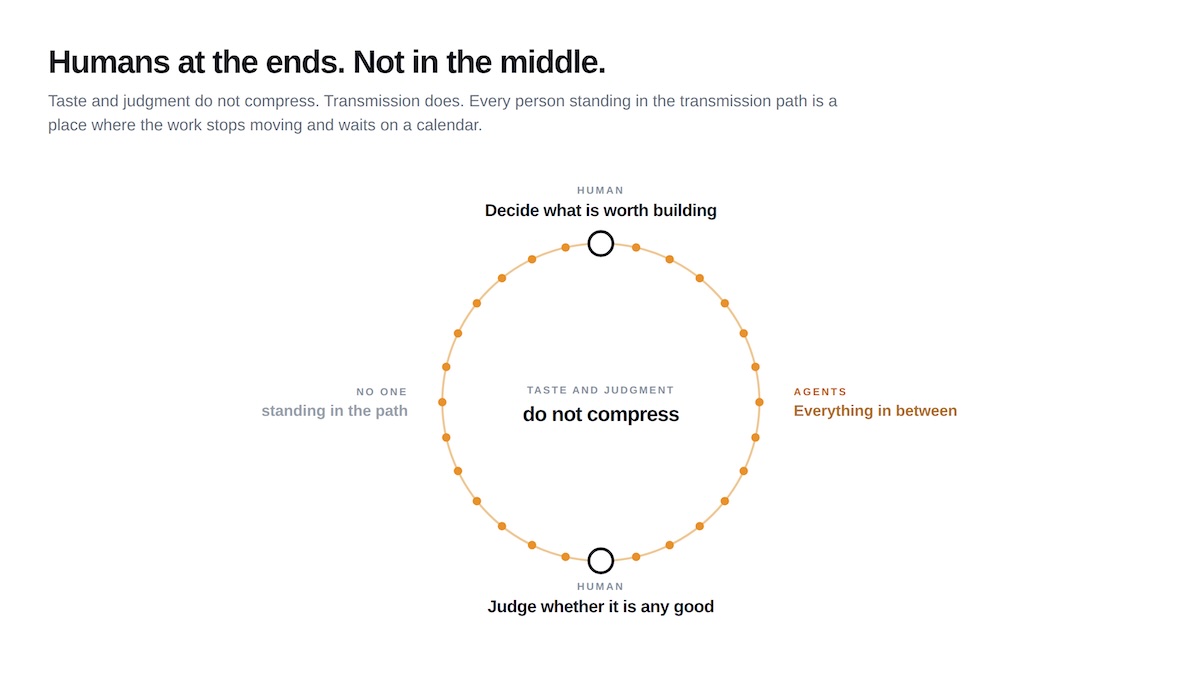
But in 2026, humans hurt in the middle. Every person in the transmission path is a place where the work stops moving and waits on a calendar. That is not a talent problem, and it is not a character flaw.
Those are good people doing exactly the job they were hired to do. The role itself is the latency. This is why AI native companies are moving so faster. The have fewer people doing more loops.