If you grew up in an environment where silence meant a storm was coming. Maybe it was one parent, a family member, a sibling, or all of the above.
As a defensive mechanism, you became elite at reading rooms. You learned to detect a shift in mood before a word was spoken. You did not do it to lead. You did it to stay safe.
As a leader, that radar can be a liability.
If you are chasing approval, you are not chasing the mission.
We are taught that leadership is about consensus. We think a “good” executive is one who keeps the team happy and the board calm. The data tells a different story.
The CEO Genome Project, a ten-year study of 17,000 C-suite assessments, found a startling gap between what gets you hired and what makes you successful. High confidence and charisma more than double your chances of being hired. However, they have zero correlation with actual job performance.
In fact, the study found that high-performing leaders are often described as less “likable” in the traditional sense. They are twelve times more likely to be high-performing because they are decisive, not because they are popular.
When you prioritize being liked, you move too slowly. You wait for everyone to be on board. You round the edges of your strategy until it is smooth, safe, and completely ineffective. According to Harvard research, 94% of executive failures are not due to making the wrong decision. They are due to making no decision at all while waiting for a consensus that never comes.
Consider the leaders who actually moved the needle.
Jeff Bezos famously believed that harmony is overvalued in the workplace. He built Amazon on the principle of “Disagree and Commit.” He knew that honest conflict is the only way to strip away bad ideas.
Steve Jobs was not known for his warmth. He was known for a relentless, often abrasive pursuit of excellence. He understood that his job was not to be a “nice guy.” It was to be a yardstick of quality.
If you are hired to scale a company or restructure a team, you are hired to be a disruptor. Disruption, by definition, makes people unhappy. If everyone in the room is comfortable with your plan, you are probably not pushing hard enough.
Think of Billy Beane in Moneyball.
There is a scene where he sits in the locker room alone. This is after most of his team called him crazy for his approach and decisive leadership. He listens to the radio as the world calls him arrogant, cold, and wrong. He is “ruining the game.”
He did not change the math to make the scouts like him. He did not apologize for his leadership style to calm the tension in the front office. He knew that the friction was not a sign of failure. It was the sound of the status quo breaking.
You have to be willing to be the villain in one person’s story to be the hero of the company’s results.
The next time an executive questions your leadership or your team, your brain will scream “danger.” It is an old reflex from a tense past.
Correct it.
That tension is not a threat to your safety. It is the tax for entry into high-stakes leadership.
Aim for respect. Affection is optional. If the numbers are moving and the strategy is sound, the unhappiness in the room is just noise. It is “weather.” You can acknowledge it without letting it change your course.
Stop trying to fix the mood. Fix the business.
The weight in your stomach is not fear. It is the feeling of doing the work.
Most leaders are still stuck in a linear mindset. We have been taught for decades that to double our output, we must double our headcount. It is a simple, comfortable equation that is now completely broken. In the age of AI, thinking of hiring as a 1:1 ratio of people to production is a structural error that will leave your company behind.
Think of the movie The Matrix. When Neo finally understands the code of the world around him, he does not just become a slightly better fighter. He becomes a multiplier. He can manipulate the environment and move at speeds that were previously impossible. He is no longer bound by the standard rules of the simulation.
AI is that code for our modern workforce. I wrote about this recently in The End of Entry Level, and this post expands on that concept.
You should no longer be looking for “employees” to fill a seat and perform a task. You need to hire multipliers. These are individuals who understand how to leverage AI to achieve 10x or 100x the output of a traditional hire.
When I was the Head of Growth at Superpages, we took organic revenue growth from 11% to 164%. We did that by focusing on high-leverage growth strategies, not just by throwing more people at the problem.
Today, that same level of acceleration is possible with a fraction of the team size if those people are multipliers. You do not need thousands of people if you build a structure that prioritizes high-value impact over raw headcount.
If you are an investor or a CEO, you have to stop asking how many people a company has. Instead, ask about their leverage. A small team of multipliers using AI can now outperform a legacy organization with ten times the staff. This is not about cutting costs, it is about creating value for others at a scale that was never before possible.
The goal of business is to generate cash flow (money) in a repeatable and scalable way. And the goal of money is to pass the point of diminishing return so you can buy your time back.
If you hire traditional employees, you are just building a bigger machine that requires more of your time to manage. If you hire multipliers, you are building a legacy of efficiency and innovation.
Stop trying to win the talent war by counting heads. You win by finding the people who can rewrite the code of your business. That is how you move from the chase of the money phase into the freedom of the time phase.
Most leaders confuse activity with progress. We spend our days firefighting and wonder why the fires keep starting. It is easy to feel productive when your calendar is full, but being busy is often a trap that keeps you from being effective.
In the movie Jumanji, there is a famous scene where an invasive vine tears through the walls of a family home. The characters could have spent their lives pruning those leaves or scrubbing the floors, but the house would have still collapsed. They understood the weeds were not the real problem. They were a symptom of the game itself. To save the house, they had to finish the game.
I see this same pattern in business every day. Most leaders are expertly pruning weeds. They obsess over superficial issues like minor fluctuations in weekly engagement or individual friction. These feel urgent, but they are usually distractions from a structural root cause. Research into systems thinking suggests that the vast majority of performance issues are tied to the system itself, rather than the individuals within it.
It’s actually refreshingly easy to fix most problems, but the hardest part is most people are focusing on the wrong problems. Superficial problems are much easier to spot, and much easier to “fix” quickly. But we tend to find glory in overworking ourselves. Often times the challenges in a business, relationship, or society comes down to 1-2 very simple core structural issues.
The true work of a leader is finding the one structural issue that solves five hundred superficial ones. It is the difference between mopping a puddle and fixing the leak in the roof. If you are chasing a hundred different problems, you are likely ignoring the one lever that would make them all vanish.
I learned this while scaling companies in enterprise SaaS and consumer web. When I was at one high growth company, we surpassed 100M in annual recurring revenue with less than 100 people. We achieved that growth by maintaining a relentless focus on structures and frameworks. We did not waste time on the superficial politics of needing more headcount or budget. When the structure is sound, the weeds of communication silos never have a chance to take root.
Investors must be just as disciplined about this distinction. I look for this when I evaluate opportunities like Tesla or Slack, where I was an early investor. People often focus on the superficial noise of a single quarterly report. The real value is the structural advantage. For Tesla, it was the shift to a direct-to-consumer model. That one structural choice solved thousands of problems that have plagued traditional auto dealers for decades.
If you find yourself constantly in reactive mode, you are likely ignoring a structural issue. You are trading your most valuable commodity, which is your time, for temporary fixes.
True leadership is about having the courage to stop the busy work and fix the foundation. Once you solve the structural root cause, you gain the freedom to focus on what actually matters.
That is how you build a legacy that is uniquely yours.
I have spent fifteen years in the trenches of high growth SaaS. I have seen the 2 a.m. board deck revisions and the desperate hunt for data gravity. I know what it feels like to earn every dollar of true ARR, recurring revenue through blood, sweat, and manual onboarding. The type of revenue that you can model out 3, 5, and even 10 years into the future.
That is why the news cycle of February 2026 feels so surreal to me.
Every morning there is a new record on my feed. Lovable hit 100M ARR in eight months and is already pacing toward 300M. Mercor did it in ten. Cursor did it in twelve and just crossed a billion. OpenAI just tripled to 20B in a single year. The timeline of growth has effectively gone vertical and we are all supposed to be applauding the efficiency.
I’m not clapping. I’m concerned.
There is a line from Jurassic Park that keeps playing in my head: “You wield this power like a kid.”
When Ian Malcolm says that to John Hammond, he isn’t just talking about the danger of dinosaurs. He is talking about the lack of humility. He is talking about the difference between standing on the shoulders of giants and actually being a giant.
In the movie, Hammond didn’t do the hard work of evolutionary biology; he just bought the labs and extracted the DNA. He skipped the centuries of trial and error that nature requires. He thought he owned the power because he had the key to the cage. And in so many ways I feel like all of us in technology (whether you want to call it SaaS, AI, etc.) are kinda sitting around having this very existential conversation right now about the future.
I just believe in the 30,000′ foot view. And rather than chasing vanity metrics, we should be having deeper conversations about what this all means for the future.
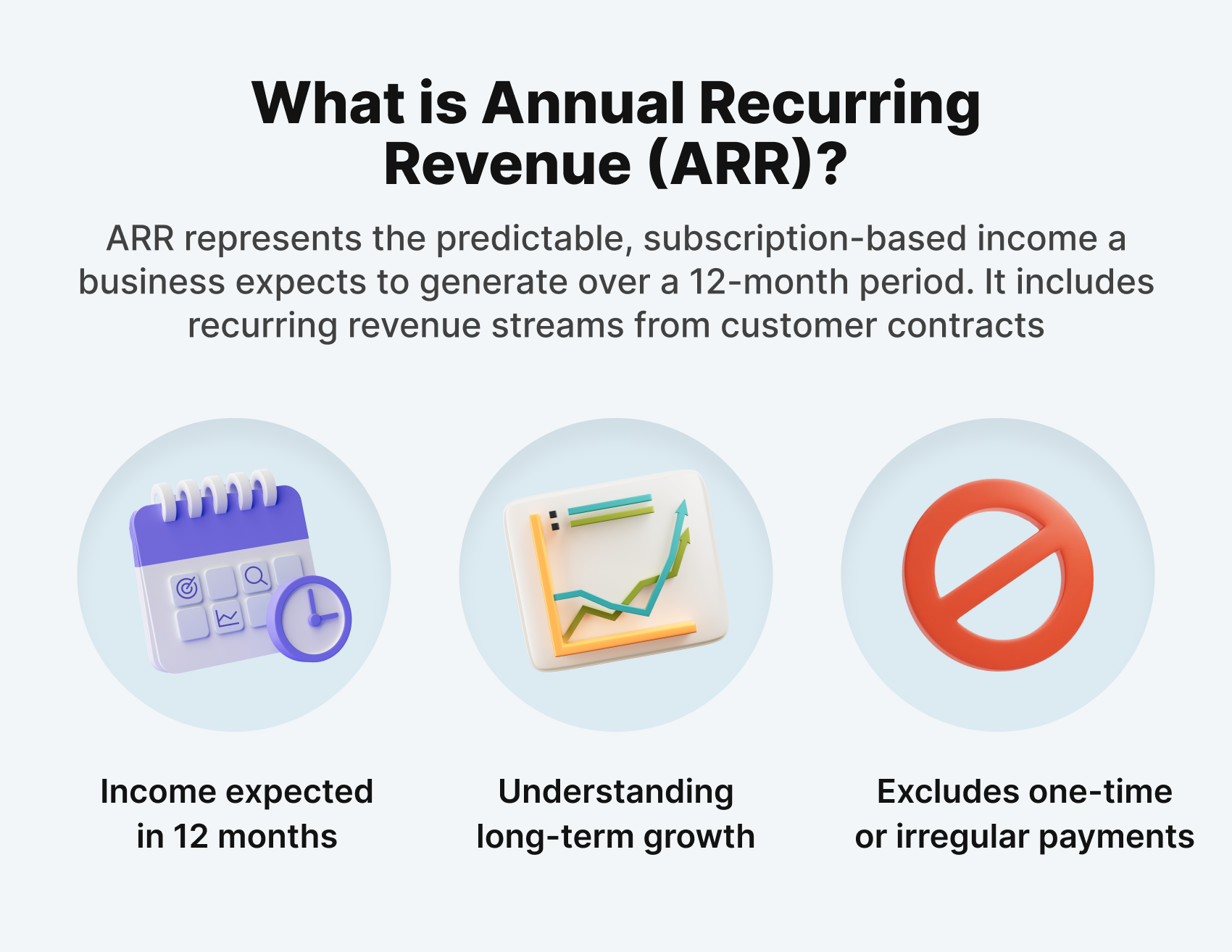
The people using the term ARR right now haven’t paid the price to use it. Because by nature ARR is a predictable and long-term metric. AI is not even focused on annual right now, or even the quarter. It’s a daily grind of beating the next news cycle.
We are witnessing the rise of Hollow ARR (HARR). And yes, I just made up that word. It’s the best way I can describe what I’m seeing, although others are definitely feeling the same thing.
Hollow ARR satisfies the technical definition of a subscription but lacks the structural integrity of a real business. In the solid era of SaaS, revenue was a proxy for a moat. It meant you were embedded. It meant you were a utility. In this new agentic era, revenue is often just a proxy for a temporary efficiency gain. The speed is intoxicating but the math is terrifying.
It’s not annual. It’s not recurring. Yes, I’ll concede it’s revenue. But a big chunk of these are pilots, monthly usage fees, and math that assumes that in an age of everything changes every 5 minutes, that nothing will change for this revenue to be modeled into infinity.
The Architecture of Revenue: Solid vs. Hollow
Feature
Solid ARR (Legacy SaaS)
Hollow ARR (HARR)
Primary Moat
Data Gravity & Workflow
Viral Vibe & Model Access
Gross Margin
80% – 90%
30% – 50% (Inference Tax)
Switching Cost
High (Implementation Friction)
Zero (Plug-and-Play)
Growth Driver
Sales Efficiency & Land/Expand
GPU Availability & Social Proof
Revenue Source
Software/Utility Budget
Payroll/Discretionary Budget
Customer LTV
High (Multi-year stability)
Unknown (High Volatility)
Value Proxy
Business Integration
Temporary Efficiency Gain
I am not saying some, or all, of these hyper-growth AI platforms will go the way of the dinosaur. I’m simply saying in our chase to brag about ARR, we aren’t stopping to think. It brings to mind Ian Malcolm’s other stinging rebuke from that dinner table scene: “Your scientists were so preoccupied with whether or not they could, they didn’t stop to think if they should.”
We have built tools that can scale to a hundred million dollars in revenue before they even have a customer support department or a security team. We are celebrating the “could” and the raw capability of a model to generate cash at light speed, without pausing to ask if the foundation of that revenue is something we actually should be calling a business.
We're about to close our first $1M ARR enterprise contract.
Fastest company to close enterprise pipeline with zero sales team, zero outbound, and a 48h old product.
Update for April 2026: I had a list of X posts embedded above, by companies bragging about ARR milestones, but literally 100% of them have since been deleted. So I guess this post even 2 months in is already aging well…
We are so enamored by the sheer velocity of the “HARR” growth that we’ve ignored the fact that we are building on shifting sand. We aren’t asking if this revenue is durable, or if it’s responsible to value it like traditional software.
We are wielding the “could” of AI to inflate numbers, but we haven’t stopped to think if we should be calling this success.
These new winners are struggling with 40 percent margins because every dollar of revenue carries a massive, variable tax in compute. If your gross margins look like a hardware company, you are not a software company. You are a reseller of tokens.
SaaS was built on sticky seats. AI is built on fluid tasks. When software is generated on the fly, the switching cost is zero. If a competitor launches a better vibe tomorrow, that annual revenue evaporates in a weekend. Most of what we call recurring revenue right now is just a series of one month trials wearing a tuxedo. I mean, do we all really need a reminder of what ARR is? I think so.
Even the source of the money has changed. These literally are the “one time” or “irregular payments” that traditional ARR excludes. Usage, tokens, credits, adoption, are all irregular by nature.
Sometimes the oldest wisdom is the best. Easy come, easy go. The best things, often take time.
These companies are winning because they tap into payroll budgets rather than software budgets. That is a trap. Payroll is discretionary. Software licenses are utilities. By selling the outcome instead of the tool, these firms have exposed themselves to macro shifts that traditional SaaS never touched.
Whose to say that in 18 months we will be skipping humans entirely? This entire crop of AI “unicorn” tools that humans use, might be replaced by different platforms that cater entirely to AI Agents.
Now, I know the counter argument. Legacy SaaS is being cannibalized. I see it every day. The old “systems of record” are being replaced by “systems of reason.” Some of the tools I spent fifteen years watching in the SaaS space will likely be eaten by these very AI agents. The old guard is vulnerable because their moats were built on friction, and AI is the ultimate lubricant.
But there is a deeper irony in the pricing error happening in the markets right now.
We are punishing legacy SaaS because they are “boring.” We are slashing their multiples because they are only growing at 15 percent. Meanwhile, we are giving 50x multiples to AI companies with 30 percent margins and a churn rate that would make a gym owner blush. But they got to $10M ARR in 30 days, or is it $9M in HARR and $1M in true long-term ARR deals?
It should be the opposite.
Legacy SaaS revenue should be valued higher today precisely because it is solid. It is proven. It is hard to kill. The new AI revenue should be valued like a high beta infrastructure trade. It is a bet on the cost of a token, not the value of a firm.
We are currently valuing the house that was built in a weekend with a 3D printer higher than the one built with stone and mortar, even while the printer is still running up the electric bill.
The record setting growth we see on my feed is not the birth of a new Golden Age. It is the final vertical spike of an old one. The winners won’t be the ones who hit 100M the fastest. They will be the ones left standing when the novelty wears off and the bill for the compute comes due.
The vertical line is not a victory. It is a warning to pause and think deeply before sharing the next ARR record breaking company in your feed.
You might just be sharing the fastest company to $100M HARR.