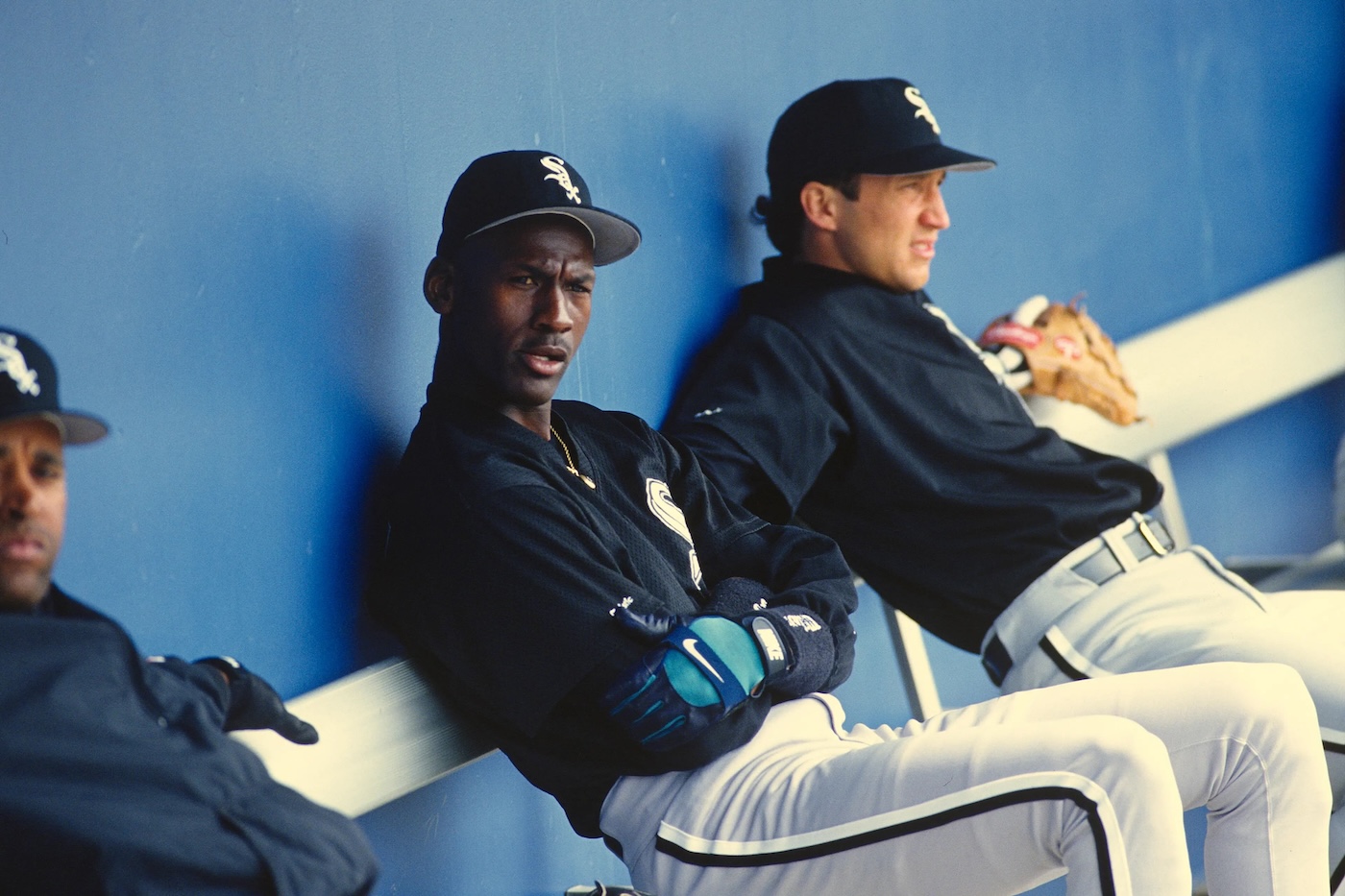
There’s a photo of Michael Jordan from 1994, sitting in a White Sox dugout in full uniform, looking like he isn’t quite sure he belongs there. He didn’t. He’d walked away from the best basketball career alive to go play minor league baseball, and he’d hit around .200.
Nobody remembers him as a baseball player, and there’s a reason for that: being generational at one thing has never once meant being generational at everything, not even for him.
“Founder Mode” is a real term now. Paul Graham coined it in 2024 after watching Airbnb’s Brian Chesky describe how conventional management advice (hire great executives, delegate, get out of the way) had nearly wrecked his company. It describes a founder who stays hands-on in the details of the business that made them a founder in the first place, instead of stepping back from it.
I want to name its opposite, because we don’t have a clean word for it yet: Founder Drift. Same intensity, same obsessive energy, aimed at anything except the company that made them a founder. A side project. A newsletter. A second, third, or fourth venture. The shiny new thing instead of the one already staring them in the face.
Three people are running this experiment live right now, in public, with quarterly earnings as the scoreboard. Two are in founder mode: Brian Niccol at Starbucks and Brian Chesky at Airbnb. One is drifting: Dharmesh Shah at HubSpot.
Founder Mode
Brian Niccol took over Starbucks in September 2024, inheriting the company’s worst same-store sales stretch since COVID. Starbucks’ previous CEO had tried to modernize and expand his way out of the slump. Niccol didn’t reinvent anything.
“Back to Starbucks” meant reintroducing seating, bringing back ceramic mugs, and cutting the discounting that had trained customers to wait for a deal instead of walking in for a coffee. It also meant renovating stores, about $150,000 a location, more than 1,000 “uplifts” completed by mid-2026, 1,500 targeted by fiscal year-end. The plan adds roughly 25,000 café seats across the U.S. by the end of the fiscal year.
The results, reported quarter over quarter: four consecutive quarters of same-store sales growth. Q2 fiscal 2026 alone delivered U.S. comparable sales up 7.1%, transactions up 4.3%, revenue up 9% to $9.5 billion, and net earnings up 33% to $510.8 million. It was the company’s first simultaneous top- and bottom-line growth quarter in more than two years.
By Q3, Starbucks was raising guidance again, with refreshers alone now a $2 billion product platform. Niccol’s own description of the quarter, on the earnings call: “the turn in our turnaround.”
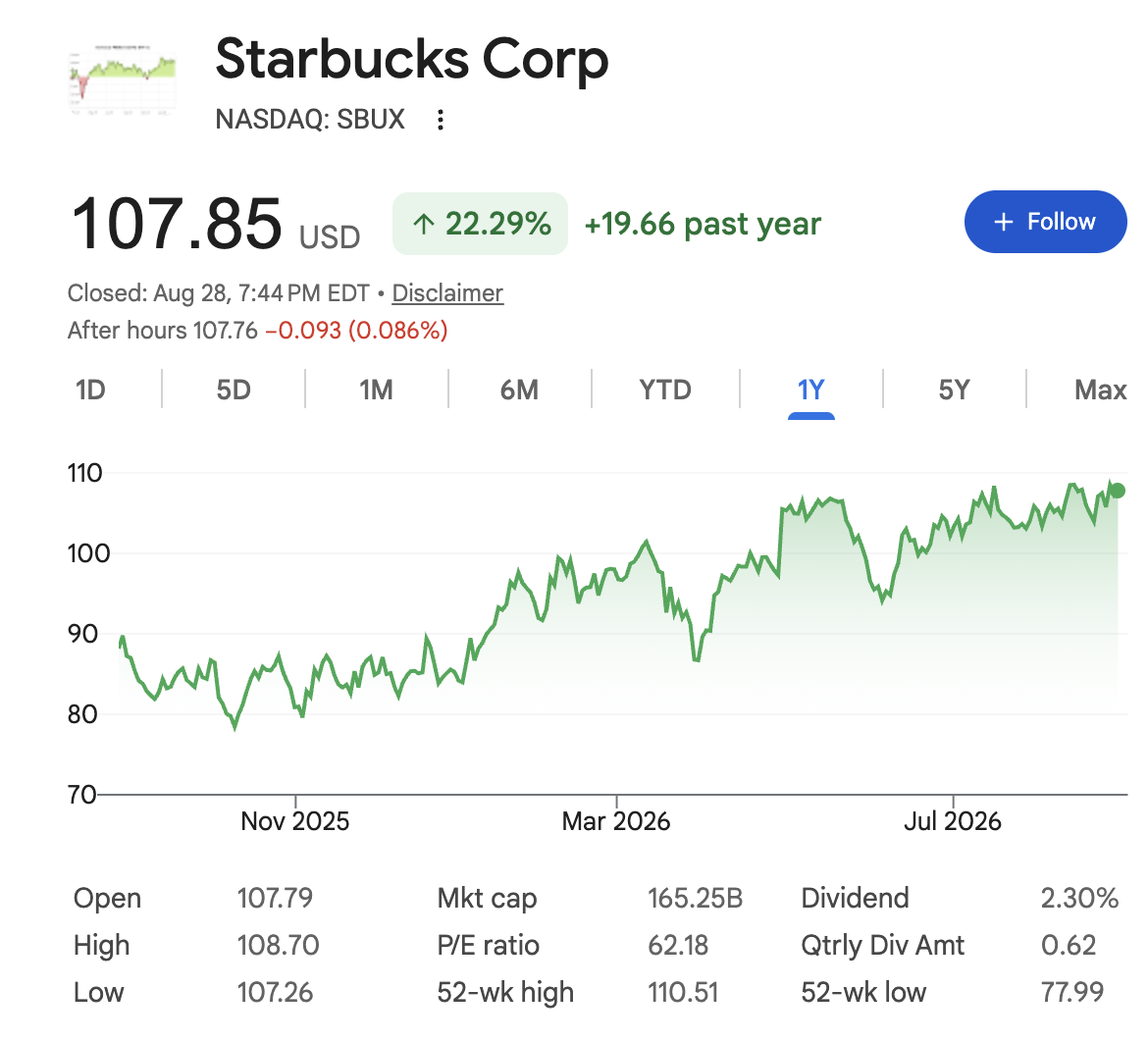
Starbucks’ own stock is up 22% over the past year, within a few points of its 52-week high. It’s the same playbook that took Chipotle’s stock up more than 770% during his six-year tenure there, while restaurant-level margins climbed from roughly 19% to nearly 29%. Zero new business lines. All discipline.
Brian Chesky is the cleanest version of the idea, because there’s already a name for what he does, and it’s the name this whole piece is borrowing. At an 8,200-employee company, Chesky has been explicit that he stays personally involved in decisions most CEOs delegate away entirely: hiring, firing, promotions, performance.
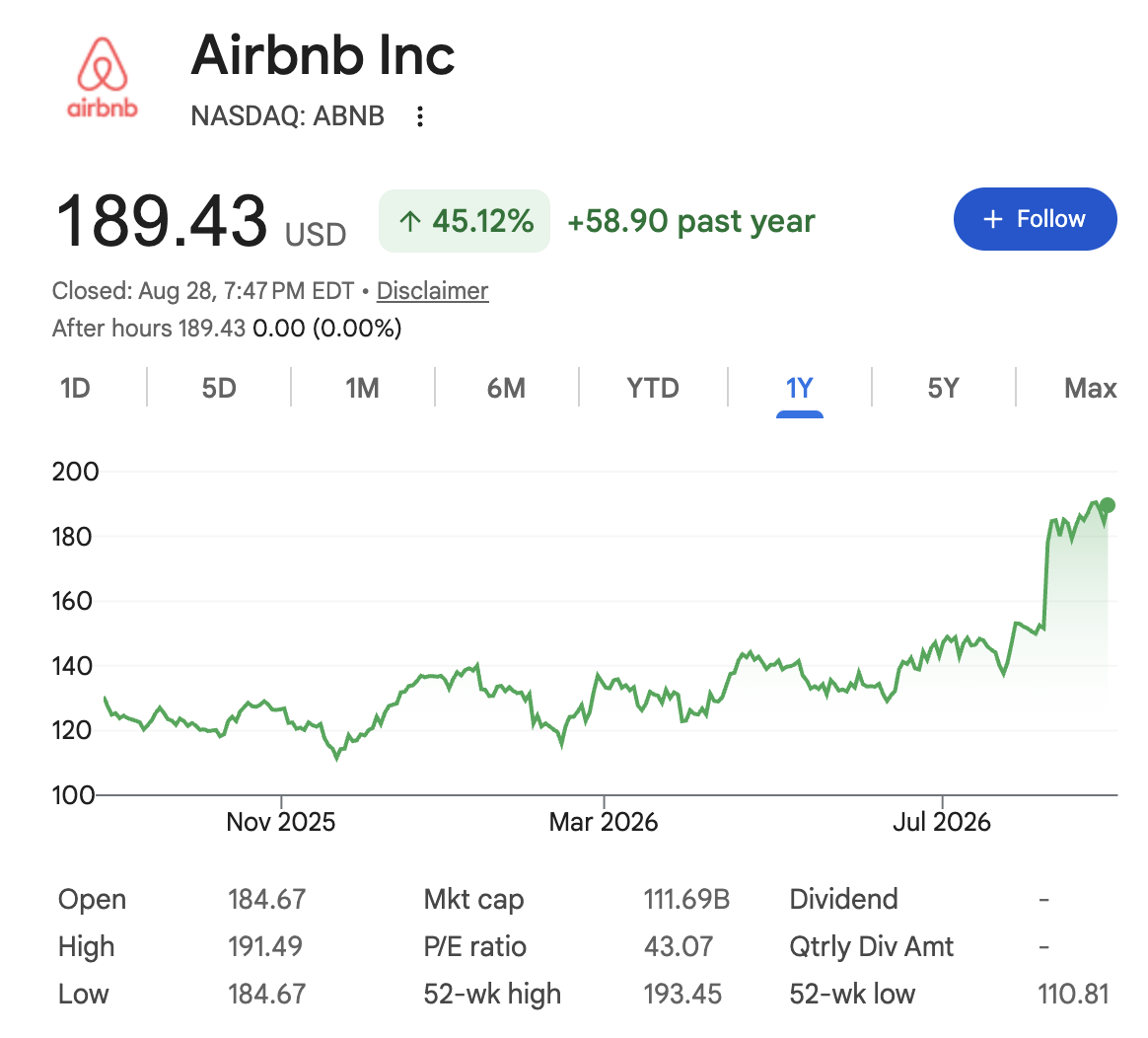
Airbnb posted Q2 2026 revenue of $3.6 billion, up 16% year over year and ahead of Wall Street’s expectations, while the stock is up 45% over the past year. Chesky’s current bet is that founder mode gets more important in an AI world, not less.
With AI now writing 60% of Airbnb’s new code, his argument is that the winners of this era will be “founder mode, not manager mode” companies, the ones where the person with the most at stake stays closest to the details instead of delegating them away.
Founder Drift
I got the idea for this piece sitting in one of Starbucks’ redesigned stores this morning, drinking coffee out of a real glass mug. I’m scrolling X and I see Dharmesh announcing his own CRM. I was super sad. Here’s someone I’ve looked up to for most of my adult life, doing the very thing I strongly encourage entrepreneurs not to do.
I’m already thinking about Niccol being in founder mode. Now I’m watching another founder do the opposite, live, in real time. So I go to HubSpot’s team page. Surely he’s stepped down then to start his own CRM? Nope, still CTO.
I go to his X bio next. Surely it explains what he’s doing, or at least says “former CTO.” Nope. I’m so confused, and then I scroll through X and see a post about focus. And now I’m even more confused.
Fortune favors the focused. pic.twitter.com/u5FXlfMM14
— dharmesh (@dharmesh) August 15, 2026
In the AI-native world, the real thing HubSpot gets from its co-founder and CTO is distribution. Every hour Dharmesh spends generating hype for ChatSpot (2023), then Agent.ai (2024, now past 2 million users), then a newsletter about AI agents, then YouSpot, is an hour that same brand equity isn’t being spent convincing the market that HubSpot’s actual AI answer, Breeze, is the real one.
YouSpot is a $1-a-month AI-native CRM launched in 2026 that, by its own framing, challenges the assumptions HubSpot itself was built on. Of course, he goes out of his way to say this doesn’t compete with Hubspot.
It’s just hard to see how the HUBS board approved their CTO to start another CRM instead of going into Founder Mode to work on the billion dollar CRM he is acting CTO for. Again, saying it out loud I’m even more confused.
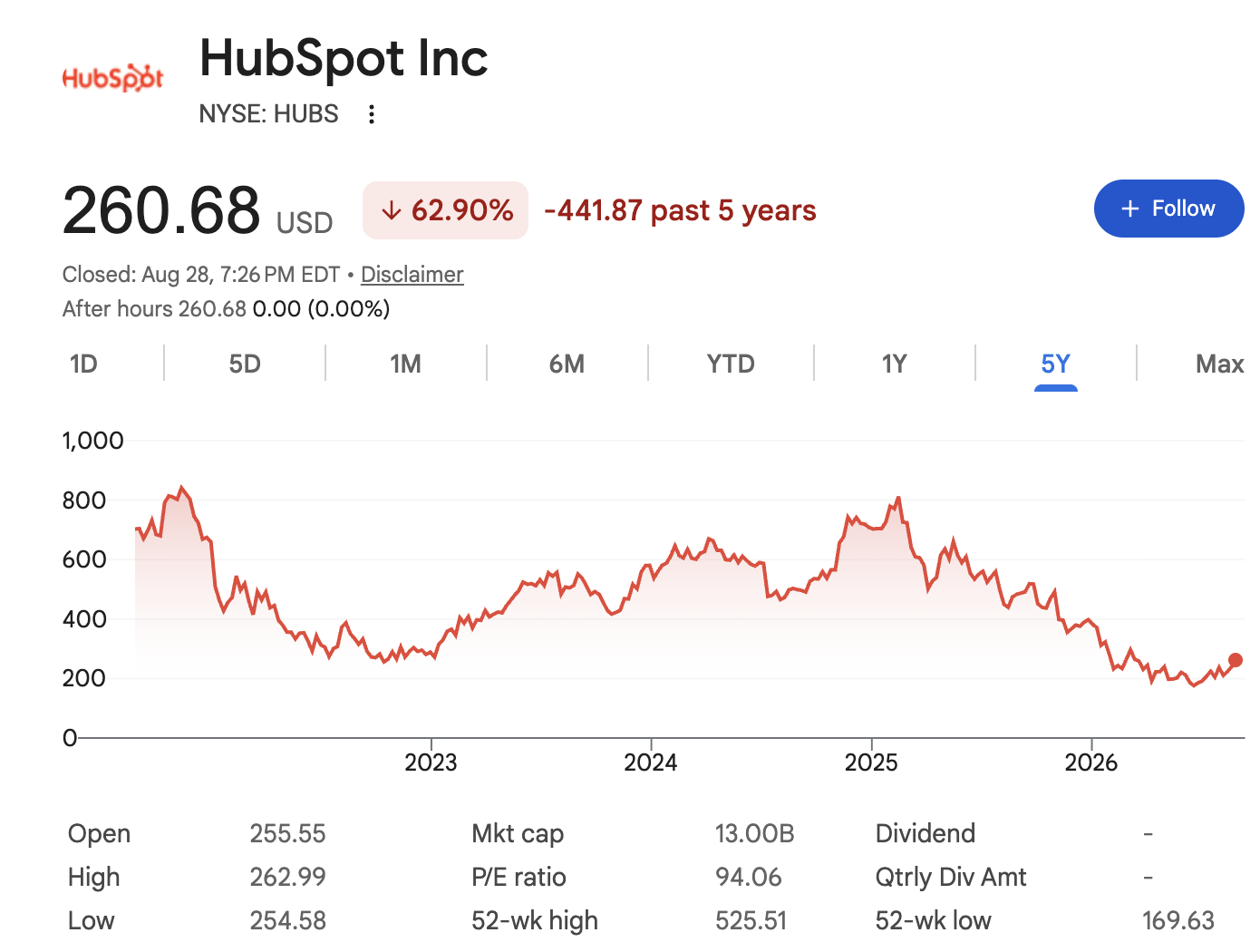
HubSpot’s stock closed at $260 on August 28, 2026, down 63% over the past five years and 50% off its own 52-week high. Its 300,000-plus customers, paying an average of roughly $11,800 a year, would probably appreciate a full time CTO.
I’m sure this is criticism he’s already heard. And for what it’s worth I’m a huge fan of his. I used to pass out the “Guide to Inbound” to my teams every year when I was in the corporate world. You couldn’t find a bigger fan of Hubspot than me.
If I had to use my crystal ball, and this is purely speculation, I’d say he’s already on his way out. But it’s just not public knowledge yet. Still, why not announce that before announcing your new CRM while employed (at least publicly) by another CRM?
ps. I try to assume the best in people, so I’m going to just assume that he doesn’t intend to confuse the market, Hubspot customers, or his followers, but that he likely can’t speak to a transition that may well already be finalized.
The Example Set
My bigger concern is the example that we are setting for the next generation. We are telling them it’s fine to hold a CTO board seat while founding their own app. That’s not how an operating executive is supposed to behave. That’s a VC’s job description, not a CEO’s or a CTO’s.
I have empathy for this. I’ve been there, but that’s why I know it’s not a good example to set. Because 99% of people who try to copy either extreme, running one company obsessively or running five casually, will get it wrong. Most people shouldn’t model their career on outliers, in either direction.
Focus isn’t the boring choice. It’s the hard one.
Quick update: Dharmesh at Hubspot reached out and clarified a few things. I still think it’s confusing, so will follow up with some additional info. Posting here as I get updates.
As a clarifying note:
— dharmesh (@dharmesh) August 30, 2026
YouSpot is completely a HubSpot project (part of HubSpot Next). It's goal is to create a product for the low-end of the SMB market — 1 person companies.
The goal is to create customer value in this fast-growing market segment with a new product that is…