Legacy
The Hour in New York That Helped Me Think Clearly
Keith Brown · Founding Partner, Outperform Ventures
Aug 1, 2026 · 4 min read
Some of my best thinking happens when I step away from work. Leaders who make time to step back make better decisions.
The most productive thing I did on a recent trip to New York wasn't work. It was an hour at the top of One World Observatory that I almost skipped to catch up on email. Stepping back is part of the job, not a break from it.
The morning I almost skipped
I was in New York for a board meeting. I had a few free hours that morning, and my first instinct was to open my laptop in the hotel room and grind.
Instead, I went to the top of One World Observatory. Wow, was it a view.
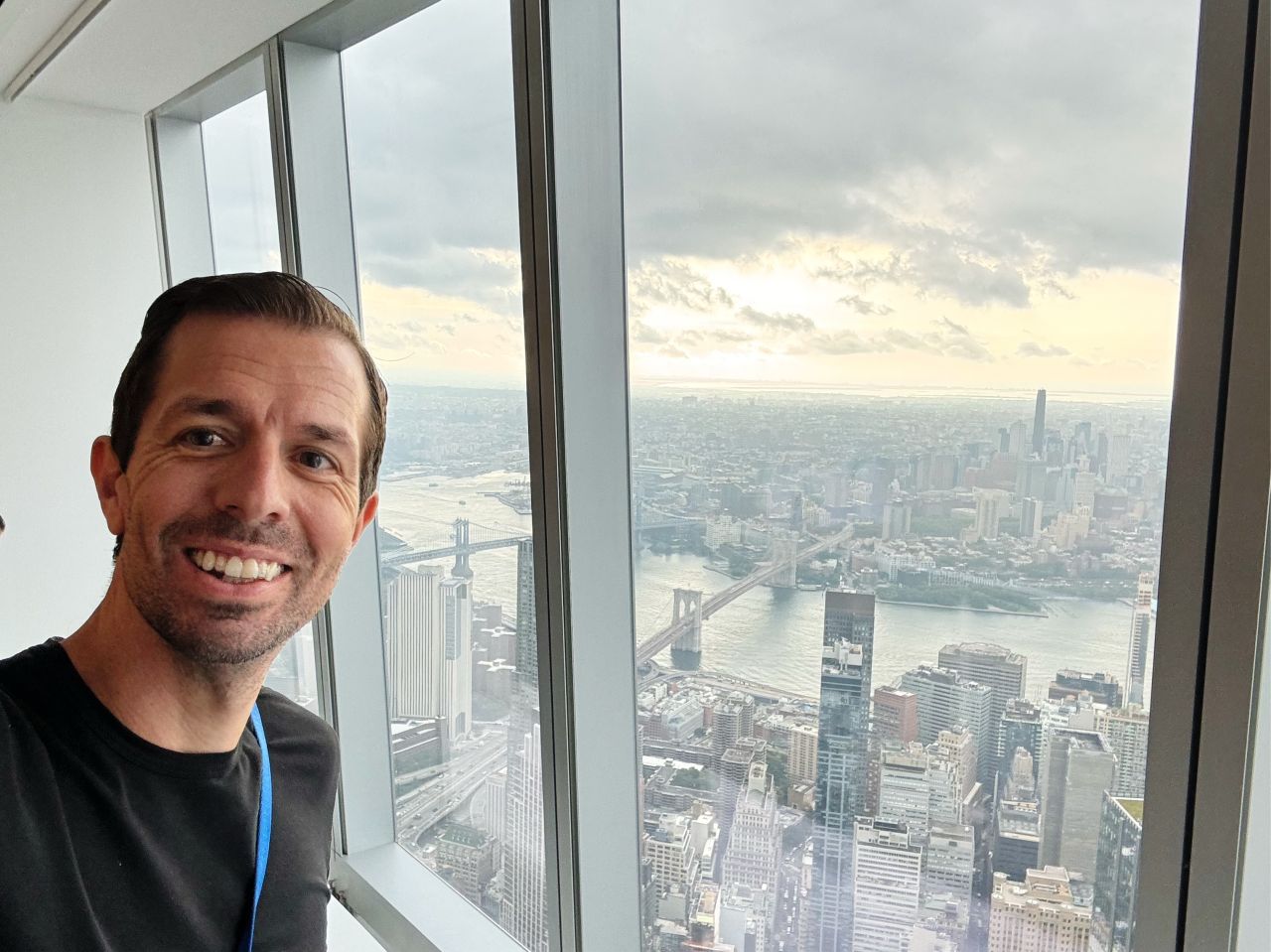
I told myself I'd stay for ten minutes, take a few pictures, FaceTime my kids, and leave. I stayed for an hour.
Stepping back feels like falling behind
In our careers, we are conditioned to believe that taking a break means falling behind.
We glorify being "in the weeds" and measure our worth by how fast we respond to messages. Inbox zero feels like progress. A full calendar feels like importance.
But when you finally step back and get 100 floors above the noise, you realize the traffic down on the street doesn't matter as much as you thought.
Sometimes the most productive thing you can do for your career isn't answering another email. It's hitting pause to get some perspective.
Why leaders need to step back

Most of a leader's real job isn't in the inbox. It's deciding what matters, what to stop, and where to point people. Those decisions need distance. You can't see the shape of a city from the sidewalk.
I've written before about the illusion of output: the trap of confusing activity with progress. Answering fifty messages feels productive. It rarely changes the direction of a company.
- Speed feels like value. Responding fast is visible. Thinking well is not.
- Busy hides drift. A packed week can keep you from noticing you're heading the wrong way.
- Perspective compounds. One clear decision from a step back can save months of effort in the weeds.
How to build the habit on purpose
I didn't plan that hour in New York. Most good pauses aren't planned, which is exactly why they rarely happen. If you want perspective regularly, you have to make room for it.
- Notice the instinct. When you have open time and your first move is the laptop, stop and ask whether that's the best use of it.
- Change your altitude. Go somewhere that physically takes you out of the day: a walk, a view, a different room.
- Leave the inbox closed. The point is to think about the work, not to do more of it from a nicer spot.
- Call the people who matter. I FaceTimed my kids from the top. It reset what I was measuring.
- Write down one thing. Before you go back, write the one decision or idea that came out of the pause.
What a pause gives you
A step back isn't time off from thinking. It's a different kind of thinking. In the weeds, you react to whatever is in front of you. From above, you can see patterns: the project that keeps slipping, the meeting that never needs to happen, the person on the team who is quietly carrying too much.
Those are the observations that change a company. They almost never show up between emails.
- Priorities. Distance makes it obvious which three things matter this quarter, and which twenty don't.
- People. You notice who needs support, and who is ready for more responsibility.
- Direction. You can ask whether the plan still makes sense, instead of just executing it faster.
Why this is harder for founders
Founders feel this pull more than most. When the company is yours, every unanswered message can feel like a risk. Early on, being in the weeds is often necessary. Someone has to do the work, and it's usually you.
The problem is that the habit outlives the stage. A company with ten or fifty people needs its leader to spend more time deciding and less time reacting. If you never step back, you become the bottleneck without noticing. The founder diagnostic is a quick way to check whether that's already happening.
Building in pauses is one of the simplest ways to grow out of that role. It costs an hour. It can save a quarter.
There's a cost to never stepping back, and it's rarely visible right away. It shows up later as burnout, as a team that waits for you to make every call, or as a strategy that quietly stopped making sense months ago. By the time you notice, the fix is much harder than an hour of perspective would have been.
The leaders I respect most protect their thinking time as carefully as their money. They know their judgment is the most valuable thing they bring, and that judgment needs room to work.
Start small

You don't need a trip to New York or a famous building. Start with one hour a week. Put it on the calendar like any other meeting, and treat it with the same respect you'd give a board member.
Use the first few sessions to ask simple questions. What am I spending time on that doesn't matter? What decision have I been avoiding? Who on my team haven't I really talked to lately?
Most leaders find the answers are already there. They just never had the quiet to hear them.
The work will still be there
Nothing broke while I was at the top of that building. The emails were waiting when I got back, and I answered them with a clearer head.
That's the lesson I keep relearning. For more on leading without burning out, read leading in difficult times or browse Leadership & Legacy.
Take a breath today. The work will still be there when you get back.
Related reading
Follow what I'm building and backing
Updates on the companies I invest in, the products I build and what I learn along the way.
- New companies I'm backing through Outperform Ventures
- Products I'm building, as they launch
- What's working and what isn't, as it happens
Unsubscribe anytime.