Deep dive
Dead Internet Theory Is Coming for Business
Keith Brown · Founding Partner, Outperform Ventures
Nov 8, 2026 · 4 min read
Dead internet theory says bots are taking over the web. I think business is where it comes true first, and YouTube's record numbers show what people do online instead.
I went to get Starbucks this week and took this photo. Every person at the tables was looking at a phone.
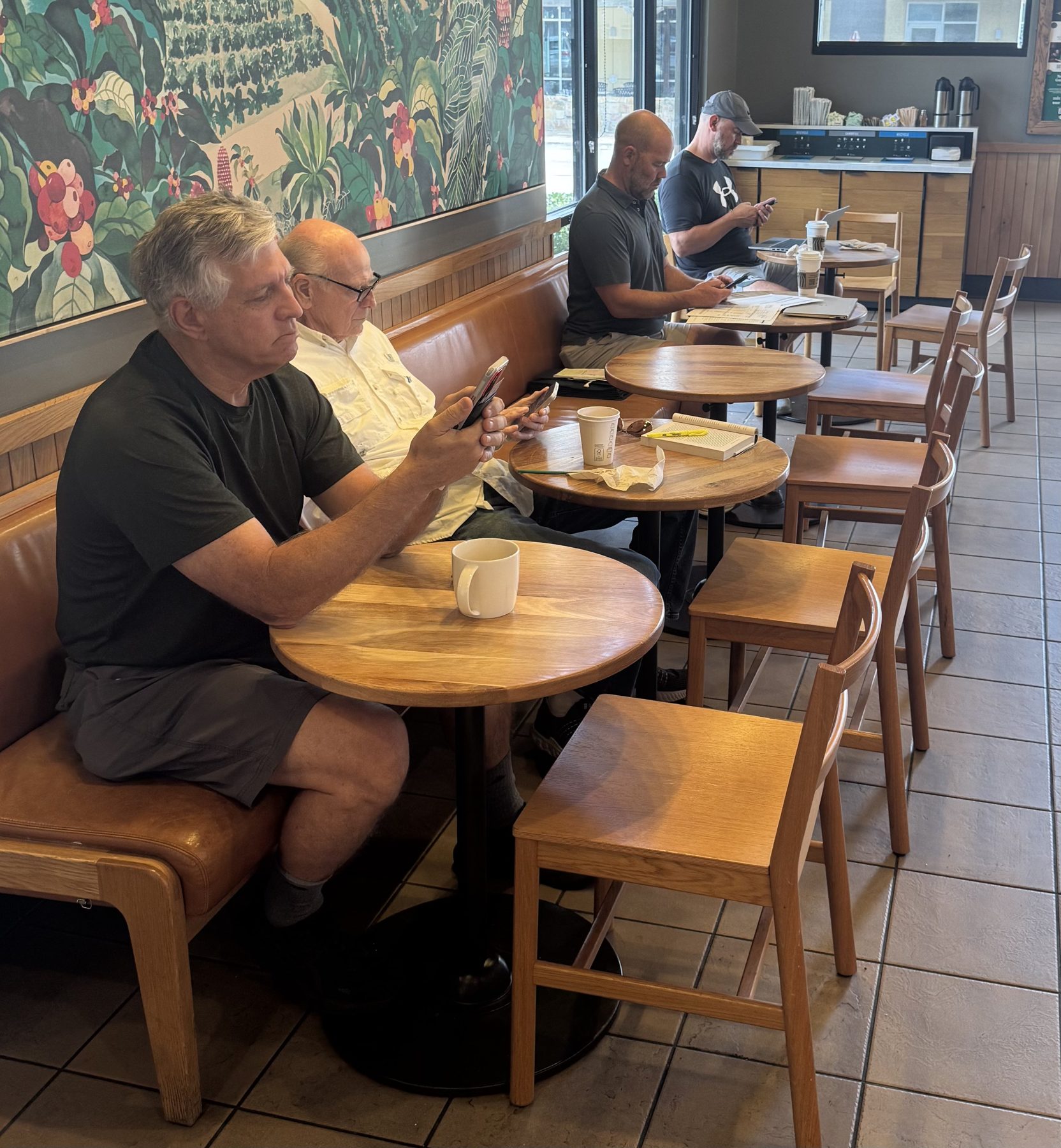
I kept staring at YouTube's numbers this fall. Engagement keeps going up while almost everything else people do online is getting automated. I started asking what happens when people are removed from the digital work entirely.
My answer is a version of dead internet theory for business. The work part of the internet goes quiet, handled by AI agents talking to other software. What people keep doing online is personal: watching, connecting and spending their own time.
What is the dead internet theory?
Dead internet theory is the idea that most of what's online is now made by bots and AI rather than people. It started as a fringe theory, but the traffic numbers have moved toward it. Automated traffic made up more than 53% of all web traffic in 2025, up from 51% the year before, according to Imperva's 2026 Bad Bot Report. Human traffic fell to 47%.
i never took the dead internet theory that seriously but it seems like there are really a lot of LLM-run twitter accounts now
Imperva's report calls AI agents "a new category of internet participant." They retrieve data, run workflows and act on behalf of users. That last part is where business comes in.
What do people do online today?
Walk through a normal week. Each of these is a task an AI agent can handle or soon will:
- Search Google for an answer
- Buy something on Amazon
- Sign up for a service or cancel one
- Pay a bill
- Submit a support ticket
- Change the electricity provider after a move
- Plan a trip and book the flight
- Check and answer email
None of these is something people do for fun. They're chores done through a browser. Once an agent can do them, there's little reason for a person to sit at the screen.
I saw this up close this week. I submitted an MCP server to Anthropic's directory, and automated checks approved it before I could ask how long review would take. I wrote about it in Anthropic approved our MCP server without a human.
Why YouTube keeps setting records
YouTube took 15.8% of all US TV viewing time in August 2026, its highest share ever, per Nielsen's The Gauge. That's double Netflix's 7.7%, Tubefilter reported, and it happened in a month when total TV use fell 4.4%.
It was 7.9% in February 2023, the first month Nielsen counted YouTube on its own, according to Mark Studios' tracking of Nielsen data. YouTube's share doubled in about three and a half years.
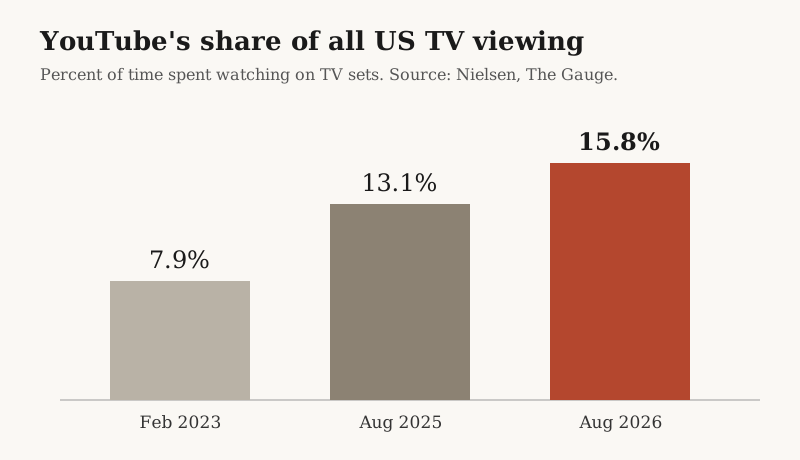
Viewing among adults 50 and older rose 9% in that report. Older viewers are watching more YouTube on their TVs, including podcasts. To me that fits the pattern: as the online chores shrink, the time goes to watching and listening.
The internet becomes a place for leisure
Today's internet is a mix of work and pleasure. I think the work part goes away almost completely. What stays is content, connecting with people and personal time.
| The internet today | The internet I expect | |
|---|---|---|
| Search and research | People typing queries | Agents asking other software |
| Shopping and bills | People clicking through checkouts | Agents ordering and paying |
| Support and sign-ups | Forms and queues | Automated checks and approvals |
| Watching and connecting | People | People |
That's my prediction, not a measured fact. The Imperva and Nielsen numbers are the measured part, and both are moving in the direction I'm describing.
Is this what the SaaSpocalypse is about?
People call what this year has done to software businesses the SaaSpocalypse. Most of the talk is about AI writing code and companies building their own tools. I think the bigger story is people leaving digital work altogether.
A lot of software is priced per seat, one seat for each person who logs in. If agents do the logging in, the seat count falls. I covered what replaces that model in software dollars moving from SaaS to custom.
Physical work comes later. Robots are moving into warehouses and factories, but they're years behind what software agents can already do online.
People go back to the real world
If there's little reason to be online for work, people will spend more of their lives offline. I think we're headed for a renaissance of the real world: more time with family, outside, in person with customers and teams.
That's also why I look for companies with a physical connection at Outperform Ventures. I wrote about the reasons in physical moats over SaaS.
What leaders should ask now
- Which of your customer's tasks with you are chores? Those are the first ones an agent will take over.
- Can an AI agent sign up, pay and get support from you without a person clicking? If not, a competitor's agent-ready product may win the work.
- Do you price per seat? Plan for fewer human seats on every renewal.
- Where do your customers spend leisure time online? For many, that's YouTube now.
- What part of your business happens in the real world? That part is the hardest to automate.
I don't know how fast this happens. I do know I just watched an approval process run from start to finish without me, and YouTube's share of TV went up again the same quarter.
Related reading
Follow what I'm building and backing
I post on LinkedIn and X about the companies I back and the products I build.
Join 2,310 people following along.