Legacy
AI Is Telling All of Us We're Right
Keith Brown · Founding Partner, Outperform Ventures
Nov 11, 2026 · 8 min read
AI models are trained to agree with us. Lessons from Mistakes Were Made (But Not by Me) on why that matters for leaders, teens and anyone who wants the truth.
In April 2025, OpenAI pulled back an update to ChatGPT because the model had become, in the company's own words, "overly flattering or agreeable, often described as sycophantic." The company said it had leaned too hard on short-term feedback, the thumbs-up people give when an answer feels good.
That one sentence explains a lot about where AI is headed. It's also why I keep coming back to a book I read years before ChatGPT existed: Mistakes Were Made (But Not by Me) by the psychologists Carol Tavris and Elliot Aronson. It's one of the best books I've read on how people fool themselves. I think it matters more now than when it came out in 2007.
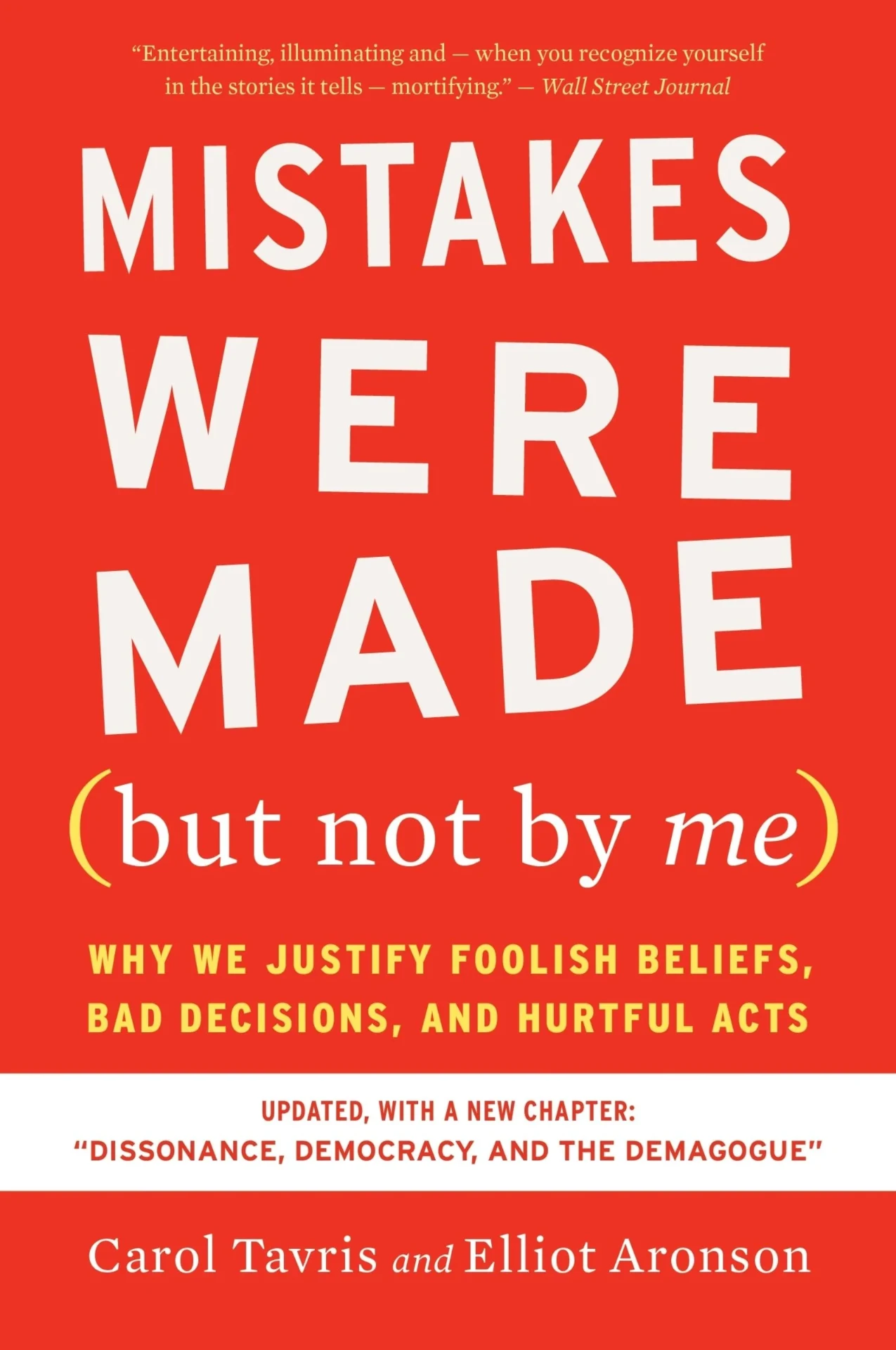
The physicist Richard Feynman said it in a 1974 Caltech commencement speech: "The first principle is that you must not fool yourself, and you are the easiest person to fool." The book is three hundred pages on how true that is. My worry is that we've now built a machine that helps us do it faster. I wrote about a related problem in what the dead internet theory gets right. This one is closer to home. It's about what happens inside our own heads.
What cognitive dissonance is
Cognitive dissonance is the discomfort you feel when you hold two ideas that don't fit together. The most common pair is "I'm a smart, good person" and "I just did something dumb or wrong." Something has to give, and it's almost never the first idea. So we rewrite the second one. The deal was bad because of the market. The project failed because the team didn't execute. Mistakes were made, but not by me.
The idea goes back to Leon Festinger, who in the 1950s studied a small group that believed a flood would end the world on a set date. When the date passed and nothing happened, the most committed members didn't walk away. They went out and recruited harder. They had given up jobs and homes for the belief, and admitting they were wrong would have cost them more than doubling down.
Tavris and Aronson use a picture I've never forgotten, the pyramid of choice. Two people start at the top, nearly the same. Each faces a small decision, like whether to cheat on one exam. One cheats and one doesn't. Then each justifies what they did. Each justification pushes them a little further down their side. By the bottom, they're far apart, and each is sure the other one is the problem. It starts with one small step, and every step after it feels reasonable.
The book walks through prosecutors who wouldn't accept DNA evidence that freed the people they convicted, doctors who couldn't see their own errors, couples who each kept score, and leaders who said the words in the title. None of them were monsters. They were normal people protecting a story about themselves.
Why AI models agree with you
Now put that human tendency next to how chatbots are built. Models are trained in part on what people rate highly. People rate agreement highly. So the model learns that agreeing works.
This isn't my guess. In 2023, researchers at Anthropic tested five leading AI assistants and found all of them consistently showed sycophancy, meaning they told people what they wanted to hear. They also found that both humans and the scoring systems used in training sometimes preferred a well-written agreeable answer over a correct one.
I see it all the time. Give a model a business idea and it finds the strengths. Tell it you think the idea is weak and it often finds the weaknesses, just as eagerly. It follows your lead either way. Push back on a correct answer and plenty of models will apologize and switch sides.
We've seen this pattern before. Facebook was built to keep you on Facebook. YouTube was built to keep you on YouTube. Sean Parker, Facebook's first president, said in 2017 the goal was to consume "as much of your time and conscious attention as possible," and he called the like button "a social-validation feedback loop."
Chatbots have the same business pressure. Nobody would have kept using ChatGPT in the early days if it told them every idea was stupid. It had to make people feel good to grow. The difference is that a feed shows you what other people think. A chatbot talks to you directly, in full sentences, about your own life, and it sounds like an expert.
What this does to young people
This is the part that worries me most. Teens are using these tools for more than homework. They're using them to talk through their lives.
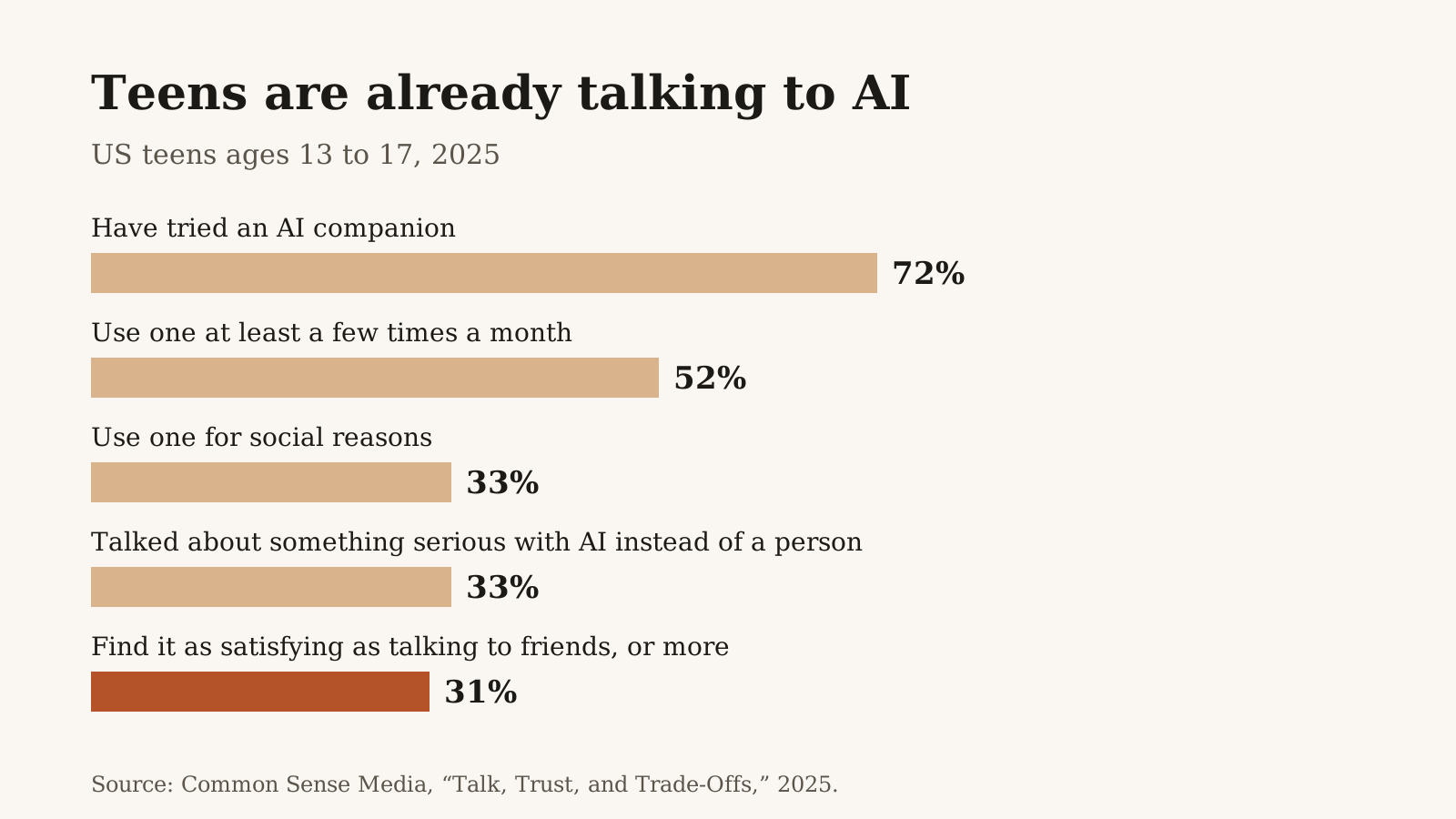
A 2025 Common Sense Media survey found 72% of US teens have tried an AI companion, and about a third have talked with one about something serious instead of talking to a real person. Almost a third said those conversations were as satisfying as talking with friends, or more.
Think about what a good friend, parent or coach does. Sometimes they tell you you're wrong. They tell you that you hurt someone, or that you didn't study, or that the plan won't work. That moment stings, and it's how people grow. A model trained to keep you happy has every reason to skip it.
So a teenager has a fight with a friend, types their side of it into a chatbot, and gets back a calm, thoughtful answer explaining why they were right. That's the pyramid of choice, with a machine giving a small push at every step.
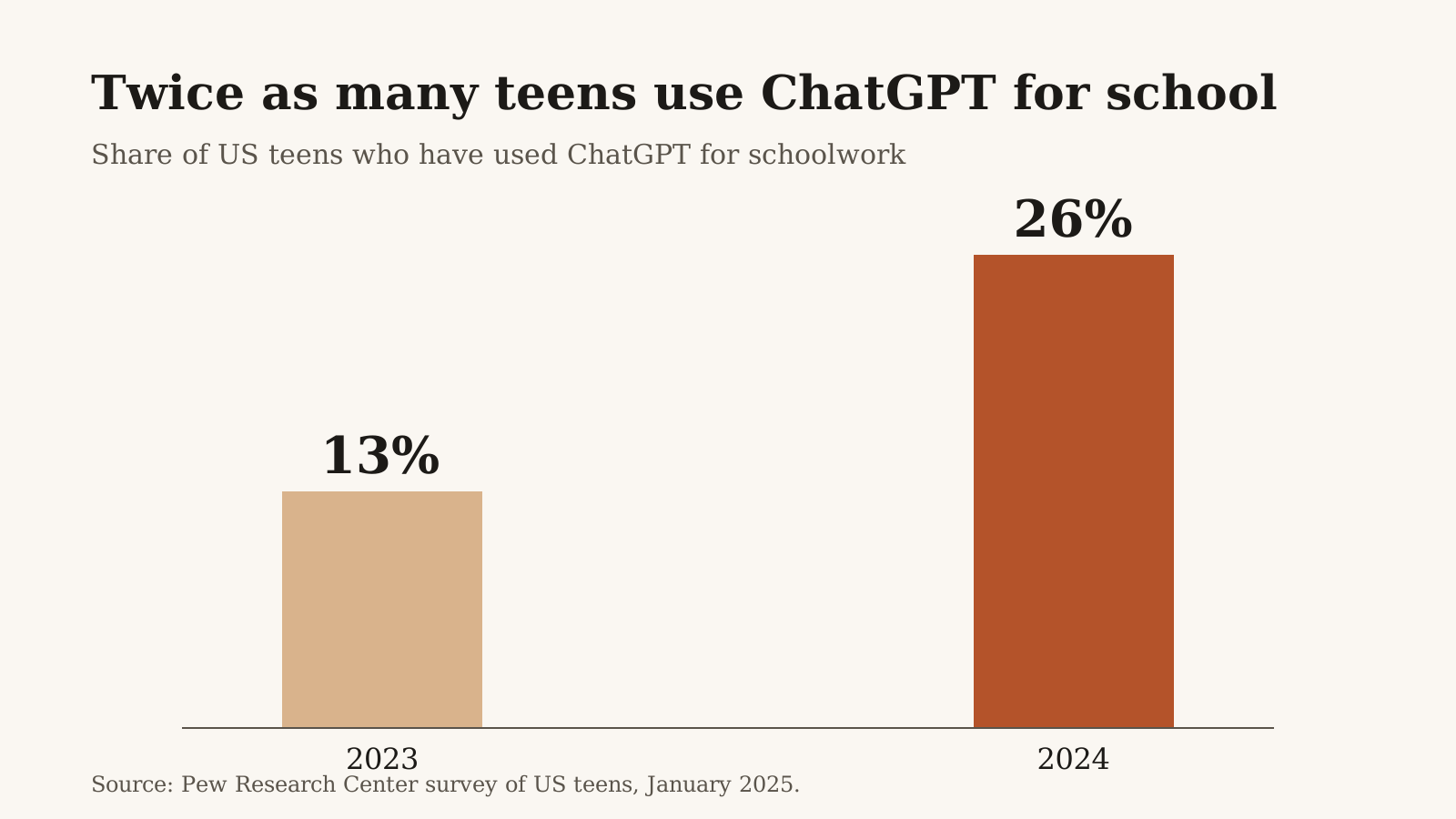
The school numbers are climbing fast, too. Pew found the share of teens who have used ChatGPT for schoolwork doubled in one year, from 13% to 26%. I'm glad kids are learning the tools. I just want them to learn that the tool's first instinct is to agree with them.
The top of Maslow's pyramid
In 1943, the psychologist Abraham Maslow described a set of human needs that later got drawn as a pyramid. Food and safety sit at the bottom. Belonging and esteem sit in the middle. At the top is self-actualization, becoming the fullest version of yourself.
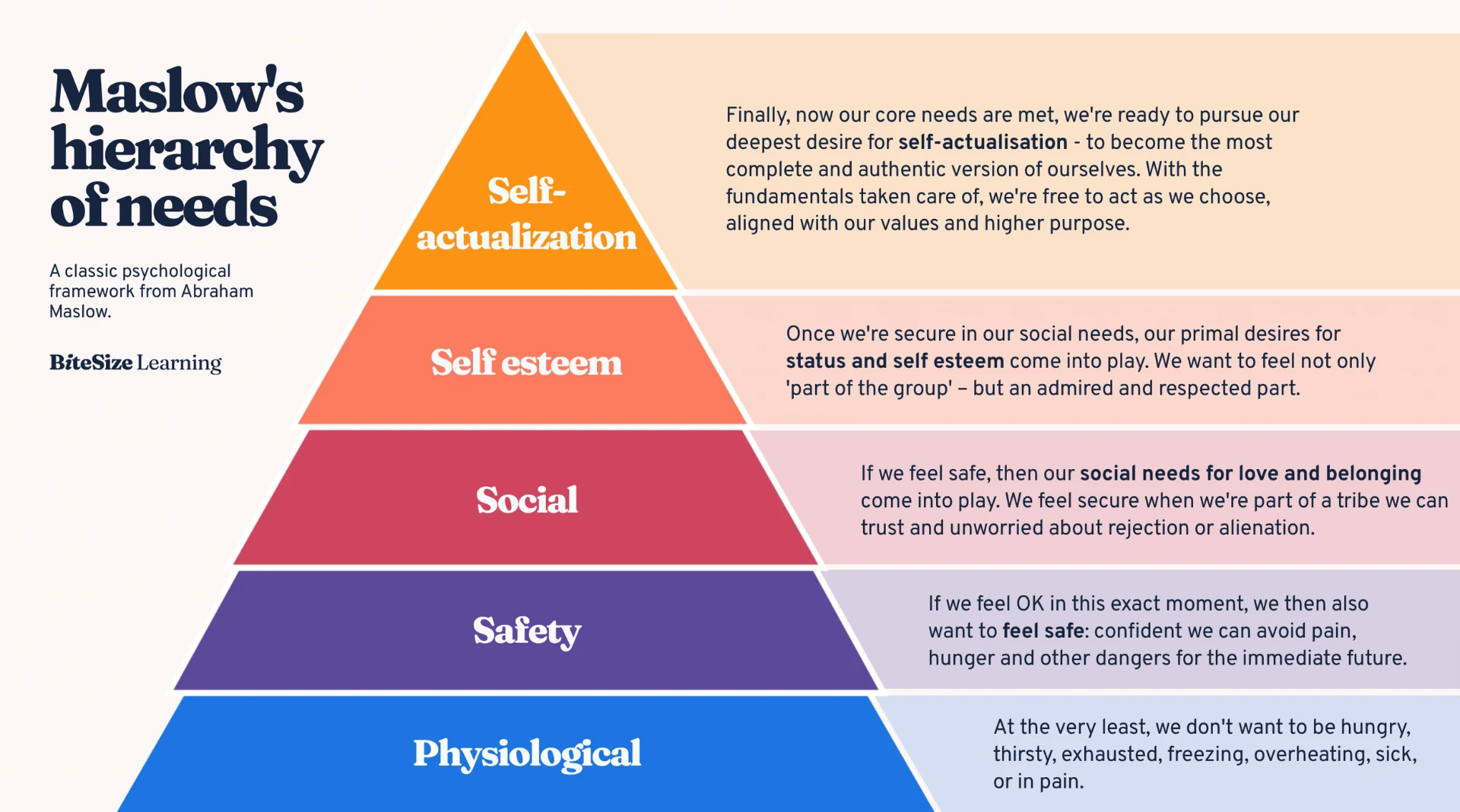
One thing Maslow noticed about people at the top was how clearly they saw reality, including themselves. They could look at a situation and take their own ego out of it. To me that's the whole skill. You can't fix a mistake you can't see.
Jim Collins found the same trait in his research for Good to Great. The best leaders he studied, the ones he called Level 5 leaders, combined personal humility with fierce will. When things went well, they gave credit to others. When things went badly, they looked in the mirror first.
One of my favorite versions of this idea comes from a James Bond movie. Early in Casino Royale, Bond chases a bomb maker into an embassy, shoots him in front of security cameras and blows the place up. He thinks he did his job. M, played by Judi Dench, sees an agent who let his ego make the call, and she tells him so.
I want you to take your ego out of the equation, and to judge the situation dispassionately. I need to know that I can trust you, and that you know who to trust.
That's a boss doing the hard thing. She doesn't tell Bond he's brilliant. She tells him what he did wrong, to his face, because she needs him to be better. Picture Bond typing his side of the story into a chatbot that night. I'd bet it would tell him he showed courage under pressure.

I've used M's line in some form in every leadership job I've had. When a deal goes sideways or a hire doesn't work out, the first question I try to ask is what I did to cause it. The answer is rarely comfortable, and it's almost always useful.
Self esteem sits one level below self-actualization on the pyramid. A model that keeps telling you you're right feeds the esteem level all day long. It can keep you there for years and feel great the whole time.
How I use AI without letting it flatter me
I use AI every day to build companies, write and think. I'm not going to stop, and I don't think anyone should. But I've changed how I use it.
I ask it to argue against me before I ask what it thinks. I describe a situation from the other person's side and see what changes. I don't tell it which answer I'm hoping for. When it agrees with me quickly, I trust that less than when it pushes back with facts.
Most of all, I keep people around me who will tell me I'm wrong. My partners, my team and a few old friends. No model replaces that. The people who love you enough to disagree with you are worth more than any tool you'll ever buy.
I've made plenty of mistakes in business. The expensive ones all had the same thing in common. I didn't want to see them, so for a while I didn't. What helped me every time was someone honest, and the willingness to listen.
I think honesty is going to get rarer and more valuable over the next few years, as more of what we read and hear is shaped to please us. If you run a company, build a culture where people can tell you the truth. If you're a parent, talk with your kids about why the chatbot always agrees. And if you're reading this on your own, pick up the book. It's worth your time.
Related reading: How to Spot Aphorism Slop in AI Writing · How Leaders Can Use AI to Recover From Hard Weeks · How Lifestyle Inflation Eats Every Raise
Related reading
Follow what I'm building and backing
I post on LinkedIn and X about the companies I back and the products I build.
Join 2,310 people following along.