Legacy
Your Best Experiences Are on the Other Side of Fear
Keith Brown · Founding Partner, Outperform Ventures
Jul 1, 2026 · 4 min read
Only one person could climb the lighthouse at a time. I went, it was scary, and it was worth it.
Your best experiences are on the other side of your greatest fears. I was reminded of that at the top of a lighthouse this summer.
This article is about that climb and what it taught me about fear in life and in business.
One person at a time
We got to a lighthouse on a family trip. The rule was simple. Only one person could go up at a time.
So the climb wasn't something we would do together. Someone had to go alone, and I decided it would be me.
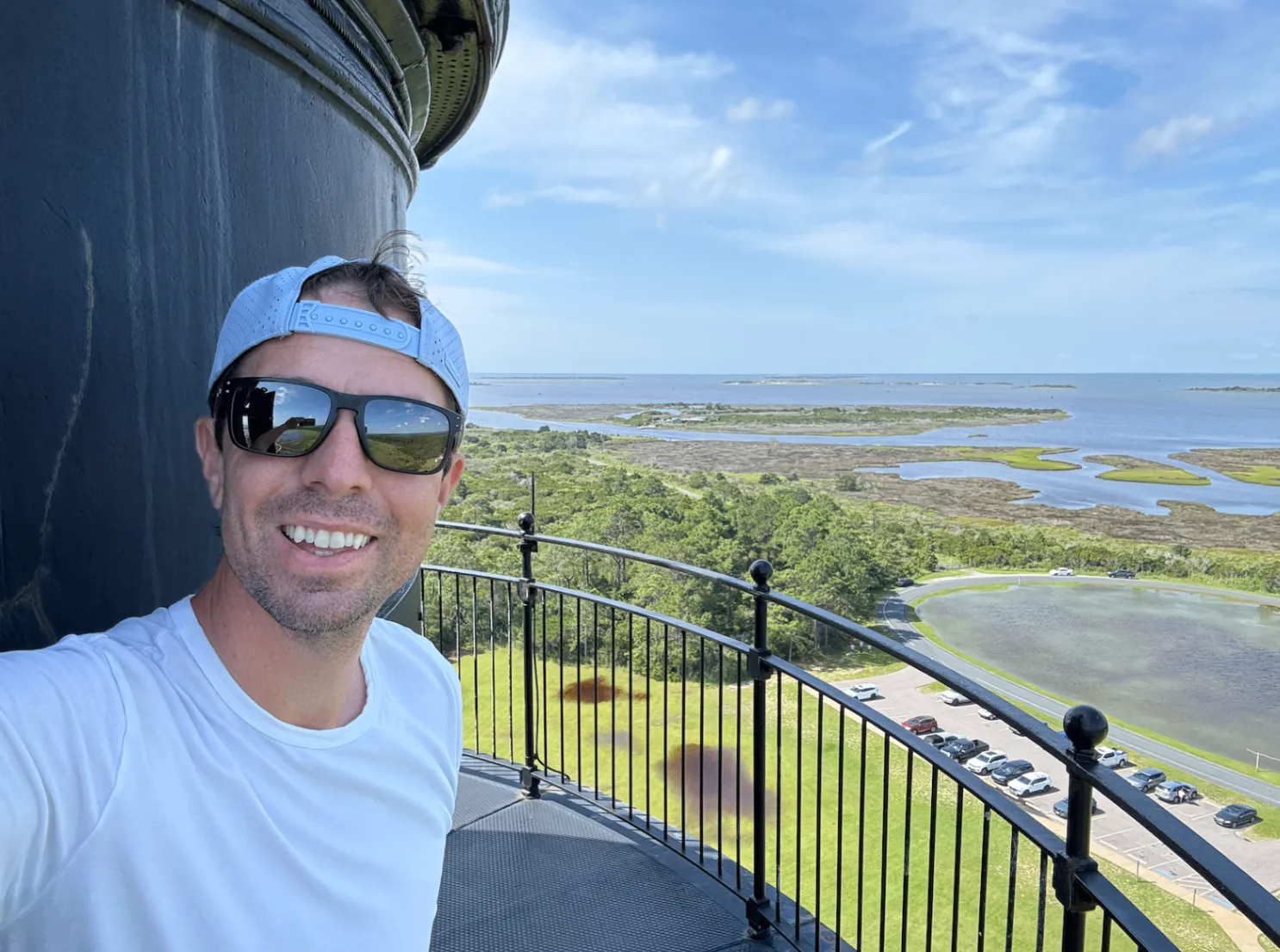
At the top, I stepped out onto the gallery, took a picture and FaceTimed my family on the ground.
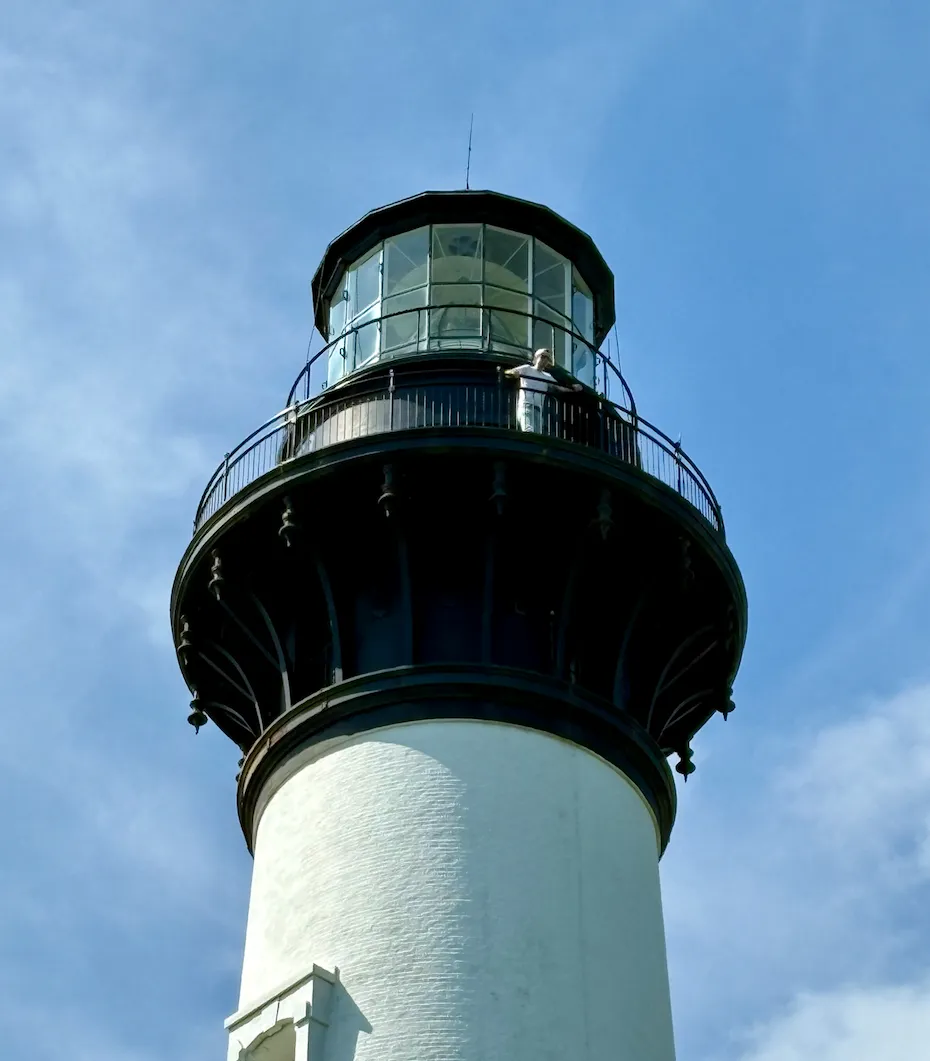
It was scary at the time. The railing is all that stands between you and a long drop, and the wind doesn't care how confident you feel.
It was also one of the best moments of the trip.
Fear shows up before the good part
Looking back, the fear and the reward came from the same place. The climb felt risky because it was new, high and a little uncomfortable. Those are the same reasons it was worth doing.
Most of the moments I remember from my career followed the same pattern. The decisions that scared me were the ones that changed things.
- Starting a business at twelve meant doing something none of my friends were doing.
- Leading M&A for a billion-dollar company meant making calls where a mistake would be expensive and public.
- Stepping away in 2018 meant walking away from the titles I had worked twenty years to earn.
- Starting Outperform Ventures meant coming back in public after years in the background.
None of those felt safe at the time. You can read more about them in My Story and in why I stepped away for seven years.
What fear looks like for founders
Founders rarely face a fear as obvious as a railing. In a company, fear usually shows up as a delay.
- Putting off the hard conversation with a cofounder or an early hire who isn't working out.
- Not raising prices because a customer might leave.
- Holding onto every decision because handing one off means trusting someone else to get it wrong sometimes.
- Waiting to launch until the product feels finished, which it never does.
- Avoiding the question of what the company is worth because the answer might be disappointing.
Each of those feels like caution. Most of the time it's fear. The cost doesn't show up right away. It shows up a year later as a company that grew slower than it should have.
If the decisions all come back to you, I wrote about that in what is capping your growth. It's the most common fear I see in founders, and it hides well.
How I deal with it
I don't think fear goes away. I've just learned to treat it as information rather than an order.
- Name it. Say out loud what you're afraid of. Most fears get smaller once you say them.
- Ask what the worst case is. Then ask whether you could recover from it. Usually you can.
- Go first. Someone has to climb the stairs. When a team sees the leader do the uncomfortable thing, it gets easier for everyone.
- Bring people with you. I couldn't take my family up the lighthouse, but I could FaceTime them from the top. Share the moment even when you have to do the hard part alone.
- Look back afterward. Notice how the fear compared with what happened. That memory makes the next climb easier.
Leaders go up alone sometimes
The one-at-a-time rule is a good picture of leadership. There are decisions only one person can make. Nobody else can climb those stairs for you.
That can feel lonely. It doesn't have to be. The climb is alone, but the view is something you can share. Your team, your partners and your family can all see it through you.
That's part of why I care about leadership and legacy. The things you were brave enough to do become stories other people use when it's their turn to climb.
What I want my kids to remember
My family watched me go up from the ground. I hope what they remember isn't the view. I hope they remember that I was scared and went anyway.
That lesson outlasts any job title. I wrote more about that in your identity was never what you do.
Your next climb
Think about the one thing you've been putting off because it scares you. A conversation, a price change, a launch, a hire or a step away from the business.
That's probably your lighthouse. Your best experiences are on the other side of your greatest fears.
Fear in business
The same pattern shows up at work. The hard conversation, the pitch, the job offer in a new city. Fear rarely goes away before the moment comes. The people who grow are the ones who go ahead while they're still nervous.
Founders feel this all the time: the first sale, the first hire, the first time asking for money. I wrote about one of those moments in why I came back and about leading under pressure in chasing approval.
If you're building something ambitious, let's connect on LinkedIn.
Related reading
Follow what I'm building and backing
I post on LinkedIn and X about the companies I back and the products I build.
Join 2,219 people following along.