Oct 21, 2026 · Fly or Tesla
Fly or Tesla Passes 4,000 Trips Checked
Keith Brown · Founding Partner, Outperform Ventures
Fly or Tesla passed 4,000 trips checked this week, less than a month after I launched it in late September. The free tool tells Tesla owners whether a trip is better by plane or by car. It compares cost, time and stress for each route.
The milestone comes with a round of changes. The site now covers nearly 1,000 routes around the world and suggests landmarks to see along the way. It also uses a new toss-up point between flying and driving: about 10 hours on the road, up from the 4 to 5 hours I first assumed.
On the trips where driving came out cheaper, owners have kept $494,709 so far, according to the live counter on the site. The average stress gap between the two options is 53%, and the average difference per trip is $584. I wrote about why Tesla has crossed into the mainstream in Why I Think Tesla Has Passed Its Tipping Point. This project is the practical side of that view.
| Fly or Tesla, Oct 21, 2026 | Number |
|---|---|
| Trips checked | 4,000+ |
| Routes covered | Nearly 1,000, around the world |
| Saved where driving won | $494,709 |
| Average stress gap | 53% |
| Average per trip | $584 |
Why I built it
The idea started with a Dallas to New Orleans drive, which I wrote about on the About page. On paper the plane wins. Two hours in the air against eight on the road. I took the car and I'd take it again.
I built the site to settle that question for any route, with the math written out so people can check it. I didn't expect this many people to use it this fast.
I asked Tesla owners one question
A few weeks ago I posted a simple question on Facebook. Would you drive your Tesla across the country instead of flying? I expected a few dozen replies and a lot of debate about charging.
Hundreds of owners answered. Most of them said yes, without hesitation. Many had already done it, some more than once. Their answers changed how the site works, so I want to share the best of them here.
Superchargers are everywhere now
The first thing owners told me is that charging isn't the worry it was a few years ago. They plan less than I thought and trust the car more.
Did a 12 day 4000 mile trip in July from Pa to Wyoming and back. Never came close to running out of charge. Superchargers are everywhere. Trust the nav system and don't overcharge at stops. Just set arrival energy level where you are comfortable and relax.
Dann Kingsley did a 12,000 mile loop in his 2018 car in 2022. This summer his family crossed Canada and back, about 9,800 kilometers. His summary was two words: "Super easy."
Richard Molby's reply stayed with me more than any other. "I have made nine trips across the country in my Model Y and I am over 80. Easy and fun."
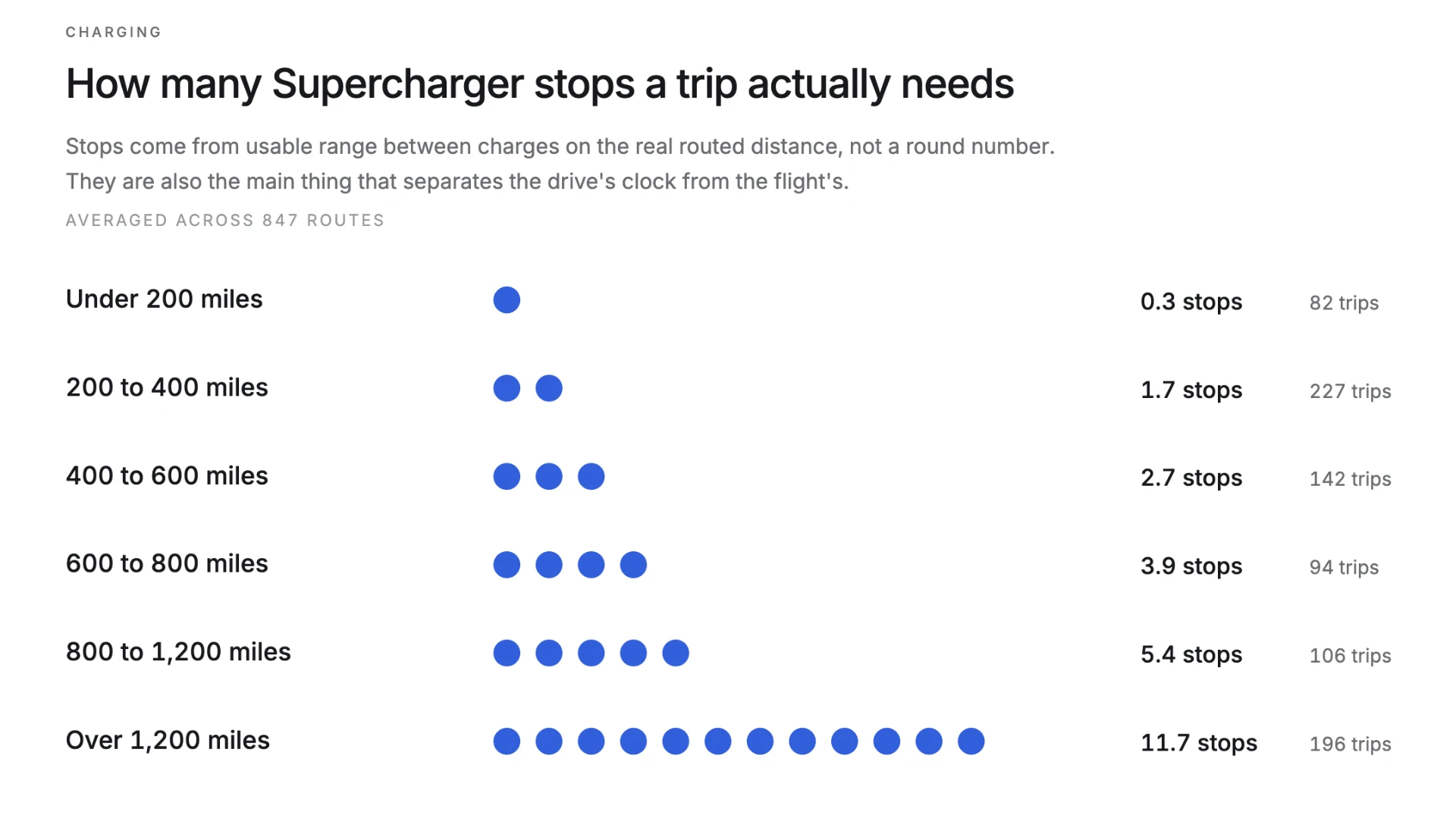
Fly or Tesla counts the stops for every route. Under 200 miles, most trips need no charge at all. Even 600 to 800 miles averages fewer than four stops.
The stops turn out to be a feature
The usual argument against driving an EV a long way is the stops. Owners kept telling me the stops are part of why they like it.
David G. Stroud put it best. Drive three hours, stop for 20 minutes for coffee, then repeat. He loses about an hour in a typical day compared to his gas car. Matt Mohn said his family stops no more than they did with gas cars, because they needed the breaks anyway.

Rich Daniel shared a story about a friend who said he'd never take a Tesla on a long trip. Rich is 61, with lower back issues. Twenty minutes to stretch, eat and use the restroom is nothing to him. His friend still has to stop for gas and then find a place to eat.

Others turned the stops into something good for them. Jonathan Christian uses each one for squats or pushups. David Church said sitting for long stretches is bad for you anyway, and the trip is much cheaper in the Tesla.
Self-driving changes the math
The biggest surprise for me was how much Full Self-Driving matters. Owners don't just tolerate the long drive. They prefer it to an airport.
Yep. Without hesitation. I don't know if I could ever do a long road trip without FSD again.
Julia Semichev took her Model Y from Greenville, South Carolina to Sacramento "fully on FSD! Best trip ever! No issues." Ashton DiCato drove from Arizona to Ohio, mostly on FSD. Dan J. Wallis did 2,540 miles round trip from Texas to Florida and called it "easy and cheap."
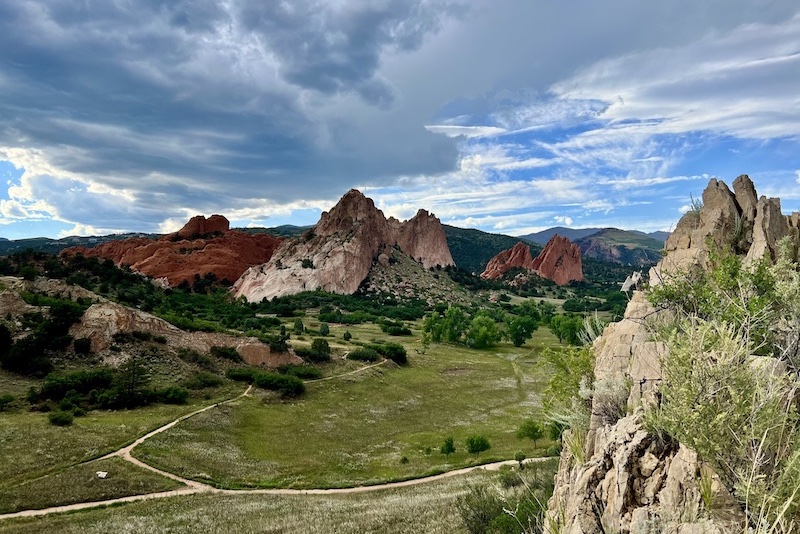
One Fly or Tesla user driving from Austin to Denver sent me this photo from a stop at Garden of the Gods in Colorado Springs. People who love the outdoors seem to appreciate road trips even more when they don't have to do the driving.
The honest pushback
Not everyone agreed, and those replies were useful too. A tool like this is only worth trusting if it shows where driving loses.
- Kyle Hendrix argued a cross-country trip means 25 to 30 charging stops and many more hours than a gas car, plus extra hotel and food costs.
- Bob Rose drove Tampa to Seattle and back with about 40 charging stops. It went well, but in the mountains the estimated charge at the next stop "jumped around 3-7%," which he called "a little nerve racking."
- Shelley Le Roy warned about unreliable Superchargers in New Mexico.
- Mace Moreland said the backroads are where the good stuff is, and that's where EVs struggle.
- Will Carr simply prefers to fly that far, no matter the car.
I agree with parts of each. Fly or Tesla still says fly when flying wins, and the library counts those trips too.
What I changed because of it
Listening to owners led to five changes on the site.
- Nearly 1,000 routes around the world. The library has grown well past the US routes I started with.
- Landmarks along the way. Each route now suggests notable things to see on the drive, so a charging stop can be a reason to stop.
- A lower stress score for driving. I heard from hundreds of people about how much they prefer FSD to flying, so I lowered the Tesla stress score.
- A new toss-up point. I assumed the break-even was a 4 to 5 hour drive. Owners showed me it's closer to 10 hours.
- A reworked algorithm. More people than I expected told me they'd drive any distance. The math now reflects that.
I've had to adjust the algorithm as more people tell me they will drive at any distance. I did not expect that.
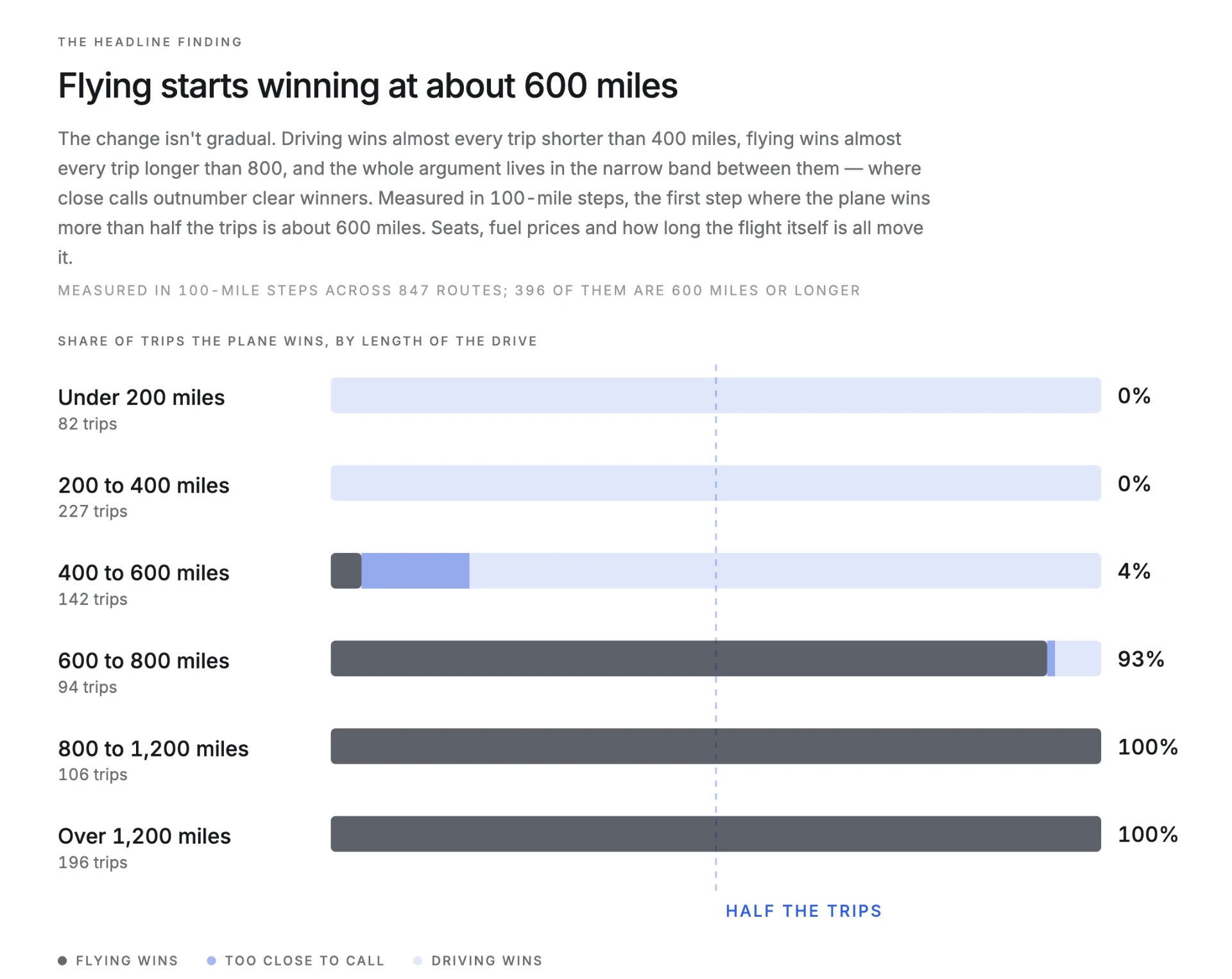
Here is how that looks across 847 routes. Driving wins almost every trip under 400 miles. Flying wins almost every trip over 800. The plane first wins more than half the trips at about 600 miles, which is close to 10 hours behind the wheel with charging.
What building it has taught me
I built Fly or Tesla in Lovable, the same way I built this site. It started as a way to settle a question I kept having. Users made it better by telling me where I was wrong.
My biggest assumption was the 4 to 5 hour toss-up. I was off by about half. I wouldn't have known that without asking, and I wouldn't have changed it without hearing it from hundreds of people.
It's been a fun project. If you're planning a trip, check your route on Fly or Tesla. If you like small tools that answer one question well, I have more on my tools page.
Fly or Tesla passed 4,000 trips checked less than a month after launch. It now covers nearly 1,000 routes, suggests landmarks along the way, and puts the fly-or-drive toss-up at about 10 hours on the road.
Get my monthly newsletter
One email a month with what I'm writing and working on.
One email a month. Unsubscribe anytime.