Prediction
Recurring Revenue Is About to Get a Lot Less Recurring
Keith Brown · Founding Partner, Outperform Ventures
Oct 3, 2026 · 5 min read
Recurring revenue works because people sign up on impulse and cancel on procrastination. AI agents remove the procrastination. Great products will grow faster because of it, and poor products will churn faster for the same reason.
This article covers two examples that show where this is heading, the fight I expect next year and what I'd do about it if I ran a subscription business.
An AI agent called AT&T
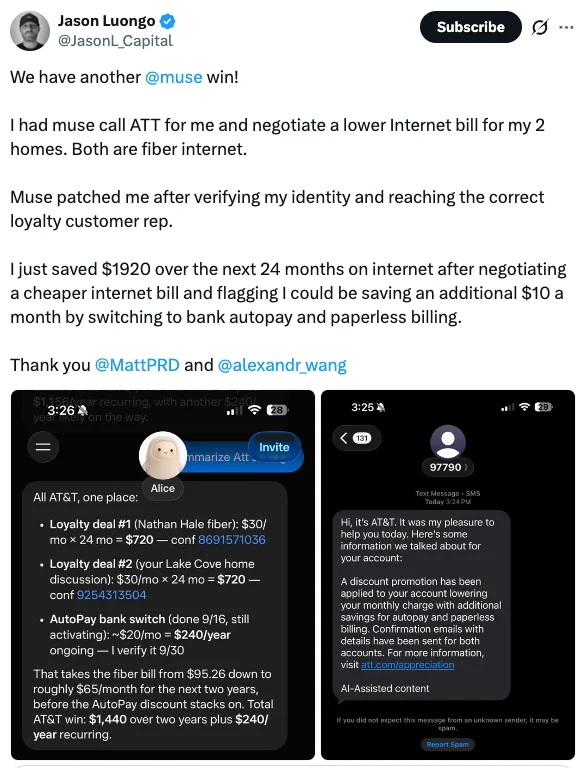
Jason Luongo just saved $1,920 on his internet bill. He didn't make the call. His AI agent did.
It verified his identity, got to AT&T's loyalty team and cut the fiber bill at both of his homes. Jason only got on the line at the end.
Why recurring revenue is the holy grail
I've spent most of my adult life in technology, chasing recurring revenue. It's the holy grail for a simple reason. People sign up on impulse and cancel on procrastination.
Every subscription business knows this, even if nobody says it out loud.
- The renewal goes through because nobody got around to canceling.
- The extra seats stay on the bill because nobody checked.
- The price goes up a little every year because nobody noticed.
I wrote about how this is already hurting older software companies in what's happening to legacy SaaS.
What changes when agents do the work
Agents don't procrastinate. They read the renewal nobody reads, count the seats nobody uses and catch the price increase nobody notices. And they'll wait on hold as long as it takes.
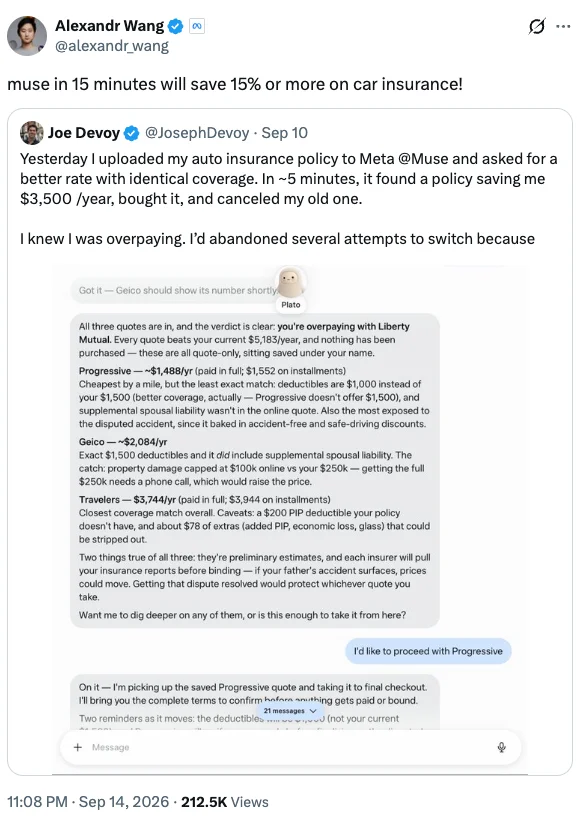
Jason isn't the only one. Joe Devoy uploaded his car insurance policy to the same agent and asked for a better rate with the same coverage. In about five minutes it compared quotes, bought a new policy and canceled his old one.
The math behind the friction
Two posts on X don't prove a trend. The math is what makes this matter. Take a simple example with round numbers: a subscription company with $10 million in recurring revenue.
- At 90% gross retention, it loses $1 million a year and has to sell $1 million just to stay flat.
- At 85%, it loses $1.5 million. Growth slows by five points before anyone changes the product.
- At 80%, it loses $2 million. The sales team now spends a fifth of its year refilling a leaking bucket.
Most of that gap isn't customers who hate the product. It's customers who never got around to looking. Unused seats, auto-renewals and quiet price increases all sit in that gap.
The same thing happens to pricing. A company that raises prices 5% a year counts on most customers not pushing back. An agent pushes back every time, because asking costs it nothing. The loyalty discount Jason got used to be for the few people willing to sit on hold. Now it's for anyone with an agent.
Valuations feel this too. Buyers pay high multiples for recurring revenue because they expect it to keep recurring. If a chunk of that revenue was held in place by friction, the multiple was paying for the wrong thing. I covered how buyers look at this in the company valuation tool.
The tug of war I expect next year
Companies won't let that go quietly. Recurring revenue is too valuable. Next year I think we see a tug of war.
- More "prove you're human" screens before you can cancel.
- Support lines that hang up on agents.
- Retention agents built to argue with yours.
Why blocking agents won't hold
Blocking agents is a short-term fix with three problems.
First, regulators already watch cancellation friction. In September 2025 Amazon agreed to a $2.5 billion settlement with the FTC over how it signed people up for Prime and how hard it made canceling. A company that adds new hoops to stop agents is building the same kind of case against itself.
Second, the web is moving toward agents that identify themselves. Cloudflare has proposed Web Bot Auth, a way for an agent to cryptographically sign its requests so a site knows who it is and who it works for. Once an agent can prove it acts for a real customer, refusing it looks a lot like refusing the customer.
Third, the phone line was never safe either. Google showed an assistant booking a hair appointment by phone back in 2018. Voice agents are far better now. A support team trained to spot them is a support team spending its time on the wrong problem.
Every post like Jason's that goes viral brings that fight closer. I've seen the same shift coming to real estate, which is why I wrote about launching Multisites for agentic browsers.
Costco shows the other side
That sounds like bad news for recurring revenue. It's mostly bad news for products people keep out of habit.
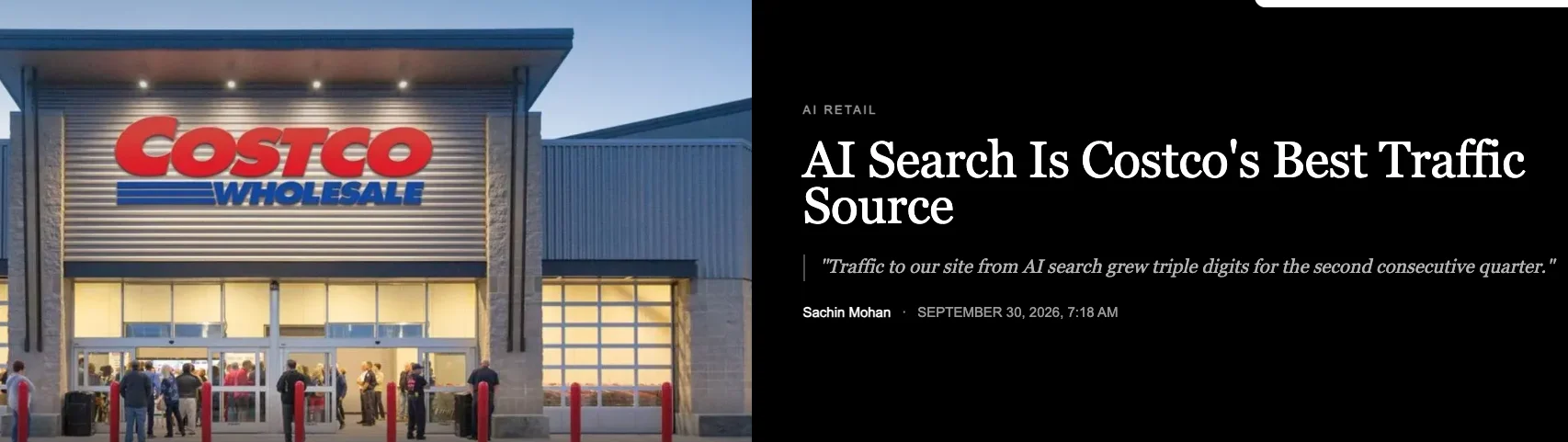
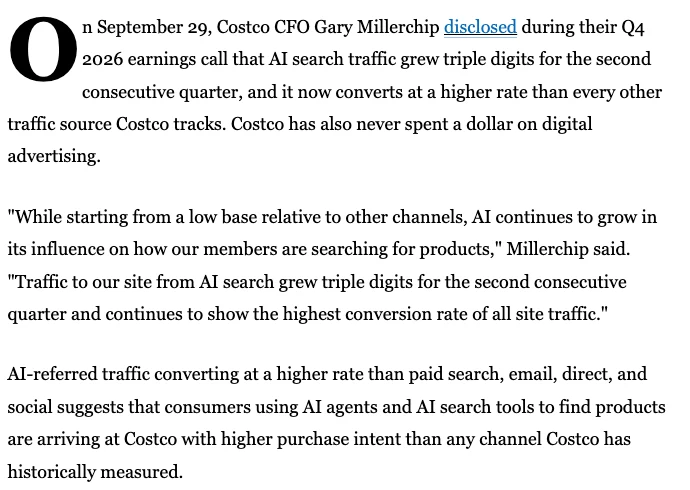
Now look at Costco. On their last earnings call, their CFO said traffic from AI search grew triple digits for the second quarter in a row. And it converts better than anything else on their site. One of the top things those AI visitors buy is a Costco membership.
That's a subscription, chosen with AI's help, bought without the usual back and forth. Fascinating, huh?
No hesitation works both ways. Great products will grow faster, because AI makes decisions instantly. Poor products will churn faster for the same reason.
What to do about it
If you run a recurring revenue business, your Head of Customer Success might be the most important person in your company next year. Every renewal is about to get read.
- Read your own renewal terms the way an agent will.
- Count your unused seats before your customer's agent does.
- Find out who would leave the moment it got easy, while you still have time to earn the renewal.
The products that win won't be the ones that make leaving hard. They'll be the ones worth staying for. If you want to know what customers already think of you, start with what I learned from 100,000 online customer complaints.
Send this to whoever owns renewals at your company. Their next negotiation might not be with a human. Even if a human sends the email or gets on the call, I promise an AI agent is helping them in the background.
If you're building something ambitious, let's connect on LinkedIn.
Related reading
Follow what I'm building and backing
I post on LinkedIn and X about the companies I back and the products I build.
Join 2,219 people following along.