
I have spent fifteen years in the trenches of high growth SaaS. I have seen the 2 a.m. board deck revisions and the desperate hunt for data gravity. I know what it feels like to earn every dollar of true ARR, recurring revenue through blood, sweat, and manual onboarding. The type of revenue that you can model out 3, 5, and even 10 years into the future.
That is why the news cycle of February 2026 feels so surreal to me.
Every morning there is a new record on my feed. Lovable hit 100M ARR in eight months and is already pacing toward 300M. Mercor did it in ten. Cursor did it in twelve and just crossed a billion. OpenAI just tripled to 20B in a single year. The timeline of growth has effectively gone vertical and we are all supposed to be applauding the efficiency.
I’m not clapping. I’m concerned.
There is a line from Jurassic Park that keeps playing in my head: “You wield this power like a kid.”
When Ian Malcolm says that to John Hammond, he isn’t just talking about the danger of dinosaurs. He is talking about the lack of humility. He is talking about the difference between standing on the shoulders of giants and actually being a giant.
In the movie, Hammond didn’t do the hard work of evolutionary biology; he just bought the labs and extracted the DNA. He skipped the centuries of trial and error that nature requires. He thought he owned the power because he had the key to the cage. And in so many ways I feel like all of us in technology (whether you want to call it SaaS, AI, etc.) are kinda sitting around having this very existential conversation right now about the future.

I just believe in the 30,000′ foot view. And rather than chasing vanity metrics, we should be having deeper conversations about what this all means for the future.
The people using the term ARR right now haven’t paid the price to use it. Because by nature ARR is a predictable and long-term metric. AI is not even focused on annual right now, or even the quarter. It’s a daily grind of beating the next news cycle.
We are witnessing the rise of Hollow ARR (HARR). And yes, I just made up that word. It’s the best way I can describe what I’m seeing, although others are definitely feeling the same thing.
Hollow ARR satisfies the technical definition of a subscription but lacks the structural integrity of a real business. In the solid era of SaaS, revenue was a proxy for a moat. It meant you were embedded. It meant you were a utility. In this new agentic era, revenue is often just a proxy for a temporary efficiency gain. The speed is intoxicating but the math is terrifying.
It’s not annual. It’s not recurring. Yes, I’ll concede it’s revenue. But a big chunk of these are pilots, monthly usage fees, and math that assumes that in an age of everything changes every 5 minutes, that nothing will change for this revenue to be modeled into infinity.
The Architecture of Revenue: Solid vs. Hollow
| Feature | Solid ARR (Legacy SaaS) | Hollow ARR (HARR) |
| Primary Moat | Data Gravity & Workflow | Viral Vibe & Model Access |
| Gross Margin | 80% – 90% | 30% – 50% (Inference Tax) |
| Switching Cost | High (Implementation Friction) | Zero (Plug-and-Play) |
| Growth Driver | Sales Efficiency & Land/Expand | GPU Availability & Social Proof |
| Revenue Source | Software/Utility Budget | Payroll/Discretionary Budget |
| Customer LTV | High (Multi-year stability) | Unknown (High Volatility) |
| Value Proxy | Business Integration | Temporary Efficiency Gain |
I am not saying some, or all, of these hyper-growth AI platforms will go the way of the dinosaur. I’m simply saying in our chase to brag about ARR, we aren’t stopping to think. It brings to mind Ian Malcolm’s other stinging rebuke from that dinner table scene: “Your scientists were so preoccupied with whether or not they could, they didn’t stop to think if they should.”
We have built tools that can scale to a hundred million dollars in revenue before they even have a customer support department or a security team. We are celebrating the “could” and the raw capability of a model to generate cash at light speed, without pausing to ask if the foundation of that revenue is something we actually should be calling a business.
We're about to close our first $1M ARR enterprise contract.
— FW (@fawiatrowski) February 14, 2026
Fastest company to close enterprise pipeline with zero sales team, zero outbound, and a 48h old product.
SOC 2 compliant thanks to @getdelve https://t.co/RBPsQobHqZ
Update for April 2026: I had a list of X posts embedded above, by companies bragging about ARR milestones, but literally 100% of them have since been deleted. So I guess this post even 2 months in is already aging well…
We are so enamored by the sheer velocity of the “HARR” growth that we’ve ignored the fact that we are building on shifting sand. We aren’t asking if this revenue is durable, or if it’s responsible to value it like traditional software.
We are wielding the “could” of AI to inflate numbers, but we haven’t stopped to think if we should be calling this success.
These new winners are struggling with 40 percent margins because every dollar of revenue carries a massive, variable tax in compute. If your gross margins look like a hardware company, you are not a software company. You are a reseller of tokens.
SaaS was built on sticky seats. AI is built on fluid tasks. When software is generated on the fly, the switching cost is zero. If a competitor launches a better vibe tomorrow, that annual revenue evaporates in a weekend. Most of what we call recurring revenue right now is just a series of one month trials wearing a tuxedo. I mean, do we all really need a reminder of what ARR is? I think so.
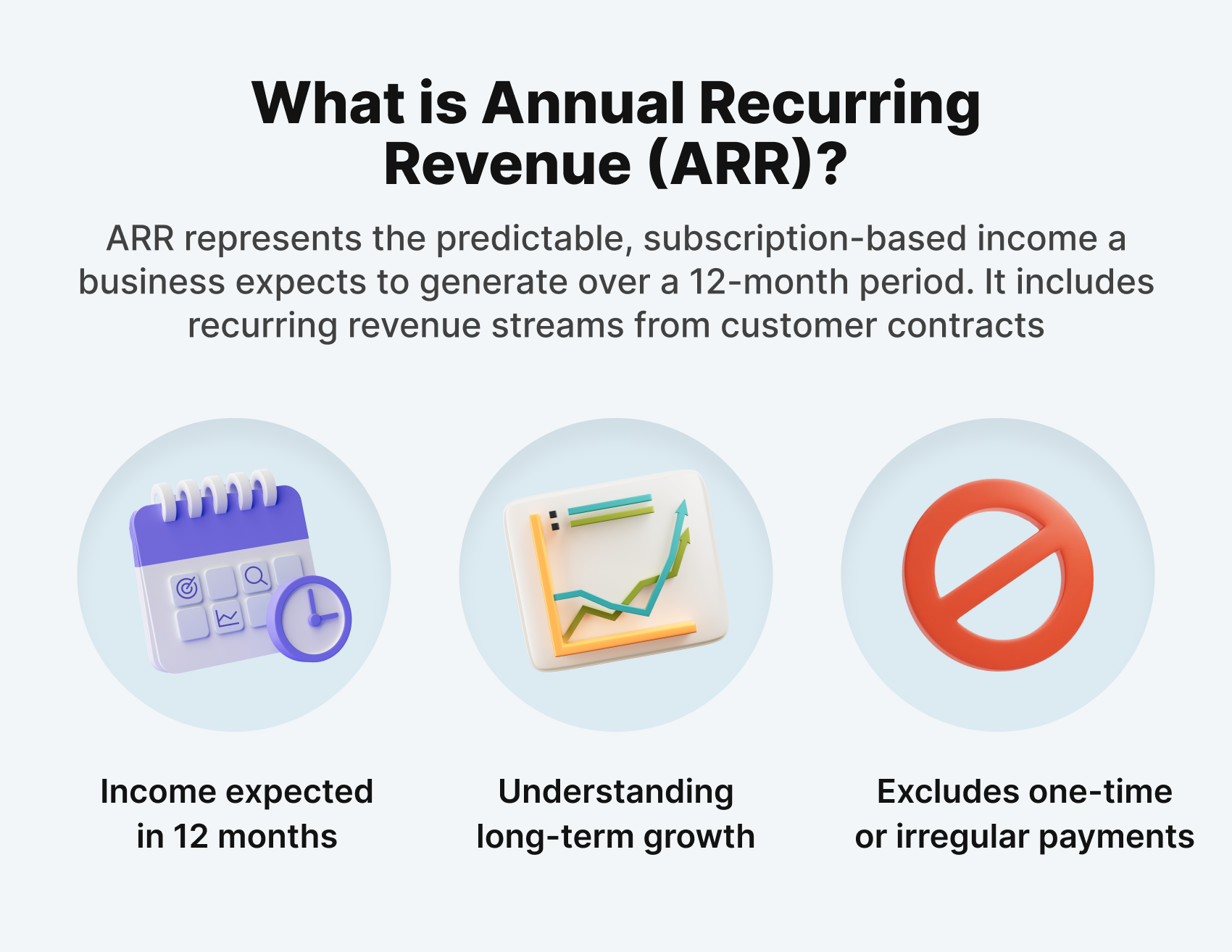
Even the source of the money has changed. These literally are the “one time” or “irregular payments” that traditional ARR excludes. Usage, tokens, credits, adoption, are all irregular by nature.
Sometimes the oldest wisdom is the best. Easy come, easy go. The best things, often take time.
These companies are winning because they tap into payroll budgets rather than software budgets. That is a trap. Payroll is discretionary. Software licenses are utilities. By selling the outcome instead of the tool, these firms have exposed themselves to macro shifts that traditional SaaS never touched.
Whose to say that in 18 months we will be skipping humans entirely? This entire crop of AI “unicorn” tools that humans use, might be replaced by different platforms that cater entirely to AI Agents.
Now, I know the counter argument. Legacy SaaS is being cannibalized. I see it every day. The old “systems of record” are being replaced by “systems of reason.” Some of the tools I spent fifteen years watching in the SaaS space will likely be eaten by these very AI agents. The old guard is vulnerable because their moats were built on friction, and AI is the ultimate lubricant.
But there is a deeper irony in the pricing error happening in the markets right now.
We are punishing legacy SaaS because they are “boring.” We are slashing their multiples because they are only growing at 15 percent. Meanwhile, we are giving 50x multiples to AI companies with 30 percent margins and a churn rate that would make a gym owner blush. But they got to $10M ARR in 30 days, or is it $9M in HARR and $1M in true long-term ARR deals?
It should be the opposite.
Legacy SaaS revenue should be valued higher today precisely because it is solid. It is proven. It is hard to kill. The new AI revenue should be valued like a high beta infrastructure trade. It is a bet on the cost of a token, not the value of a firm.
We are currently valuing the house that was built in a weekend with a 3D printer higher than the one built with stone and mortar, even while the printer is still running up the electric bill.
The record setting growth we see on my feed is not the birth of a new Golden Age. It is the final vertical spike of an old one. The winners won’t be the ones who hit 100M the fastest. They will be the ones left standing when the novelty wears off and the bill for the compute comes due.
The vertical line is not a victory. It is a warning to pause and think deeply before sharing the next ARR record breaking company in your feed.
You might just be sharing the fastest company to $100M HARR.