Reflections on 2025

It is good to be back sharing my thoughts more. I have mostly stayed off social media since the world got loud a few years ago. It felt like there was enough noise and nobody needed one more opinion. But I have heard from many of you that my perspective still carries weight. That means a lot to me.

I spent 2025 realizing that the digital world and the real world are moving in opposite directions. Online, we are told we have never been more divided. In the real world, at the gym or the coffee shop, I find we have more in common than ever. Reading the news gives me anxiety, but getting out among people gives me peace.

We are entering a massive transition. In 2025, AI came into our lives. In 2026, it will come for our jobs. That sounds scary, but I see it as a tool to finally win our time back. We can remember our humanity while the machines handle the mundane.

Our system is currently obsessed with redistributing wealth. We saw this in New York and California this year. History shows us that rarely works. We do not have an income problem, we have a spending problem. I used to resent wealthy people when I was growing up in a middle-class home. I thought they were keeping me down. The reality is that wealthy people own companies and companies create jobs.

If you redistribute money without redistributing knowledge, the money just flows back to the people who know how to manage it. AI is the great equalizer here. It has made it easier than ever to redistribute knowledge.

Sam Altman recently said the biggest misconception of his youth was thinking you get rich from a high salary. It is the opposite. You must own something. You must build something you have real ownership in. Otherwise, you are just on a hamster wheel. At 40, I realize that more than ever.

My goal now is to teach people how the system actually works. I want to show you how you are being leveraged. Many CEOs make a dollar and give back a penny to the team and call it generosity. Real generosity is helping a team get to a place where they do not need a salary. It is about empowerment, not co-dependency.

I focused on my health this year after years of putting myself last. I can feel the difference in my body. I ended 2025 feeling better than I did when it started. I spent the holidays with high energy, shopping and meeting friends for lunch. I studied my health the way I used to study money. It took constant effort and discipline.

I spent time with Ray Dalio’s Principles and Andrew Ross Sorkin’s 1929 lately. Those books help frame exactly where we are in the cycle. We are seeing people buy gold, silver, and Bitcoin to protect against inflation while houses and cars remain unaffordable. We are watching sports and social media become businesses that harvest our eyeballs rather than provide entertainment.

My prediction for 2026 is simple. It will be defined by less screen time and more human time. We will use technology to buy back our lives.

I am looking to spend more time with people who want to move past the chase for money and into the phases of time and legacy. If you are working on a meaningful project or just trying to navigate these changes, I would love to hear from you.

Private Equity Spreadsheets

Private equity likes to call itself the rational antidote to sentimental founders, bloated corporate structures, and quarterly-obsessed public markets. The narrative is tidy: disciplined investors step in, unlock efficiency, and deliver superior returns through operational excellence.

But inside the model is a more unvarnished reality, a world where companies become spreadsheets, people become ratios, and innovation becomes the tax paid in exchange for predictable IRR. And despite the industry’s polished reputation, the incentives baked into modern PE often push leaders away from long-term value creation and toward short-term arithmetic.

This is the quiet truth most CEOs already suspect: private equity isn’t inherently evil, but it is inherently numerical. And once numbers dominate the worldview, everything else becomes secondary.

The Rise of the Spreadsheet Era

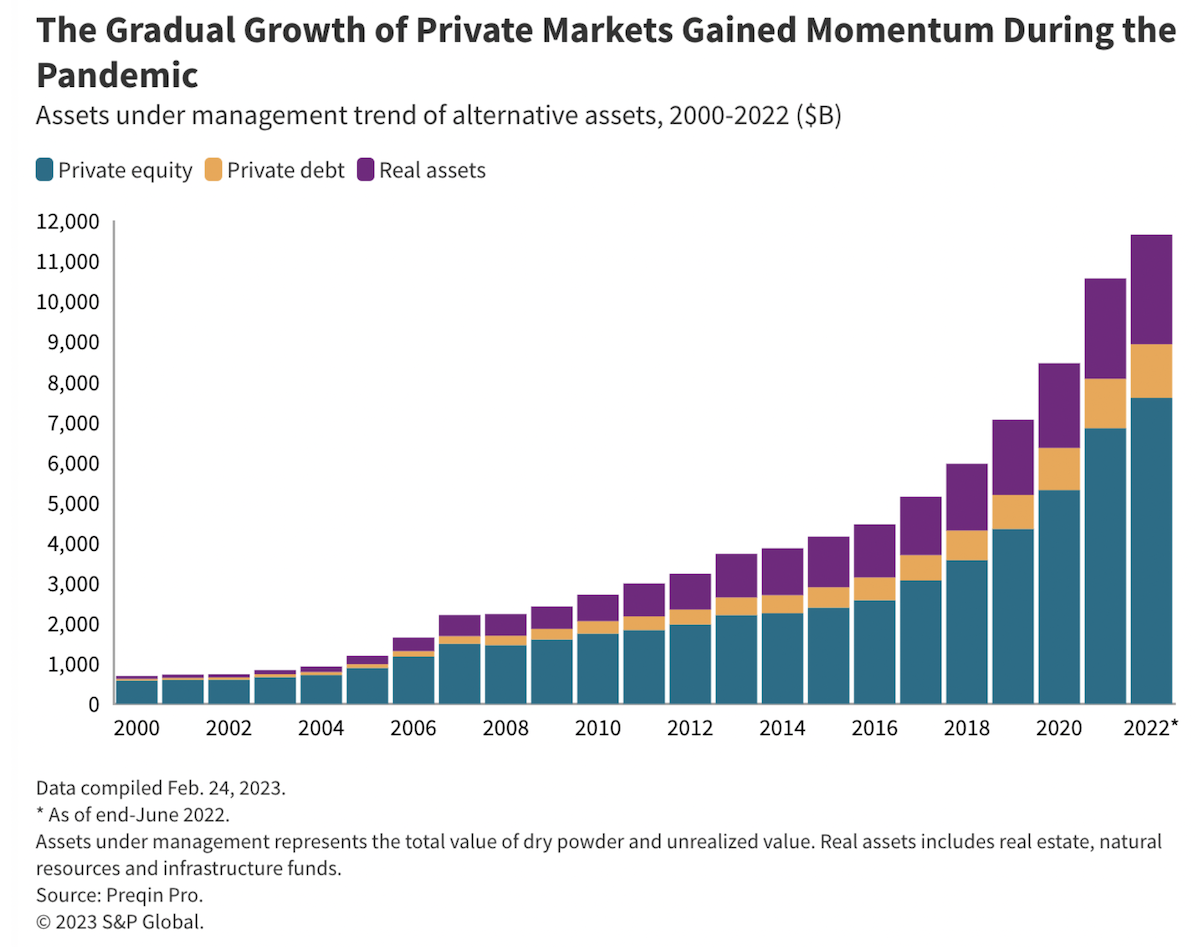
Private equity controls more of the economy than at any point in history.

Private equity hasn’t just grown, it’s taken over.

  • $13.1 trillion in global AUM as of 2024 (Preqin).
  • Over 12 million U.S. workers employed by PE-owned firms (American Investment Council).
  • PE-backed companies now account for nearly 6% of U.S. GDP.
  • More than one out of four M&A deals globally involves PE capital (Bain).

When an industry with that kind of scale brings a singular incentive structure — protect capital, amplify returns, minimize uncertainty — it reshapes entire sectors.

PE doesn’t just buy companies. PE sets the operating logic of modern business.

The Incentive Machine Behind the Brutality

The defining characteristic of private equity is not leverage.

It’s time.

Funds operate on a 7–10 year cycle, but the median hold period has collapsed to 5.2 years (Bain). That means every decision must mathematically contribute to a future sale at a higher multiple. Innovation? Uncertain. Talent development? Slow. Long-term bets? Risky.

So they gravitate to what can be quantified and controlled:

  • SG&A compression
  • Headcount efficiency
  • Price optimization
  • Working-capital release
  • Short-cycle capex deferral
  • Bolt-on arbitrage

Bain reports that over 70% of PE value creation now comes from EBITDA improvements and multiple expansion — not true operational transformation.

Translation: the model is not designed to build the future. It’s designed to engineer a higher exit.

People Become Ratios, Not Resources

A 2023 HBR study found that companies acquired by PE cut an average of 13% of their workforce within two years.

Research from Chicago Booth showed that wages at PE-acquired firms lag industry peers by up to 4%. Another study found PE-owned hospitals increased patient volumes while decreasing staff, leading to statistically worse patient outcomes.

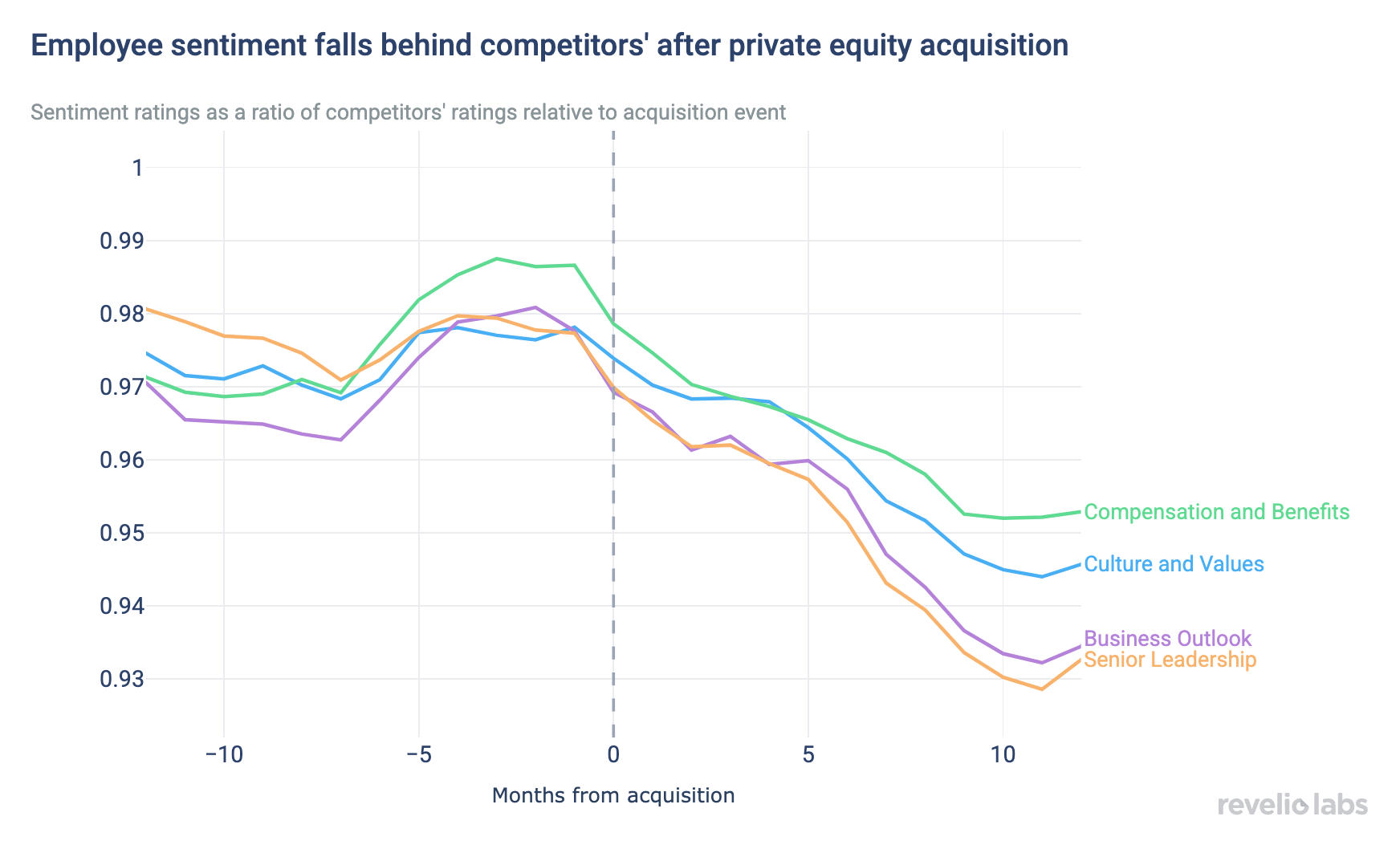
That’s why employee sentiment, culture, happiness, all fall when Private Equity comes in.

But none of this is irrational. It’s arithmetic.

Labor is the most flexible cost lever with the fastest path to EBITDA impact. In a compressed hold period, the best lever wins — even if the workforce loses.

To PE, headcount reduction isn’t personal. It’s line-item physics.

Innovation: The Silent Victim of Predictable Returns

The National Bureau of Economic Research found that after PE buyouts:

  • R&D spend declines an average of 12%
  • Patent output drops
  • Patents issued are less original and less impactful

Why?

Because innovation introduces two things PE can’t model easily:

  • Long payoff windows
  • Nonlinear outcomes

PE’s worldview optimizes for control. Innovation’s worldview optimizes for exploration. One of them is spreadsheet-friendly. The other is not.

The PE firm’s job is not to dream. It’s to de-risk.

The Human Cost of Capital Preservation

CEOs in PE-backed environments often describe the same shift:

  • Suddenly every conversation becomes about numbers.
  • Everything turns into a dashboard.
  • I stopped talking about customers and started talking about cohorts.

And it’s not because leaders suddenly lose their imagination. It’s because the system punishes anything it can’t quantify.

PE doesn’t mandate brutality. The model incentivizes it.

And incentives always win.

Why Smart CEOs Still Work With Them

Here’s the nuance no anti-PE narrative admits:
Sometimes the brutality is exactly what a company needs.

PE capital can:

  • Professionalize a founder-led business
  • Bring needed discipline
  • Create accountability
  • Accelerate industry roll-ups
  • Unlock scale through systems and shared services

The best PE firms truly do create value, not just extract it. But the model still shapes the outcome more than the intentions.

Even the most visionary investor must answer to the IRR timeline.

The Uncomfortable Future of Value Creation

The world is moving toward AI, automation, product innovation, and new business models — all long-horizon, experimentation-heavy, probabilistic bets.

The world of PE is moving in the opposite direction: toward faster cycles, more leverage, stricter diligence models, and tighter operational control.

This is the tension CEOs are walking into. PE wants certainty. The future does not offer any.

When an industry optimized for predictability collides with an economy optimized for reinvention, something has to give.

And increasingly, what gives is innovation.

So What Should CEOs Take Away?

Three truths matter:

  1. Private equity is not built to create the future, it’s built to monetize the present.
  2. If you sell to PE, your company becomes a spreadsheet, for better, often for worse.
  3. Success comes from protecting innovation from the gravitational pull of financial engineering.

The firms that win the next decade won’t be the ones with the cleanest models. They’ll be the ones that let math guide decisions without letting it dictate imagination.

Because the hidden flaw in private equity’s worldview is this:

Not everything valuable can be optimized.

And not everything that can be optimized is valuable.

Sources